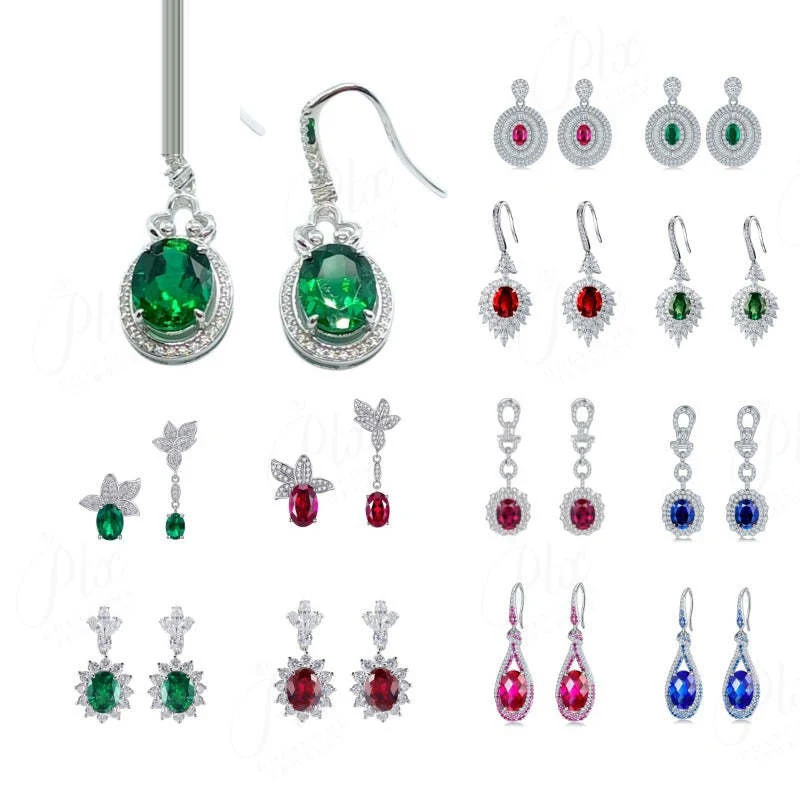
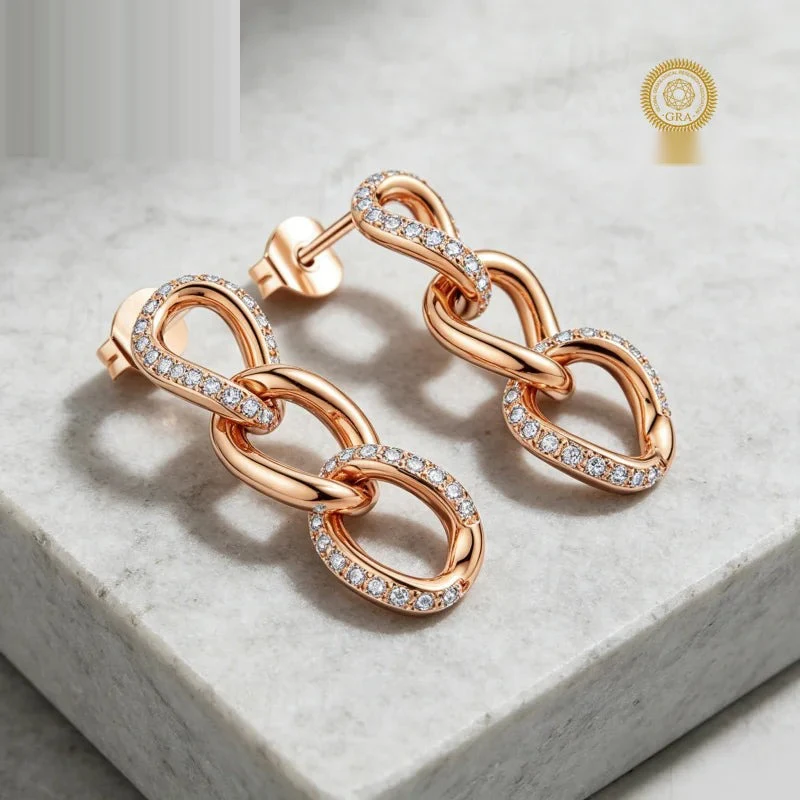
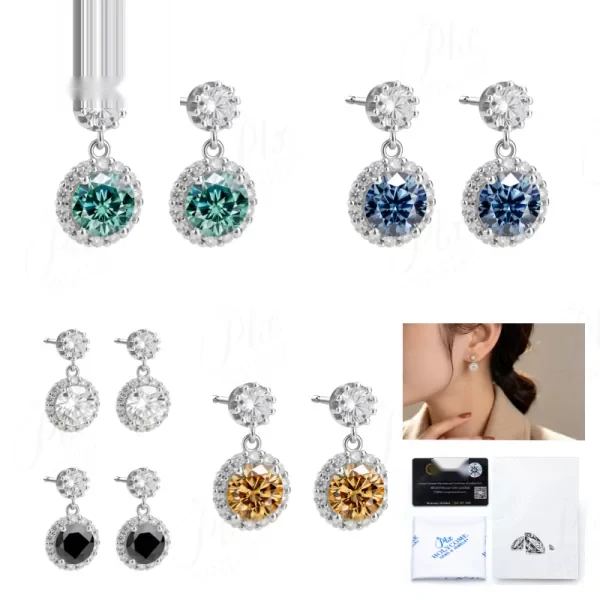
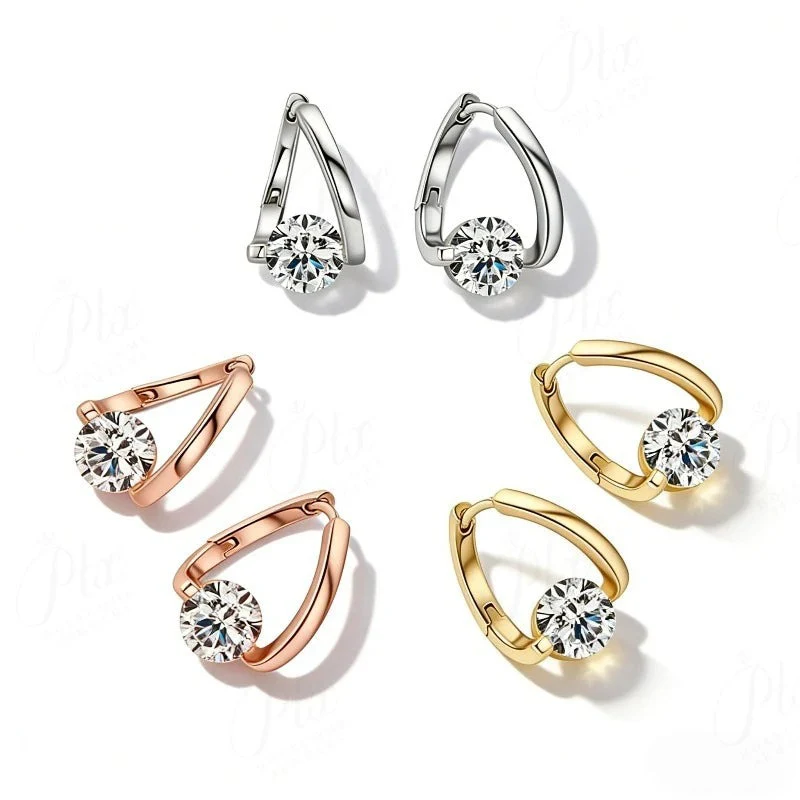
A boutique in Toronto ordered forty pairs of 6.5 mm moissanite studs through a web form. The form asked for stone size and metal only. What arrived were two pairs where one stone in each pair measured 6.3 mm and the other 6.6 mm, the earlobes sat at slightly different heights, and the buyer rejected the lot. The factory was not at fault; the spec sheet never asked the questions that matter. Ordering custom moissanite earrings online works when the buyer types the right fields, not when the factory guesses.
Below are the five fields we require on every online earring order, with the tolerance, gauge and weight numbers we write onto the proforma before the wax tree goes up.
Matched-pair tolerance: the field that rejects batches
A matched pair is not two stones of the same advertised size. It is two stones within a tolerance we sort on the loupe. On a 6.5 mm stud we hold 0.1 mm maximum diameter difference and match the table and crown height within 0.2 mm. Sorting a matched pair takes about three minutes per pair on the tumble-sorted lot, and it is the reason our studs read level on the ear. Buyers who skip this field get pairs that look fine on a cloth but uneven on a lobe. Our stud and drop overview shows the difference between paired and tumbled stock.
Post gauge and ear length
We build stud posts in 0.85 mm gauge for stones up to 7 mm, stepping to 1.0 mm above that. Post length runs 10.5 mm standard, which clears most earlobes, but thick-lobe clients need 12 mm. A post that is too short backs out of the clutch; a post that is too long pokes the neck when the client lies down. We ask buyers to specify average lobe thickness, not just stone size. The clutch we ship is a surgical-steel push back on silver and a friction butterfly on gold. Buyers choosing fastening should read our posts versus leverbacks guide before the order goes in.
Ear weight and the droop problem
A 6.5 mm moissanite stud in 14k gold weighs about 2.4 g per ear. Above 3.0 g per ear, lobes stretch and the stone tips forward. Drops above 8 mm centre need a hinged post rather than a straight push back, because the hinge carries the weight through the ear rather than the hole. We flag any online order over 3.0 g per ear and ask the buyer to confirm the client wears hinged fittings. Our earring design specs write-up lists the weight ceiling we apply per stone size.
Backing type and metal contact
Nickel release is a real compliance issue for ear posts that touch skin all day. We build posts and clutches in sterling silver at ISO 9202 fineness, and we disclose nickel content per the EU Nickel Directive 94/27/EC as amended, because ear piercing is one of the exposure routes the directive covers. Buyers shipping into the EU should ask for the nickel-release test report, not just the metal stamp. Sterling versus gold trade-offs are covered in our silver versus 10k guide.
CAD proof for earrings: why we render both ears
Online orders skip proofing at their peril. We render a left and right ear position on the CAD so the buyer can see the lobe height and post angle before casting. Earrings are symmetric but worn asymmetrically, and a centre that sits proud on one ear reads wrong on the other. The render step adds three working days but cuts rejects to under 2 percent on earring lots. Our render versus photo proofing guide explains what the CAD view will and will not show.
What matched-pair tolerance should I order?
0.1 mm diameter on studs up to 7 mm. Below that tolerance the labour triples for no visible gain; above it the pairs read uneven on the lobe.
Which post gauge fits a 6.5 mm stone?
0.85 mm gauge in standard lobes. Step to 1.0 mm if the client wears the studs daily or the lobe is thick.
Do heavy drops need a hinged post?
Above 3.0 g per ear, yes. A straight push back droops on a heavy drop; the hinge carries the load through the ear structure.
Can I order nickel-free posts for the EU?
Yes. We build posts in nickel-tested sterling or gold and supply the release report. Spec it on the online form; do not assume the default post is compliant.
MOQ and the cost of a rejected pair
On a forty-pair order, a 2 percent reject rate is one pair, which we replace at no cost. Buyers who skip the matched-pair field see closer to a 5 percent reject rate, and those rejected pairs cannot be resold as studs because the two stones are not a pair. The 0.1 mm sorting takes three minutes a pair and is the cheapest quality step in the whole earring build. On small orders, our MOQ write-up covers the minimum pair count we will run for a custom earring spec.
Send us stone size, metal, lobe thickness and your destination market. We return a matched-pair tolerance, post gauge and backing spec on the proof sheet before wax. Ask us to spec your next custom moissanite earring order online.
Frequently Asked Questions
Is moissanite a good diamond alternative for retail buyers?
Yes for price-sensitive customers who want brilliance and hardness. Moissanite ranks 9.25 on the Mohs scale, holds up to daily wear and costs a fraction of a natural diamond of the same size, so it resells fast in bridal and fashion lines.
What is the minimum order for wholesale moissanite?
MOQ starts at 50 pieces per design for stock items. Custom cuts and private-label settings usually start at 100–300 pieces depending on the mold.
Do you provide certificates with moissanite stones?
Yes. Every parcel ships with GRA or IGI documentation listing carat weight, color grade and cut. We recommend passing the certificate to your end customer for trust.
How long does sample and bulk production take?
Samples ship in 3–5 days. Bulk runs take 15–20 days under 500 pieces, and 25–30 days for custom work.