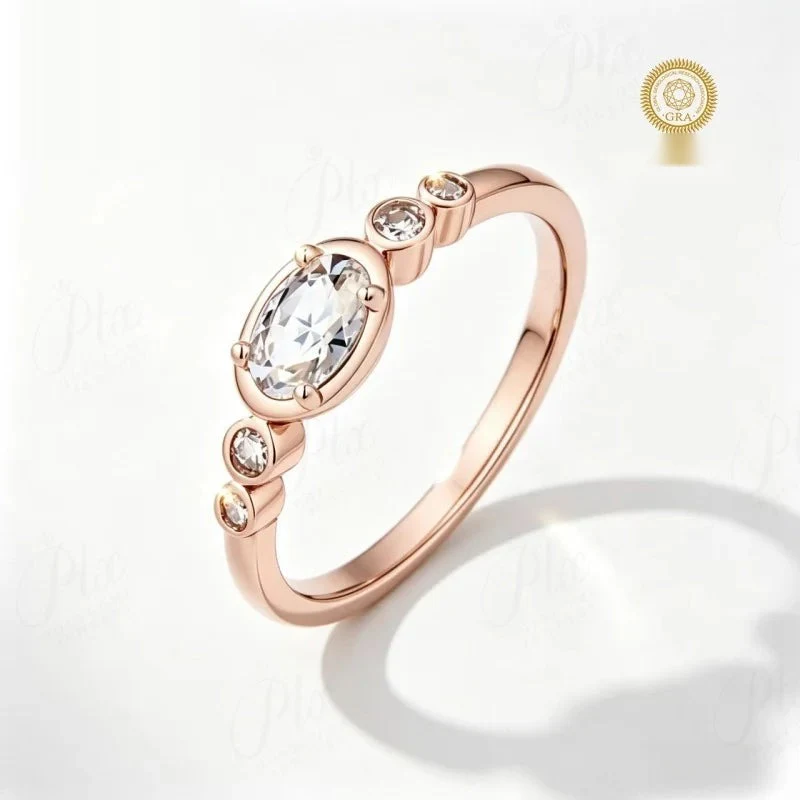
A buyer in Melbourne approved a 3D render of a 7 mm halo ring, received the finished piece, and emailed us three days later saying it looked smaller than in the picture. The render was technically correct - the proportions matched - but it had been shot from a close-up macro angle with no reference object in frame. That one complaint cost us a remake and two weeks of trust. We changed the proofing process that month, and the workflow below is what we run on every custom order now.
What a 3D render does and does not show
A render shows shape, symmetry, head height, shoulder angle and the way light falls on the stones. It does not show scale, weight on the finger, the actual color of the gold, or the way the ring sits next to a knuckle. Renders are also often shot at macro focal lengths, which exaggerate the stone and the head. To fix the scale problem we now attach two reference items to every render: a millimetre ruler across the front of the ring and a second render with a US size reference band drawn beside it. The sketch-to-CAD write-up covers how the model itself is built.
We also reference IGI's grading geometry when we write the measurement sheet: the mm dimensions on the sheet match the numbers a gem lab would record, so the buyer can compare the piece against any future appraisal.
Photo proofing after the first sample
After casting and setting, before final polish and plating, we shoot the first sample on a grey card with a coin or ruler in frame. We send three photos: front, profile and on a US size 7 mandrel. The buyer has 48 hours to request a tweak - usually a head that sits too high, a band that is too thin, or a stone that is slightly off-center. This is the second approval gate, and it is the one that catches the problems a render cannot. Our QC checklist lists the 14 measurements we record on that photo set.
The measurement sheet we attach
Every proofing email includes a one-page sheet with:
- Center stone mm size and cut (e.g., 6.5 mm round brilliant).
- Band width at the top and at the base of the shank.
- Head height off the finger in mm.
- Finished finger size (e.g., US 6.5).
- Metal weight in grams.
- Number and size of side stones if any.
That sheet is what lets the buyer compare the render, the photo and the finished piece against the original brief. When a remake is requested, we work from the sheet, not from the render.
What buyers should do with the render email
We ask buyers to forward the render and measurement sheet to their retail client before we cast. Clients who see the mm-ruled render in advance almost never come back with a scale complaint. The two questions we encourage buyers to ask are: does the head height suit your daily-wear style, and does the band width match what you expect to see on the finger? Those two questions catch 90% of the scale misreads before they become remakes. If the client wants a tweak, we fold it into the same CAD pass. If they approve, we release the file to casting.
How we handle scale misreads
Three changes cut post-delivery it-looks-smaller complaints by about 80%:
- Ruler in every render - not just a pretty view; a straight-on front shot with a mm scale.
- Mandrel photo - the ring on a known-size mandrel so the buyer sees how it sits on a finger.
- Side-by-side render vs first-sample photo - sent in the same email, so the buyer compares the two directly.
For rush orders we still run both gates; the rush production guide explains which steps we compress and which we do not.
Can I see a render before casting?
Yes. Two to three renders are included in the quote, plus a measurement sheet. Three free revision rounds are included.
How many free revisions are included?
Three CAD revision rounds. Additional rounds are billed at $45 each and add one working day.
What if the finished piece does not match the render?
If the deviation is outside the measurement sheet we sent for sign-off, we remake at our cost. If the client simply changed their mind, we quote a remake at standard rates.
Do you send photos after casting?
Yes. A first-sample photo set (front, profile, mandrel) is sent before final polish and plating. The buyer has 48 hours to approve or request a tweak.
Can I approve a wax sample before casting?
On request for orders at MOQ 5 or above. A wax sample ships by express courier; it adds 5 working days and a courier cost, but it is the most accurate way to lock scale.
Send us the brief and any reference photo. We will return a render with a mm ruler, a measurement sheet and a firm quote within three working days. Start your custom proofing today.
The Gemological Institute of America’s gem encyclopedia is an authoritative, widely cited reference on moissanite and diamond quality factors.
Frequently Asked Questions
How does the custom OEM process work?
Send a reference, sketch or CAD file. We quote, produce a 3D render, then a wax or resin model for approval before casting. Nothing goes to bulk without written sign-off.
How long does a custom sample take?
About 20 days for a new CAD model, including one revision round. Repeat designs reuse the existing mold and ship in 3–5 days.
What is the custom MOQ?
100–300 pieces per design depending on the mold and stone setting complexity.
Do you sign NDAs for private label?
Yes. Private-label clients get an NDA and exclusive mold use for the agreed term.