A boutique buyer in Toronto ordered sixty pairs of 8 mm stud earrings, sold fourteen in the first month, then the returns started. Posts bent back on three pairs, friction backs fell off on four, and one stone loosened in its head. The moissanite was fine. The ear wire gauge and back choice were not. Stud earrings are sold as a stone, but they fail as a hardware problem.
Below are the earring specs we quote before we cut the first post, with the wire gauges, back types and drop lengths we hold on our spec sheet.
Post gauge and ear wire weight
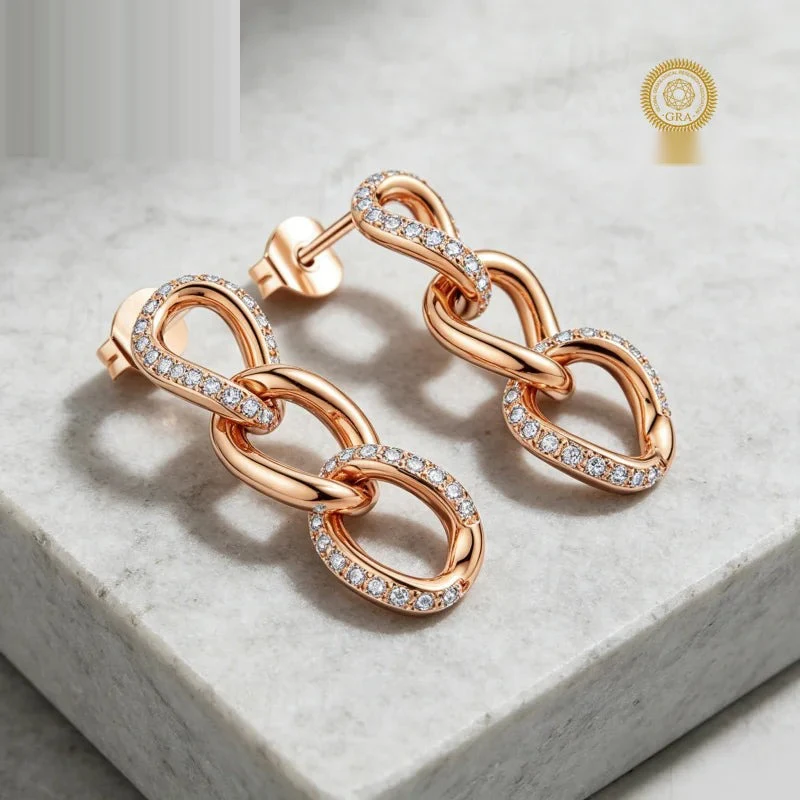
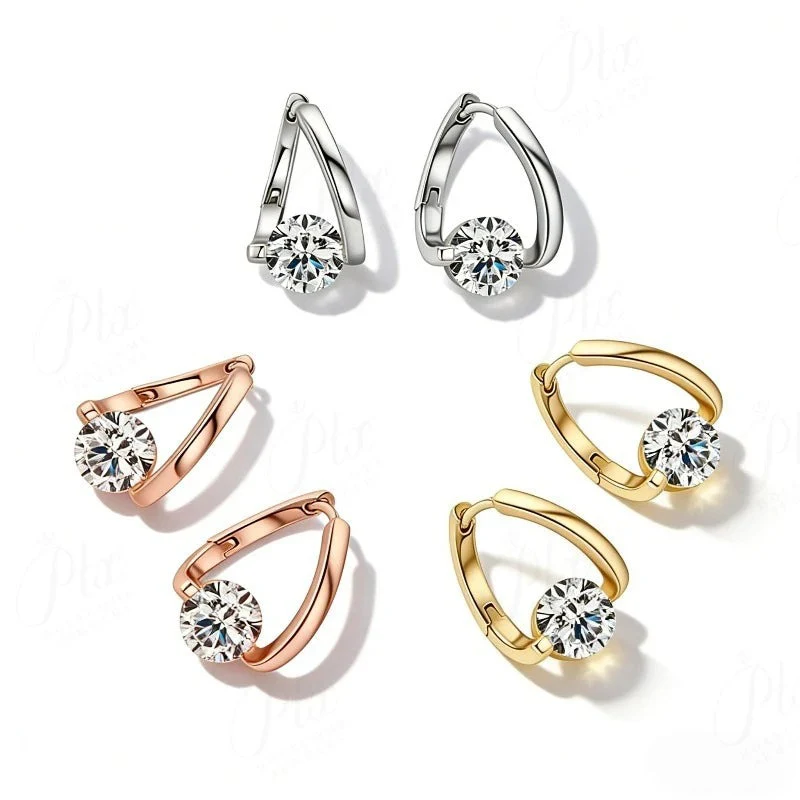
Stud posts are built in 0.8 mm round wire for stones up to 6 mm, stepping to 0.9 mm wire from 7 to 9 mm. Below 0.8 mm, the post bends under the tension of a tight earlobe and the stone tilts. We solder the post to the head with a 1.5 mm square joint, not a butt joint, because the butt joint fails at the solder seam within a year of daily wear. Weight on a pair of 8 mm studs in 14K gold runs about 1.8 grams total; in sterling silver it runs about 2.2 grams because silver needs thicker wire to match the strength.
Backs: push, clutch and screw
Push backs are the default on entry studs. They cost about USD 0.18 per pair and hold, but they slip off when the post is shorter than 6 mm. Clutch backs (two-prong friction) run USD 0.45 per pair and hold on shorter posts. Screw backs run USD 1.20 per pair and are the only back we recommend for drops above 3 grams, because the screw thread locks the earring against the earlobe. We pair screw backs with 1.0 mm posts, since the thread cuts into thinner wire. Our posts versus leverbacks guide covers the closure choice in depth.
Stone size versus ear wire proportion
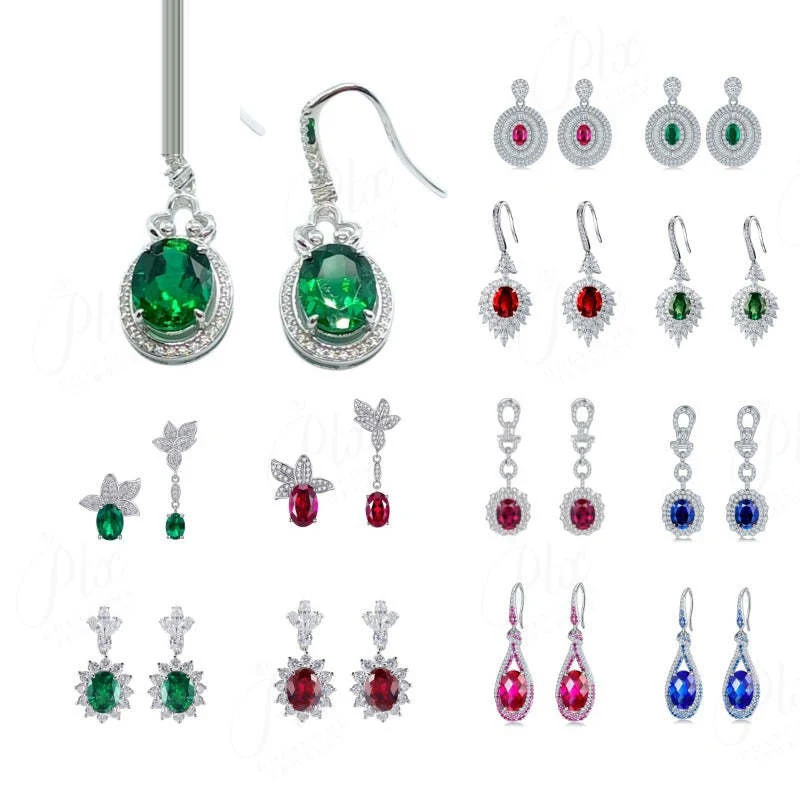
An 8 mm round moissanite on a 0.8 mm post looks top-heavy on a thin earlobe. We cap the centre stone at 7 mm on a 0.8 mm post and step up to 0.9 mm wire above that. For drops, the total drop length should not exceed 30 mm on a leverback, because longer drops swing and catch on collars. Buyers selling to office wear should default to studs; buyers selling to evening wear should default to drops under 25 mm. Our stud versus drop comparison lists the sell-through split we see by season.
Drop length and leverback safety
Leverbacks close with a hinged wire that snaps into a notch. We build them in 1.1 mm wire and file the notch at 35 degrees so the wire locks instead of resting. A leverback that opens on its own is usually a notch worn shallow, not a broken spring. We quote a safety chain on drops above 3 grams; the chain runs to USD 2.50 per pair and is the reason return rates on our drop range sit under 2 percent. Buyers should also read our earring stud and drop build notes before quoting a drop line.
Pair matching and sorting
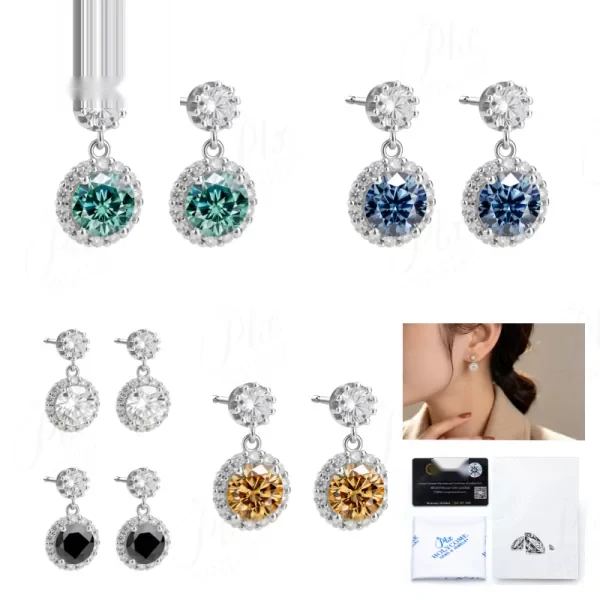
Moissanite is sorted into pairs within 0.1 mm diameter and matched for face-up color. On a pair of 6.5 mm studs, a 0.2 mm mismatch is visible when the pair is laid side by side under a loupe. We pair melee for halo earrings in matched lots and sort pairs by hand before QC. Each pair ships in a sealed bag with a matching lot number. The material itself is silicon carbide, with the refractive index and dispersion documented on Wikipedia moissanite entry; we reference it when explaining to buyers why the stone reads brighter than a diamond of the same cut.
What post gauge do you use on 6 mm studs?
0.8 mm round wire, 14K or sterling, soldered to a 1.5 mm square joint. We will not release a 6 mm stud on 0.7 mm post wire because the bend failure rate in our QC logs runs above 8 percent.
Are screw backs worth the upcharge?
On studs under 3 grams, no. On drops over 3 grams or on earrings for children and active wear, yes. The USD 1.20 per pair upgrade avoids the loss claim that follows a slipped earring.
How heavy can a drop earring be before the earlobe stretches?
Above 4 grams per side on a standard earlobe, clients report stretching after six months of daily wear. We cap drops at 3.5 grams and recommend a cuff or climber style above that weight.
Do you sort paired melee for matched color?
Yes. Halo earrings ship in matched lots within 0.1 mm diameter and a single face-up color grade. Mismatched pairs are the most common QC rejection we catch before packing.
Send us the stone size, ear wire material and the wear profile. We return a post gauge, back type and drop length recommendation on the spec sheet before CAD. Ask us to spec your next custom moissanite earring line.
Frequently Asked Questions
Is moissanite a good diamond alternative for retail buyers?
Yes for price-sensitive customers who want brilliance and hardness. Moissanite ranks 9.25 on the Mohs scale, holds up to daily wear and costs a fraction of a natural diamond of the same size, so it resells fast in bridal and fashion lines.
What is the minimum order for wholesale moissanite?
MOQ starts at 50 pieces per design for stock items. Custom cuts and private-label settings usually start at 100–300 pieces depending on the mold.
Do you provide certificates with moissanite stones?
Yes. Every parcel ships with GRA or IGI documentation listing carat weight, color grade and cut. We recommend passing the certificate to your end customer for trust.
How long does sample and bulk production take?
Samples ship in 3–5 days. Bulk runs take 15–20 days under 500 pieces, and 25–30 days for custom work.