A buyer in Sydney returned a pair of custom moissanite studs after a trade show: one earring had fallen off the stand during the day, and the friction back had come loose on the other. The stones and settings were perfect. The finding was the weak point. Friction posts are rated for light wear; a drop earring that swings on the lobe needs a locking finding, and the buyer had not been asked which earring style they were building.
Earrings fail at the finding more often than at the setting. Below are the four findings we build on custom moissanite earrings, the wire gauges behind each, and the wearer profile each one suits. We quote the finding on the intake brief, not as an afterthought.
Standard post with friction back: the everyday stud
A standard post is a straight wire, usually 0.8 mm gauge, that passes through the piercing and locks with a friction butterfly back. We build studs up to 6.5 mm in 14K gold on a 0.85 mm post; above that the post flexes and the earring tilts. Friction backs hold at roughly 1.5 to 2.5 kg of pull before releasing, which is fine for a 2 g stud but risky for a 5 g drop. We sell friction-post studs as the everyday, low-maintenance option and quote them on our stud and drop overview.
Leverback: the locking drop finding
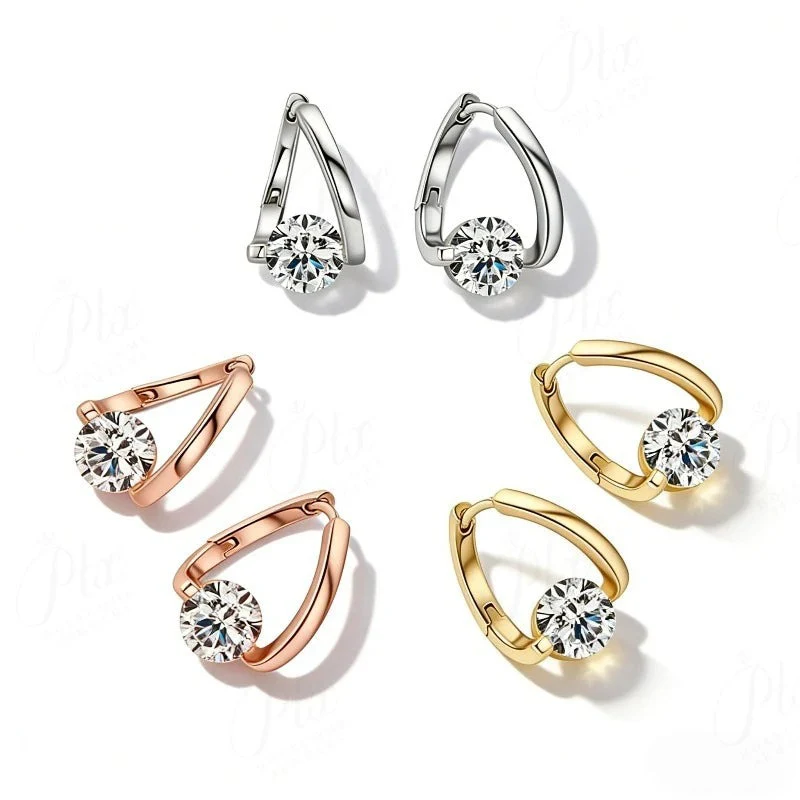
A leverback is a hinged wire that snaps shut into a hook, so the earring cannot slide off the earlobe. We build leverbacks in 1.0 mm sheet wire for drops above 3 g. The pull-out force on a closed leverback is effectively zero until the hinge is pressed open, which is why we default to leverbacks on drops, hoops and chandeliers. The trade-off is cost: a leverback finding adds about USD 4.50 per pair over a friction post, and the hinge is a wear part that should be checked every 18 months.
Fishhook and kidney wire: the lightweight option
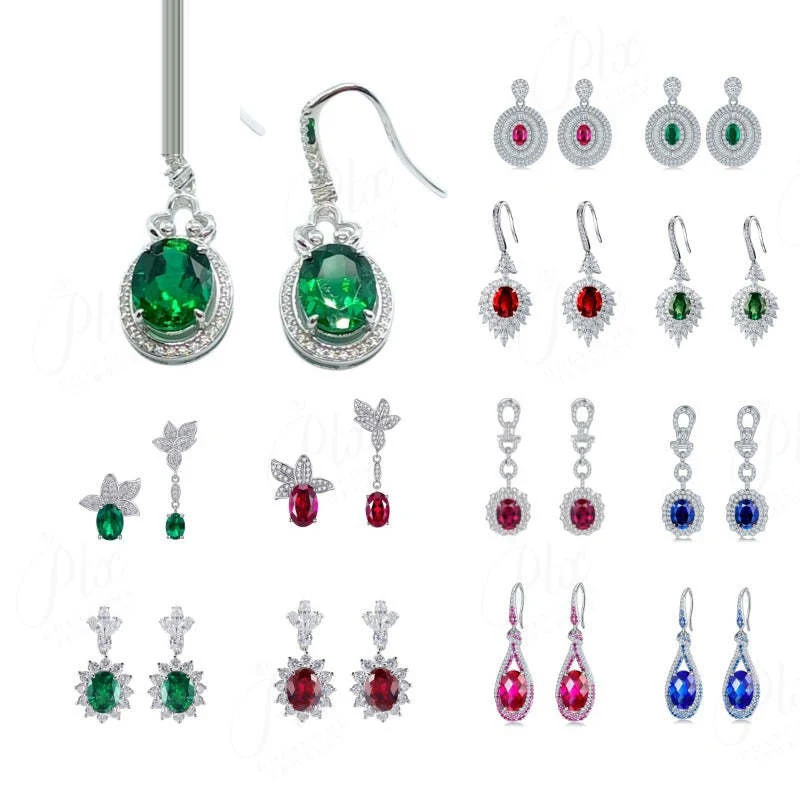
Fishhooks are curved wires that pass through the lobe and hang free; they are light, cheap and used on dainty drops under 1.5 g. Kidney wires are a closed teardrop shape that cannot slip off but read more utilitarian. We use fishhooks on dainty moissanite drops for the bridal market and kidney wires on everyday wear pairs where the buyer wants security without the leverback cost. Our stud versus drop post guide covers the weight threshold in more detail.
Ear thickness and post length
The post must extend past the back of the lobe by at least 2 mm, otherwise the butterfly back sits on the flesh and pinches. We ask buyers to specify lobe thickness on the brief: standard lobes (4 to 5 mm) get a 10 mm post; thick lobes (6 to 8 mm) get a 13 mm post. Short-post earrings are the number one warranty return on studs, because the back slides off the end of the wire.
Nickel and REACH compliance on findings
Earring posts contact broken skin, so nickel release matters. Sterling silver posts sold into the EU must meet the REACH nickel restriction, which limits nickel release to 0.5 micrograms per square centimetre per week. We spec 925 sterling posts with a nickel-free solder and 14K gold posts on EU orders; brass posts are not used on finished earring findings for our wholesale line. Buyers shipping into the EU should ask for the nickel release test report on the QC pack.
Pairing finding with stone size
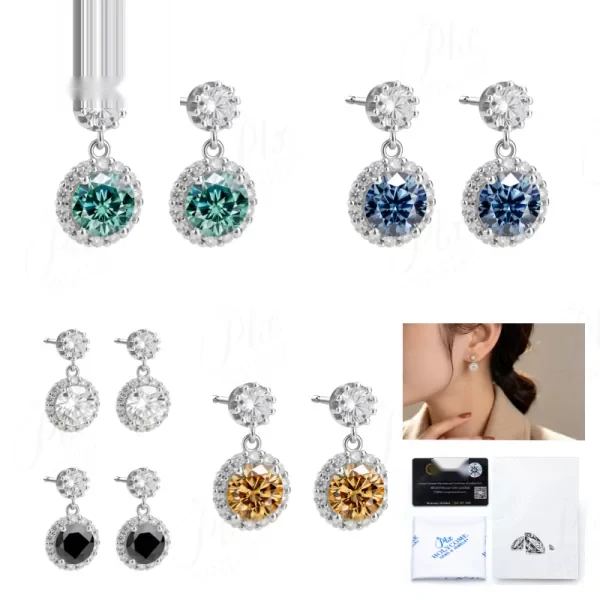
A 3 mm moissanite stud on a fishhook reads dainty and is sold as a second-hole earring; the same stone on a leverback reads as a small drop and sells at a 30 percent higher retail. The finding changes the product category, not just the hardware. We quote both finding options on the buyer's spec sheet so the buyer can price two SKUs off the same stone. Our stud and drop overview lists the same SKU split.
What finding do you recommend for a 5 g moissanite drop?
Leverback. A friction post on a 5 g drop pulls out within weeks of daily wear; the leverback hinge carries the weight on the hook, not on the earlobe hole.
Can I switch a stud from post to leverback after production?
No. The post is soldered to the setting; converting requires rebuilding the top. We lock the finding choice on the signed spec sheet before casting.
What post gauge fits a standard piercing?
0.8 mm is the universal post. Piercings stretched above 1.0 mm are quoted separately; we build to the measured gauge the buyer supplies.
Do you supply spare friction backs?
Yes. Each pair ships with two spare silicone-lined backs. Silicone-lined backs hold tighter than plain brass butterflies and reduce post wear on the lobe.
Send us the earring style (stud, drop, hoop), the finished gram weight and the destination market. We return the recommended finding, gauge and post length on the signed brief. Ask us to quote your custom moissanite earring findings.
Frequently Asked Questions
Is moissanite a good diamond alternative for retail buyers?
Yes for price-sensitive customers who want brilliance and hardness. Moissanite ranks 9.25 on the Mohs scale, holds up to daily wear and costs a fraction of a natural diamond of the same size, so it resells fast in bridal and fashion lines.
What is the minimum order for wholesale moissanite?
MOQ starts at 50 pieces per design for stock items. Custom cuts and private-label settings usually start at 100–300 pieces depending on the mold.
Do you provide certificates with moissanite stones?
Yes. Every parcel ships with GRA or IGI documentation listing carat weight, color grade and cut. We recommend passing the certificate to your end customer for trust.
How long does sample and bulk production take?
Samples ship in 3–5 days. Bulk runs take 15–20 days under 500 pieces, and 25–30 days for custom work.