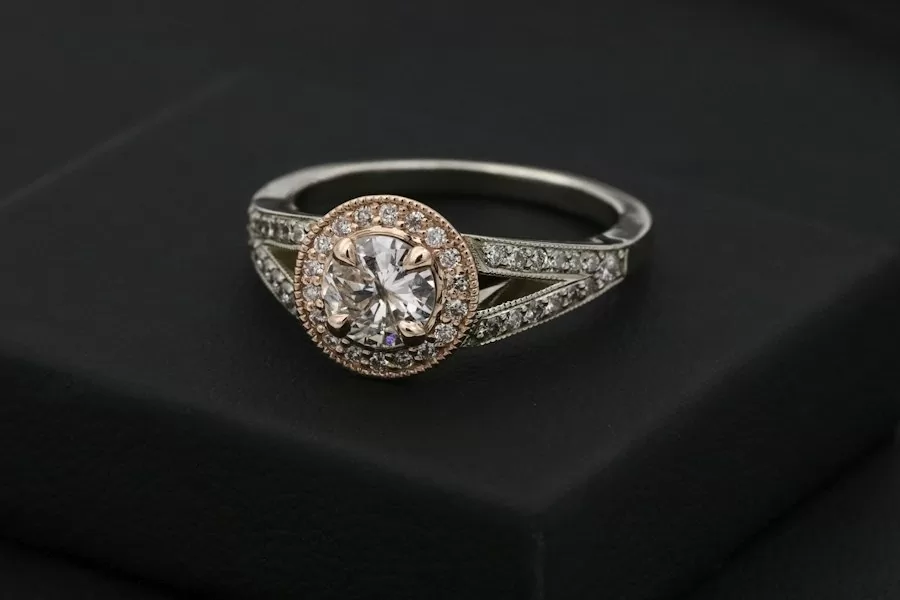
Few engagement styles carry as much romance per carat as the three-stone ring. Often called the "trinity" or "trilogy" ring, it places a larger center stone between two slightly smaller side stones, and most couples interpret the trio as a story: a shared past, a living present, and a future together. When the stones are moissanite set in 925 sterling silver, that meaning arrives at a price point that leaves room for a matching band, a nice dinner, and a deposit.
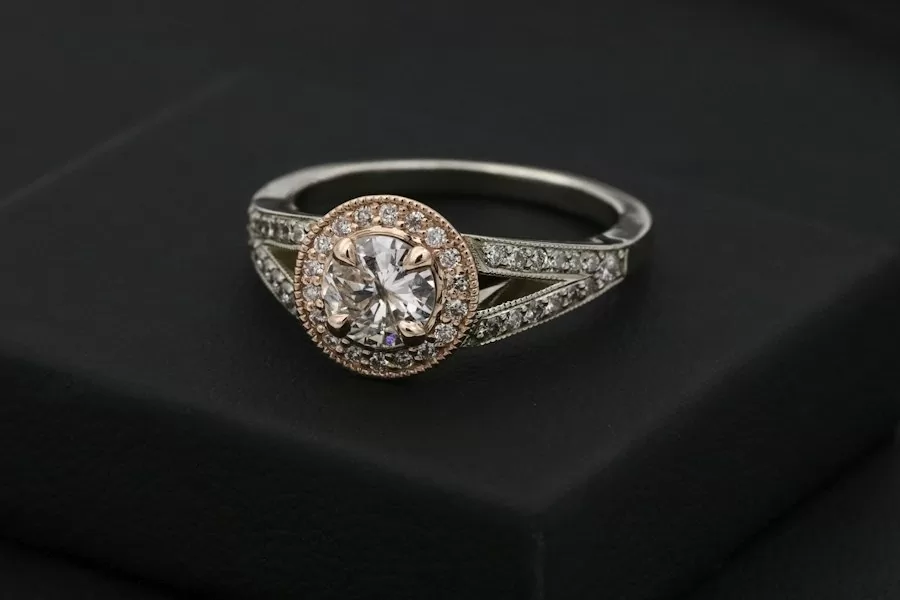
This guide walks through the symbolism, the most common settings, how to choose stone sizes, and what to expect when you shop or stock this style.
What a three-stone ring actually means
The narrative reading is the one most jewelers and customers reach for, but the design has older roots. Early multi-stone rings were a way to pack more sparkle onto a finger before solitaire marketing took over. Today the meaning is flexible. Some wear the trio as past-present-future. Others read the side stones as family members, children, or even milestones like a first home and a first trip. Because the symbolism is personal, it photographs well and sells well—customers want to explain their ring.
Popular settings for three-stone moissanite rings
- Prong trio: The center stone and each side stone are held by individual prongs. This lets light reach every stone and keeps the look open and airy. It is the most common and most affordable build.
- Halo-accented trio: Each of the three stones sits inside a micro-pavé halo. The design reads larger than its actual carat weight and suits shoppers who want maximum sparkle without paying for extra carats.
- Bezel trio: Each stone is wrapped in a thin rim of silver. Bezel settings are the most durable for active lifestyles and have a softer, more modern silhouette. See our guide to ring settings for a side-by-side of prong, bezel, and pavé.
- Tension and channel: Less common in sterling silver because softer metal does not grip stones as aggressively as platinum or gold, these builds need thicker bands and a trusted maker.
Sizing the center and side stones
A balanced trio usually uses a center stone roughly twice the diameter of each side stone in face-up appearance. For example, a 6.5 mm (about 1 carat equivalent) round center pairs naturally with 3.5 to 4 mm side stones. Going larger on the sides—above half the center width—makes the ring feel crowded and can fight the center stone for attention. Because moissanite costs far less per equivalent carat than diamond, buyers can step the center up a full size without blowing the budget. Read our breakdown of moissanite cut, color, clarity, and carat to understand what drives visible quality.
Shape pairings that work
Round center stones with round side stones are the safest, most timeless pairing. Other combinations customers love include an oval center with tapered baguette side stones for an art-deco mood, or a cushion center with pear-shaped side stones that point inward toward the finger. Mixed shapes add character, but keep the metal finish consistent—a polished center with brushed sides can read as unfinished.
Why sterling silver and moissanite fit this style
Three-stone settings use more metalwork and more stones than a solitaire, so the per-unit cost climbs fast in gold or platinum. In rhodium-plated 925 sterling silver, the same silhouette is reachable at a fraction of the price, and the bright white metal flatters moissanite's fire. For buyers comparing options, our moissanite versus diamond comparison explains the brilliance and durability differences in plain terms. Sterling silver rings do need occasional re-plating if worn daily, but that is a small trade for a ring that looks several times its price.
Choosing a band that stacks later
Think ahead to a wedding band. A three-stone ring with a flat, straight outer edge pairs cleanly with a straight wedding band. A ring with a contoured or cathedral setting may need a notched, curved band to sit flush. If you plan to stack an eternity band later, ask the maker whether the setting leaves room. Our piece on moissanite eternity bands covers that pairing in more detail.
A few buying checks
- Confirm the side stones are also moissanite, not cubic zirconia—some listings label the whole ring "moissanite" while only the center is genuine.
- Check that prongs sit flush and no stone rocks when the ring is tapped on a flat surface.
- Look for the 925 stamp and, when relevant, a GRA report for the center stone.
- Order a half size up if the three-stone style sits wider on the finger.
A three-stone moissanite ring gives couples a story they can wear every day. The design is romantic, the settings are flexible, and the silver-plus-moissanite build keeps the whole gesture affordable enough to enjoy rather than insure to the hilt.
Sterling silver terminology used in this guide follows the Wikipedia entry on sterling silver.
Frequently Asked Questions
Is moissanite a good diamond alternative for retail buyers?
Yes for price-sensitive customers who want brilliance and hardness. Moissanite ranks 9.25 on the Mohs scale, holds up to daily wear and costs a fraction of a natural diamond of the same size, so it resells fast in bridal and fashion lines.
What is the minimum order for wholesale moissanite?
MOQ starts at 50 pieces per design for stock items. Custom cuts and private-label settings usually start at 100–300 pieces depending on the mold.
Do you provide certificates with moissanite stones?
Yes. Every parcel ships with GRA or IGI documentation listing carat weight, color grade and cut. We recommend passing the certificate to your end customer for trust.
How long does sample and bulk production take?
Samples ship in 3–5 days. Bulk runs take 15–20 days under 500 pieces, and 25–30 days for custom work.