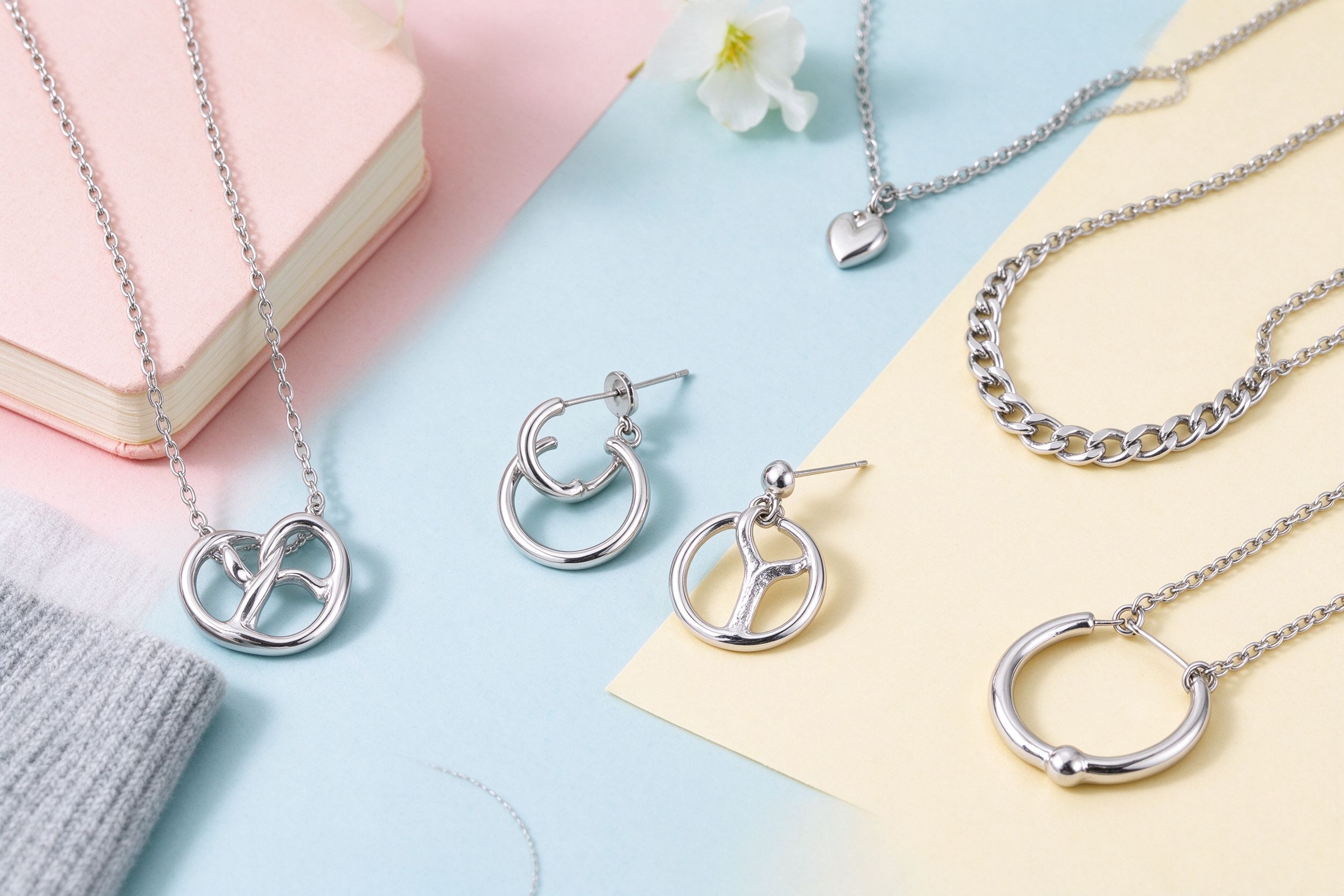
Moissanite has gone from a niche science curiosity to one of the fastest-growing stones in fashion jewelry. If you are deciding whether to stock moissanite, diamond, or both, this guide breaks down the real differences your customers care about.
Appearance and brilliance
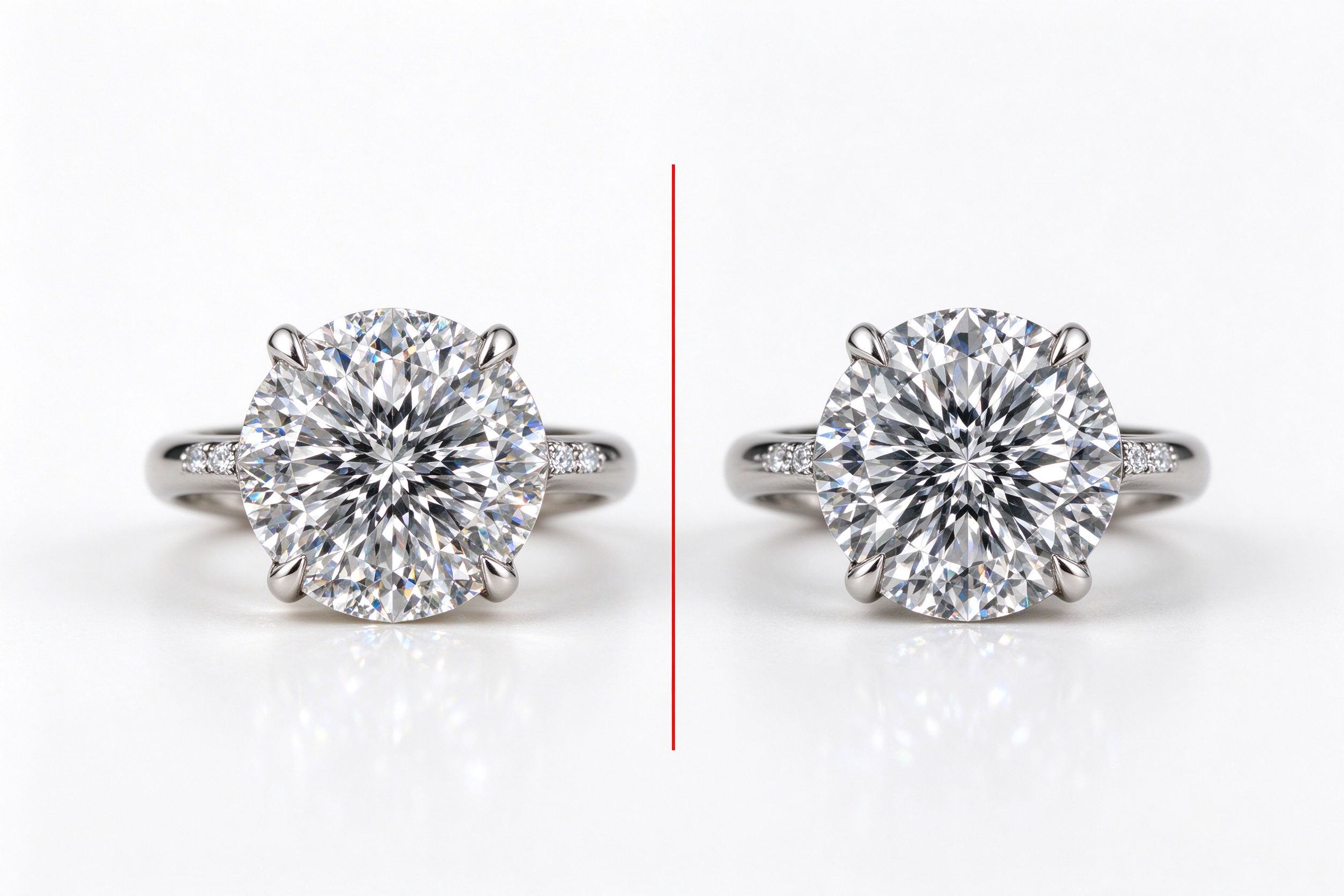
Moissanite actually has a higher refractive index than diamond, meaning it can refract even more colorful light. A well-cut D-color VVS1 moissanite looks brilliant, fiery and nearly indistinguishable from a diamond to the naked eye. Many pieces even pass diamond testers, which is a major selling point for gift buyers.
Hardness and durability
Diamond scores 10 on the Mohs scale. Moissanite scores 9.25, close behind, and far harder than cubic zirconia at 8.5. For everyday wear rings, moissanite holds its polish and brilliance for years, making it practical for daily-use fashion jewelry.
Price and margin
A one-carat natural diamond costs thousands of dollars. A GRA-certified one-carat moissanite on 925 silver wholesales for roughly $12 to $20. That gap lets you price retail pieces at $60 to $120, where customers feel they are getting a premium product at an accessible price. Moissanite is one of the highest-margin categories in modern jewelry retail.
Certificate and trust
Every Holycome moissanite piece includes a GRA certificate listing color, clarity and carat. That certificate builds trust at the point of sale and supports your return policy. Natural diamonds come with grading reports, but at a price point most boutique customers cannot afford.
Our recommendation
Stock a curated moissanite line for bridal, gifting and statement shoppers, and pair it with simpler 925 silver basics for everyday turnover. At Holycome, MOQ is only 5 pieces per design, so you can test moissanite rings, earrings and necklaces without overcommitting. Ask for our GRA certificate samples and see the quality yourself.