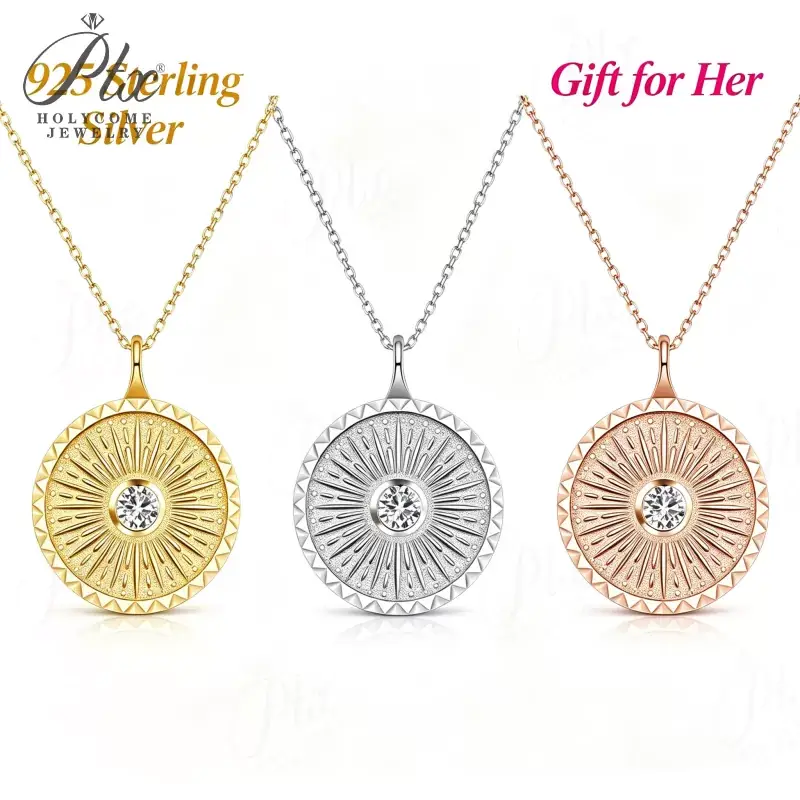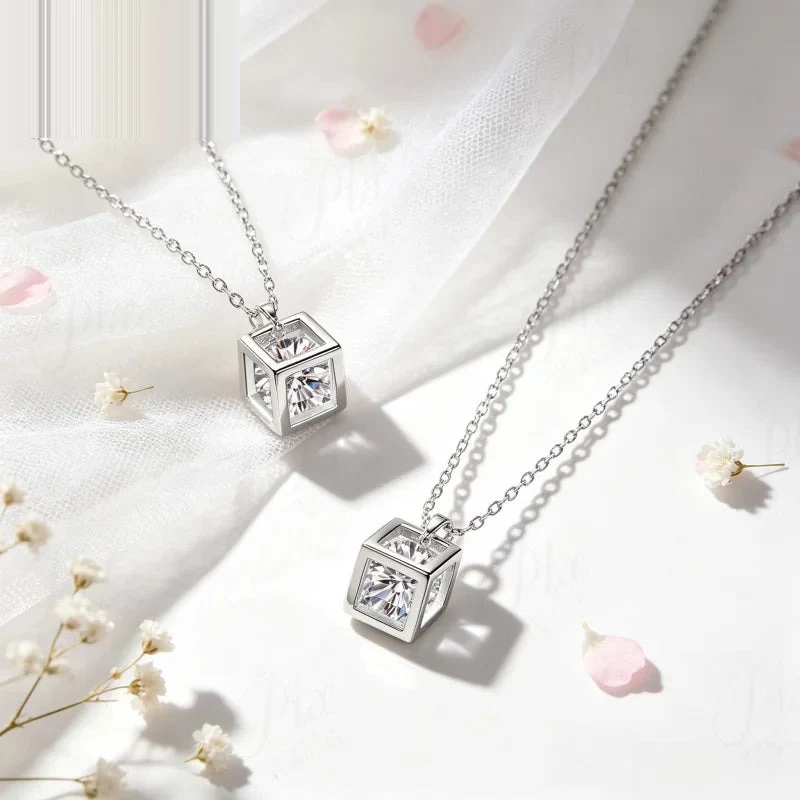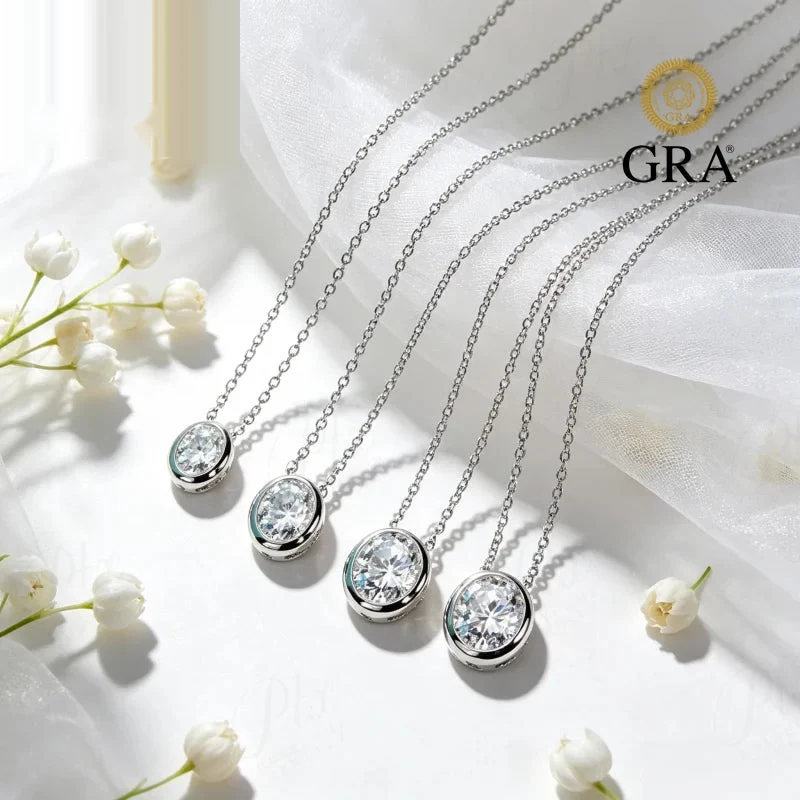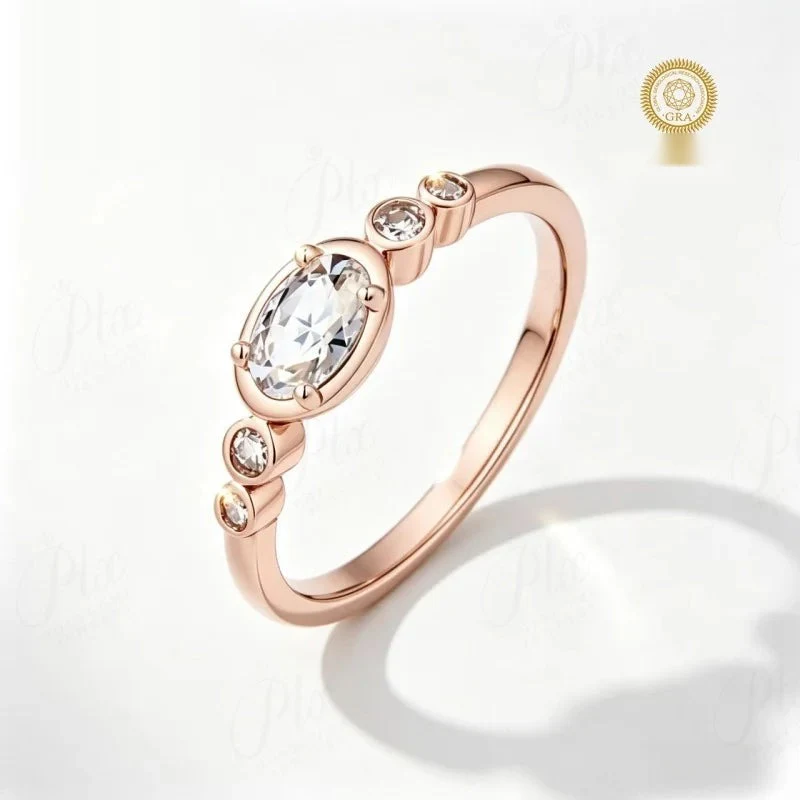
A jeweler in Kyoto asked us to design a pair of matching wedding bands: a 2.5 mm band for her set with a 4.0 mm moissanite, and a 5.0 mm band for him with the same stone in a flush bezel. The design brief was "they should not look like a matching set, but they should be obviously a matching set." That is the paradox every couple-jewelry commission has to solve. This article lays out the design levers we use to make two pieces feel related without looking identical.
The shared design vocabulary
Matching couple jewelry works when the two pieces share one or two design elements and differ on the rest. The most common shared element is the metal: both rings in 14K yellow gold, or both in rhodium-plated white. The second is the stone: a 4.0 mm moissanite in her ring and a 4.0 mm moissanite flush-set in his band, so the same stone appears at two scales. The third is an inside-band engraving: the same date or coordinates on both. We avoid making both pieces identical width, because identical-width bands read as a "his and hers" set rather than a couple's set.
Stone size and shape for couple pieces
For rings, the most common split is a 5.0 to 6.5 mm center on her piece and a 3.0 to 4.0 mm flush stone on his. The shape usually matches: both round, or both oval. For pendants, the matching split is a 7x5 mm oval on her chain and a 6.0 mm round on a 50 cm men's chain. For earrings, a matching set is usually her studs at 6.5 mm and his cufflinks at 8.0 mm with the same stone. See our shape guide for the mm-to-carat equivalents on each size.
Setting choices that pair well
Her piece in a prong solitaire and his piece in a bezel is the classic pair: the prong reads as the more formal, more sparkly piece; the bezel reads as the more durable, more everyday piece. This split also lets her wear an engagement-style ring and him wear a wedding band that will survive a workshop. We avoid both pieces in prong settings, because two prong-set wedding rings look like a matched jewelry-store set rather than a designed pair.
Engraving and the hidden line
The most requested couple detail is a shared engraving: the wedding date on both, or a set of coordinates, or two halves of a phrase that only the pair can read. We put the same line on both inside bands at the same character count. The hidden-engraving trend (a tiny mark under the head that only the couple knows about) is a $45 add-on and is usually done on the woman's piece, with a matching tiny mark on the inside of the man's band. See our engraving options for the character limits.
Pricing and production for a pair
A pair of custom rings costs roughly 1.7x the price of a single ring, not 2x, because the CAD setup and the casting flask are shared. The two rings go through the same casting cycle, the same polishing run and the same plating bath. Lead time for a pair is the same as for a single custom ring: 21 to 25 working days, because the pieces are produced in parallel. Buyers who sell couple sets typically price the pair at 1.8 to 2.0x the single ring, which leaves a healthy margin. The broader history of matching wedding bands is summarized on the wedding ring reference, but the modern commercial split between a sparklier her-piece and a more durable his-piece is a custom-design choice rather than a tradition.
Do you make couple pendants and earrings as well as rings?
Yes. The same design vocabulary applies: shared metal, shared stone, one shared engraving. We have shipped couple pendant sets and couple earring-cufflink sets in the last 12 months.
Can the two pieces use different metals?
Yes, but we recommend keeping one shared element (the stone or the engraving) so the pair still reads as related. Two different metals with no shared detail looks like two unrelated rings that happen to be worn together.
How far in advance should a couple order?
4 to 5 weeks before the wedding. That leaves a buffer for one CAD revision and one sizing adjustment. Rush at a 30% surcharge compresses to 2 to 3 weeks.
Do you ship the two pieces separately?
We can ship them together in one box or separately to two addresses, at the buyer's preference. Both pieces ship with their own certificate and QC photo pack.
Can a couple set be resized later?
Yes, both pieces can be resized within one full size. Resizing requires re-engraving and re-plating, so it is a 5 to 7 day job. The QC checklist runs again after resize.
Send us the two finger sizes, the metal and the shared element you want (stone, engraving or both). We will return a paired CAD render within three working days. Design your couple set.
Frequently Asked Questions
Is moissanite a good diamond alternative for retail buyers?
Yes for price-sensitive customers who want brilliance and hardness. Moissanite ranks 9.25 on the Mohs scale, holds up to daily wear and costs a fraction of a natural diamond of the same size, so it resells fast in bridal and fashion lines.
What is the minimum order for wholesale moissanite?
MOQ starts at 50 pieces per design for stock items. Custom cuts and private-label settings usually start at 100–300 pieces depending on the mold.
Do you provide certificates with moissanite stones?
Yes. Every parcel ships with GRA or IGI documentation listing carat weight, color grade and cut. We recommend passing the certificate to your end customer for trust.
How long does sample and bulk production take?
Samples ship in 3–5 days. Bulk runs take 15–20 days under 500 pieces, and 25–30 days for custom work.