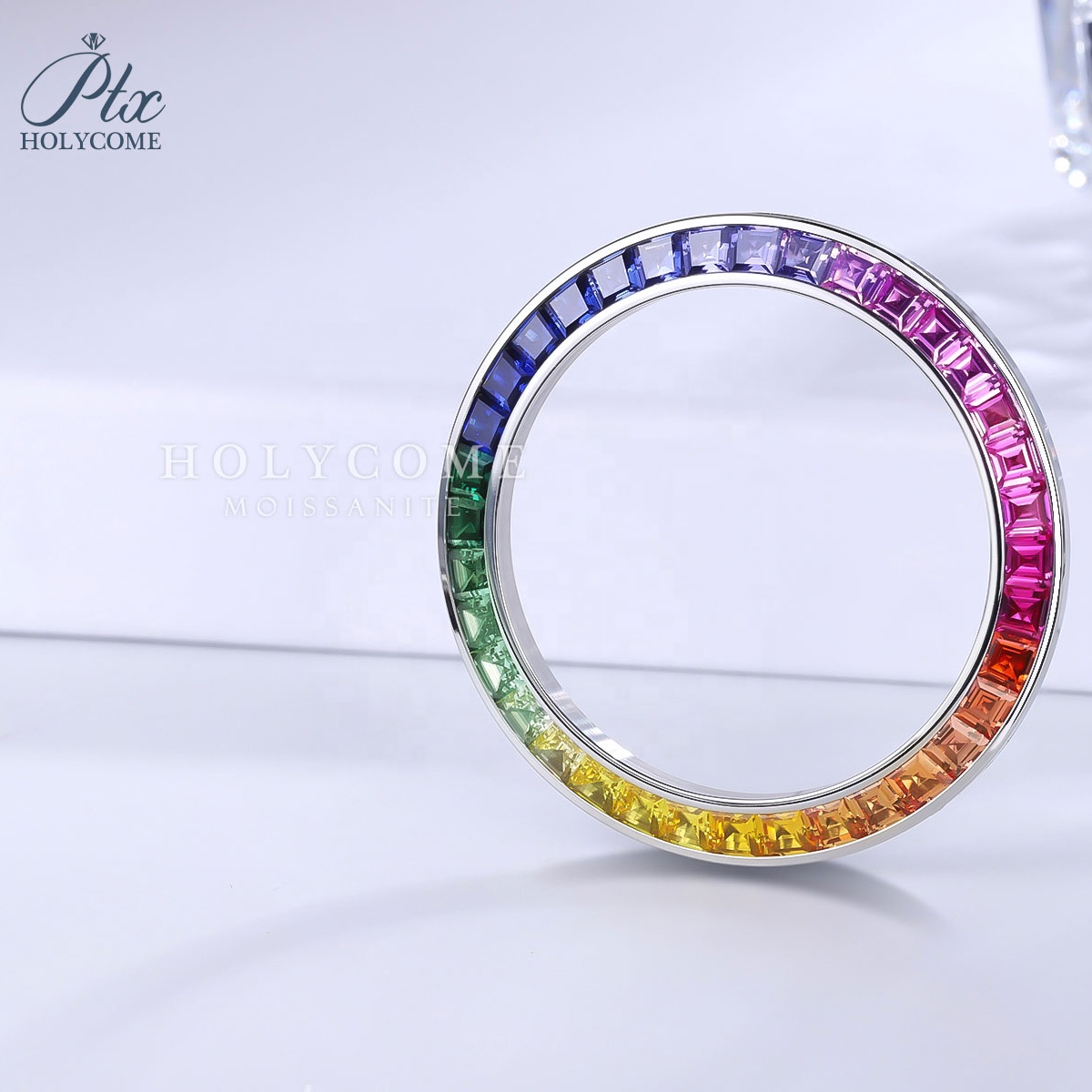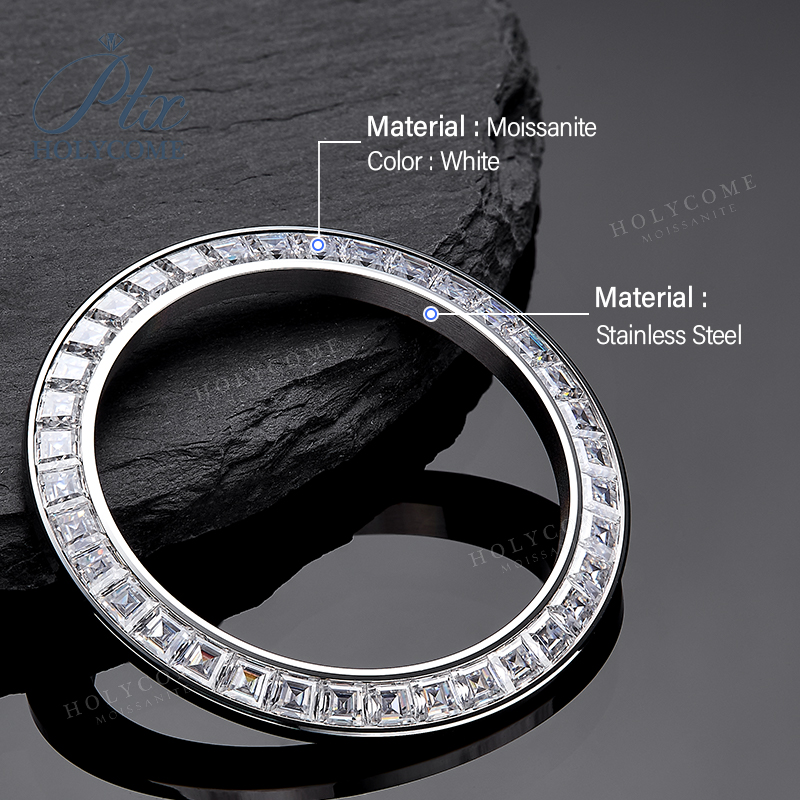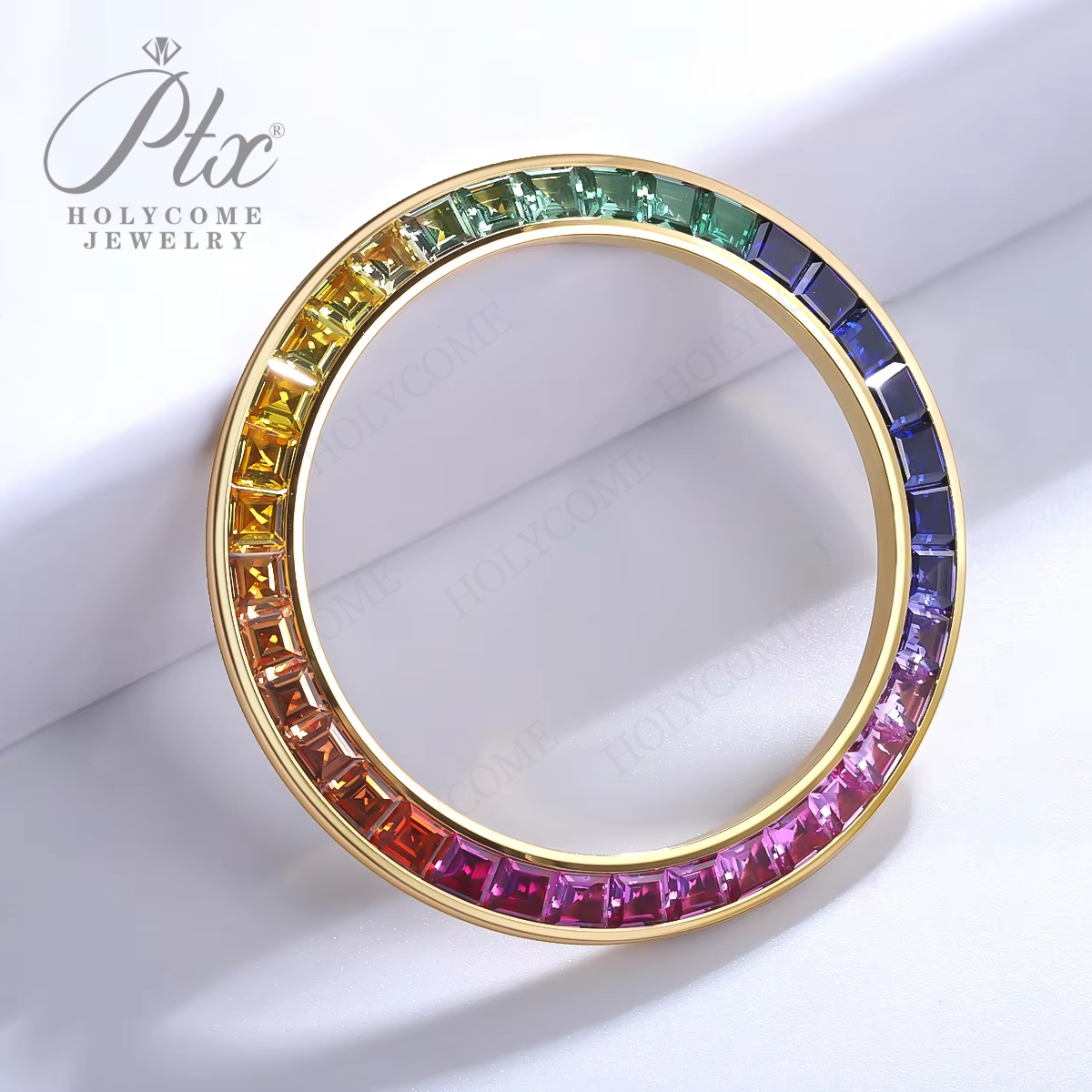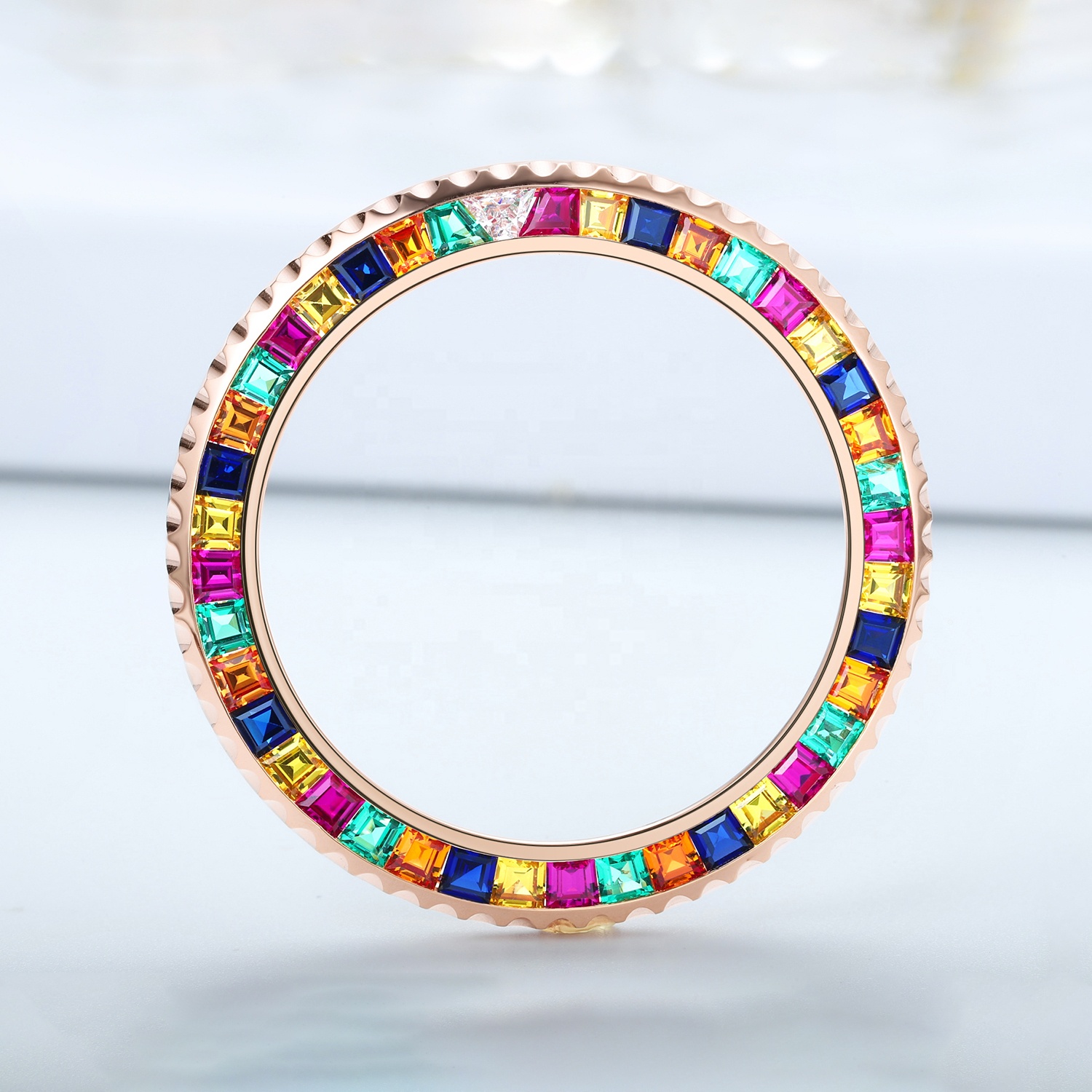
A buyer in Brisbane called us after a customer returned a ring because the prong caught on sweaters. The stone was fine. The setting was the problem: four sharp cathedral prongs on a stone that the client wore daily to an office job. Prong and bezel are not aesthetic alternatives; they are wear-pattern alternatives. Choosing between them is the single most consequential setting decision on a custom moissanite order, and it should be made before CAD is locked, not after. This article compares the two on light return, durability, maintenance and cost.
Prong setting: light return at the cost of catch risk
A prong setting lifts the stone off the seat and lets light enter through the pavilion from every side. On a moissanite with a refractive index of 2.65 to 2.69, that open light path is where the dispersion flashes come from. A well-set six-prong round shows nearly 100% of the stone's face up. The tradeoff is that prongs catch on fabric, hair and food; a thin prong can bend if the ring takes a knock. We use six prongs on stones above 7 mm and four prongs below. Prong tips are rounded to a 0.4 mm radius after setting so they do not shear. For the optical baseline we reference GIA's treatment of cut and light return.
Bezel setting: protection at the cost of light
A bezel wraps a continuous wall of metal around the girdle. The stone cannot fall out, prongs cannot catch, and the ring can be worn in a gym or a workshop. The tradeoff is that the wall blocks 15 to 25% of the pavilion and reduces the flash a moissanite is known for. Bezel is the right choice for a ring that is worn daily without removal, for men's bands, and for couple rings where one partner works with their hands. We set the bezel wall at 0.8 to 1.0 mm thick; thinner walls distort under burnishing and leave a gap.
The compromise: half-bezel and pavé shoulders
Most custom orders land between the two. A half-bezel (a U-shaped wall across the front and open on the sides) protects the most vulnerable corners on oval, pear and marquise stones while keeping the sides open for light. A pavé shoulder adds side stones that distract from the prong count. We recommend half-bezel on any fancy shape above 8 mm, because fancy-shape corners chip more readily than round girdles.
Cost and timing comparison
Setting labor for a six-prong solitaire is about 45 minutes on the bench. A full bezel takes 60 to 75 minutes because the wall has to be raised, burnished and polished without dragging on the stone. The per-piece setting cost difference is about $15 to $25. For a pair of earrings, the bezel saving in return-rates usually justifies the higher setting cost, because earrings are knocked more often than rings.
Maintenance and return rates
We track returned pieces by setting type. Prong-set pieces come back for prong re-tipping at about 3% per year. Bezel-set pieces come back for polishing only, at under 1% per year. The tradeoff in retail terms is that a prong-set piece sells at a higher margin (customers perceive more sparkle) but needs a free service every 18 to 24 months. Bezel-set pieces sell at a slightly lower margin and need almost no service. For a retail buyer deciding between the two, the prong version moves faster at full margin but carries a quiet after-sales cost; the bezel version sells a touch slower but almost never comes back to the bench.
Which setting is more secure for daily wear?
Bezel. A bezel cannot catch on fabric and cannot bend open. A prong can loosen over years of knocks and eventually lose a stone.
Which setting makes the moissanite look biggest?
Prong. The open seat lets the eye read the full outline of the stone. A bezel covers the girdle and visually subtracts about 0.2 mm from the face-up size.
Can I convert a prong setting to a bezel later?
Not on the same head. A prong head has prongs machined into it; a bezel head is a solid wall. Conversion means recasting the head and re-setting the stone, which costs as much as a new setting.
How often should prongs be checked?
Every 12 to 18 months. A prong that is bent 0.2 mm will still hold the stone; a prong that is bent 0.5 mm will not. We include a free prong check at any of our partner retail stores worldwide.
Do you recommend prongs or bezel for pendants?
Prong for pendants under 3 grams, where light return is the selling point. Bezel for pendants that are worn daily and might catch on collars. See the pendant guide for bail sizing.
Send us the stone shape, the wearer's daily activity and the preferred look. We will recommend prong, half-bezel or full-bezel in your CAD render. Request a setting consultation.
Frequently Asked Questions
Is moissanite a good diamond alternative for retail buyers?
Yes for price-sensitive customers who want brilliance and hardness. Moissanite ranks 9.25 on the Mohs scale, holds up to daily wear and costs a fraction of a natural diamond of the same size, so it resells fast in bridal and fashion lines.
What is the minimum order for wholesale moissanite?
MOQ starts at 50 pieces per design for stock items. Custom cuts and private-label settings usually start at 100–300 pieces depending on the mold.
Do you provide certificates with moissanite stones?
Yes. Every parcel ships with GRA or IGI documentation listing carat weight, color grade and cut. We recommend passing the certificate to your end customer for trust.
How long does sample and bulk production take?
Samples ship in 3–5 days. Bulk runs take 15–20 days under 500 pieces, and 25–30 days for custom work.