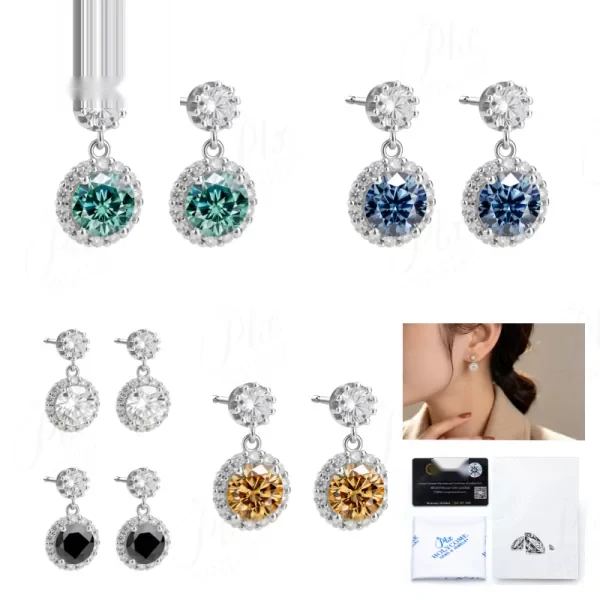
A pair of moissanite stud earrings is usually the second stone jewelry piece a buyer owns, after an engagement ring or a pendant. It is also the easiest place to go wrong on size. Too small and the stones vanish against the ear. Too large and the look shifts from everyday to evening in a way the buyer did not plan. Choosing the right stud size is mostly about matching the stone to the face, the neckline and the occasion the earrings are actually for.
The everyday size range
Three to four millimeters, roughly a quarter carat total weight, is the everyday stud. It is the size that sits on the earlobe without dominating it, works with a work wardrobe, and stays comfortable for long wear. This is the size most people reach for when they want "diamond-like" studs they never take off. It is also the best first moissanite purchase because the price stays gentle and the wear is daily.
Five to six millimeters, around half a carat per stone, is the classic upgrade. This is the size that reads as jewelry rather than accessory, that catches light under office fluorescents, and that feels like a deliberate purchase. It is the sweet spot for gifts, anniversaries, and buyers who want one pair they can dress up or down.
The statement and evening range
Seven millimeters and up, one carat per stone or more, is the statement size. These studs read as evening pieces. They photograph beautifully, sparkle under event lighting, and pair naturally with an updo so the stone is not hidden by hair. This size is not the daily driver for most people, but it is the size that turns a simple black dress into a look. If a buyer wants one pair that does it all, the five-to-six millimeter range lands closer than the larger size.
Match the size to the face and ear
Proportion is the hidden factor. A small earlobe on a slim face carries a four-millimeter stud elegantly, while the same stone looks lost on a broader face. A larger earlobe can comfortably take a six or seven millimeter stone without it overwhelming the shape. The rule of thumb is that the stud should feel balanced against the ear, not sit on top of it. When in doubt, size up half a millimeter rather than down, because smaller studs are the ones people end up never wearing.
This is the same proportion thinking that guides hoop size choice: the piece should relate to the frame, not compete with it.
Setting and metal choices
For studs, a four-prong or basket setting shows the most stone and keeps the ear close to the lobe, while a bezel setting gives a smoother, more modern outline and protects the edge of the stone. Sterling silver with rhodium plating gives the bright white look that makes moissanite sing, and it stays hypoallergenic for sensitive ears. Push-back posts are standard, but for larger sizes a screw-back adds security and prevents the earring from drooping over a long day.
Because moissanite's fire is part of the appeal, buyers comparing stones should understand the color, clarity and cut basics so they know why one pair looks brighter than another at the same size.
Styling and buying advice
Smaller studs layer beautifully with cuffs, climbers and huggies in the same ear. Larger studs are usually the only earring in a curated ear, letting the stone carry the look. For a first pair, most buyers are happiest at five millimeters: big enough to notice, small enough to wear to meetings. For a gift where the wearer already owns basics, the upgrade to six or seven millimeters is what feels special.
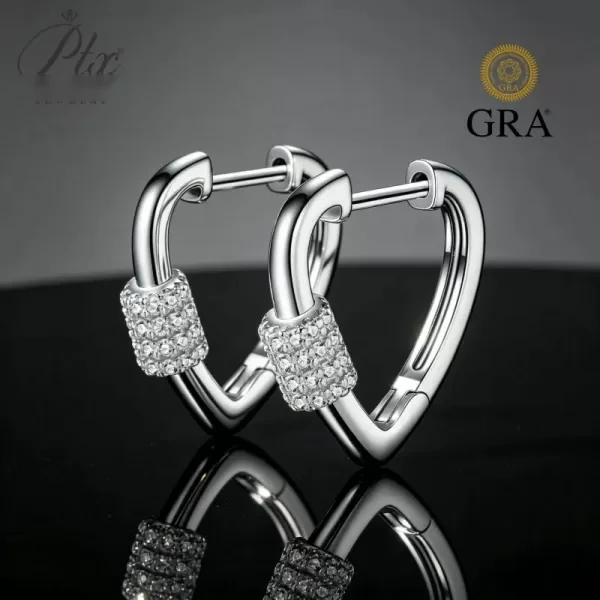
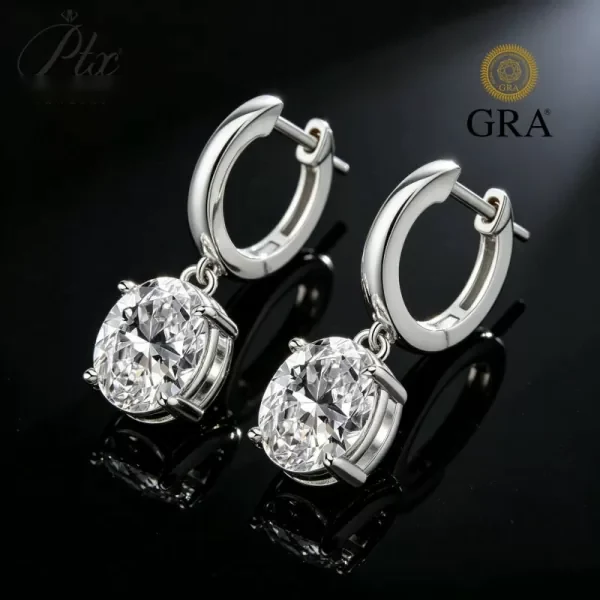
Check the rest of the range in our moissanite silver earrings styles guide to compare studs with drops and hoops.
Caring for studs so they stay bright
Studs spend every day against skin and hair products, so a quick habit keeps them bright longer. Wipe the front and the post with a soft cloth after wearing, and keep the backs fastened so the pair does not scratch against other jewelry. Because the setting is small, avoid spraying perfume or hairspray directly over the ears, since residue builds up around the prongs. Stored in a small pouch rather than loose in a drawer, a pair of moissanite studs stays bright and ready for years of daily wear.
Stud size is the decision that determines whether moissanite earrings get worn every day or sit in a box. Match the carat to the ear, the setting to the occasion, and the metal to everyday comfort, and the pair will be the most reached-for piece in the jewelry box.
For third-party reference, the Wikipedia article on moissanite details moissanite’s discovery, optical properties and use in jewellery.
Related reading: Moissanite Stud Earrings Size Guide: What Carat Looks Best in Silver, Halo vs Solitaire Moissanite Engagement Rings: Which Should You Choose, Moissanite vs Lab-Grown Diamonds: Which Should You Stock?.
Frequently Asked Questions
Is moissanite a good diamond alternative for retail buyers?
Yes for price-sensitive customers who want brilliance and hardness. Moissanite ranks 9.25 on the Mohs scale, holds up to daily wear and costs a fraction of a natural diamond of the same size, so it resells fast in bridal and fashion lines.
What is the minimum order for wholesale moissanite?
MOQ starts at 50 pieces per design for stock items. Custom cuts and private-label settings usually start at 100–300 pieces depending on the mold.
Do you provide certificates with moissanite stones?
Yes. Every parcel ships with GRA or IGI documentation listing carat weight, color grade and cut. We recommend passing the certificate to your end customer for trust.
How long does sample and bulk production take?
Samples ship in 3–5 days. Bulk runs take 15–20 days under 500 pieces, and 25–30 days for custom work.