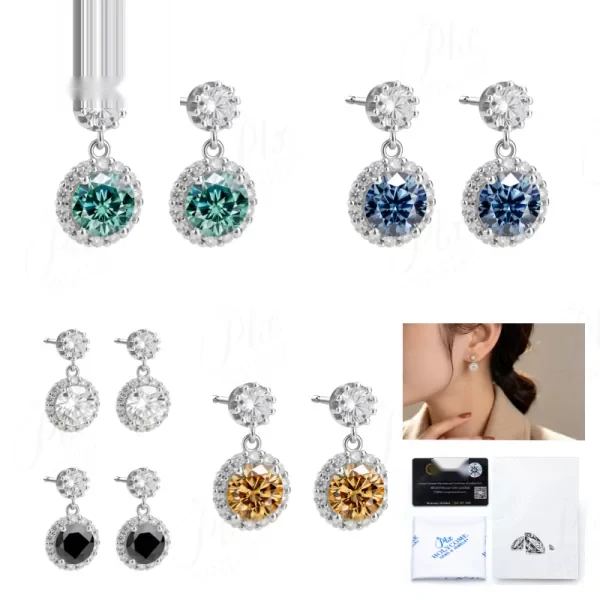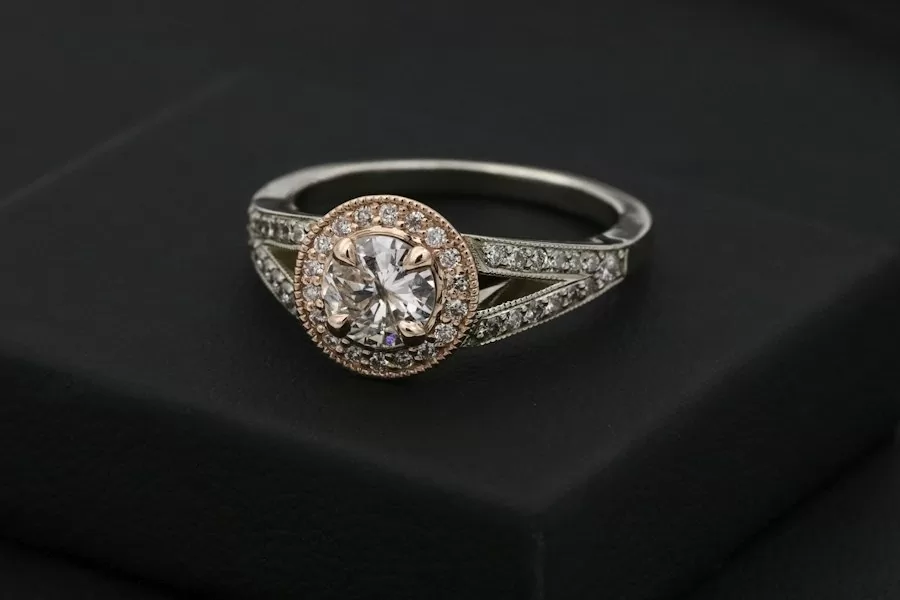
When a shopper walks in asking for something that looks bigger and brighter, they are usually describing a halo. The halo setting places a center stone inside a paved or beaded frame of smaller stones, and the effect is both optical and emotional. The surrounding light hits the eye first, making the center moissanite read larger than its actual carat weight. For couples working with a realistic budget, that is the whole appeal.
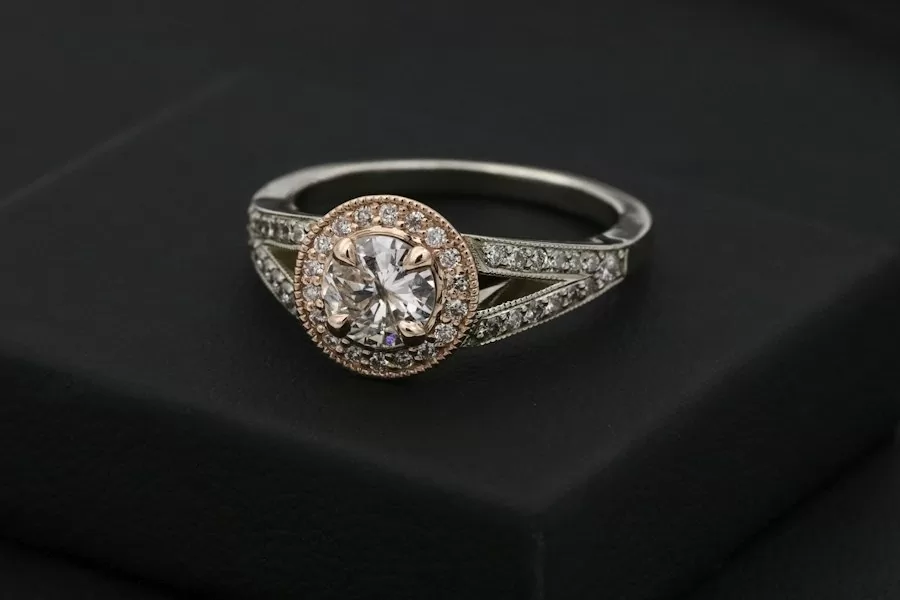
Moissanite and the halo setting were practically made for each other. Moissanite already disperses more light than a diamond, meaning it throws more rainbow color, or fire, as it moves. Add a ring of smaller moissanite stones around the center and the flash multiplies. The result reads as a high-end designer piece at a price point a young couple can actually afford.
What a halo actually does to perceived size
A one-carat center stone surrounded by a halo of melee often looks like a 1.5 to 2 carat stone from across the room. That is not a trick on the buyer; it is geometry. The halo extends the total face-up diameter of the ring, so the silhouette on the finger is broader. Many couples tell us they chose a smaller center stone with a halo rather than a larger bare stone because the halo simply photographs better.
If you are retailing these rings, that perception matters. Engagement ring buyers share photos constantly, and a halo reads beautifully in close-ups. The center stone stays the hero, but the halo gives the camera something to grab onto.
Why 925 sterling silver is the practical halo base
Halo settings use a lot of tiny stones, which means a lot of tiny prongs. Sterling silver is soft enough for a jeweler to set those small stones cleanly and hard enough, when properly finished and rhodium-plated, to hold up to daily wear. A rhodium flash over 925 silver gives the bright white look of platinum without the cost, and it keeps the small melee stones looking uniform and brilliant.
We cover this plating detail elsewhere on the site, and it is worth understanding before you commit: rhodium plating on sterling silver is what keeps a white halo looking fresh. Over time the rhodium wears thin on high-contact edges, but a quick replate restores it. Compare the center stone options before you order by reading moissanite color, clarity, cut, and carat guidance.
The three halo styles your inventory should cover
- Classic round halo with a round center and a single concentric ring of melee. This is the safe, high-volume seller and the first SKU any bridal buyer should stock.
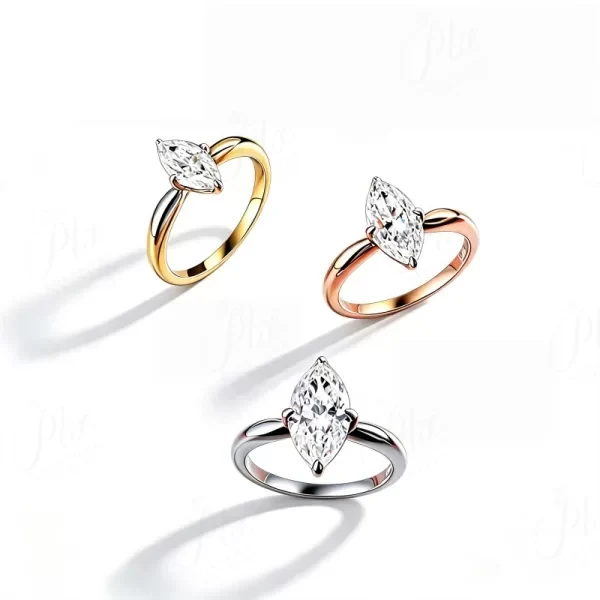
- Cushion or oval halo that follows the center shape. Ovals in particular elongate the finger and photograph extremely well, which is why they have dominated bridal feeds for several seasons.
- Hidden halo, where the stones sit just under the center rather than fully around it. This reads as a solitaire until the light catches it, and it appeals to minimalist brides who still want extra sparkle.
Price positioning that protects your margin
Because moissanite halo rings use multiple stones, the production cost is higher than a single solitaire. Resellers often make the mistake of pricing them only slightly above solitaires and leaving money on the table. The halo is a feature buyers perceive as luxury, so price it as a step up. A halo ring should carry a meaningfully higher price than a comparable solitaire, and most customers accept that because they can see exactly where the sparkle comes from.
Pairing the ring with a matching band is the easiest upsell we know. Read our notes on moissanite eternity bands in silver to build a bridal set that lifts average order value without extra marketing spend.
Setting durability and the honest caveat
The one honest thing to tell every customer is that more small stones mean more surfaces to snag. A halo with fine prongs is not the ring for someone who works with their hands daily. Suggest a bezel-set or hidden-halo design for active lifestyles, and a full pavé halo for someone who wants the look and accepts light wear care. Setting expectations up front reduces returns and builds trust.
Care is simple: rinse the ring in warm soapy water, gently brush under the stones where lotion collects, and store it away from other pieces. Clean rings sparkle; dull, soapy halos do not. Treat the halo as an upgrade that rewards a little attention, and it will serve both the customer and your store reputation for years.
Ring width and halo proportion
A halo can look heavy on a narrow finger, so match the halo diameter to the hand. Slim, delicate halos suit slender fingers; wider, more substantial halos balance broader hands. The band under the halo should not be too thin either, because it visually anchors the whole piece. When customers ask what will fit their hand, walk them through band width and proportion before they order, and check our notes on ring band width and finger proportions. Getting proportion right means the ring feels designed, not like a halo floating on a thin wire.
Sterling silver terminology used in this guide follows the Wikipedia entry on sterling silver.
Related reading: Moissanite Halo Engagement Rings in Sterling Silver: A Buying Guide, Halo vs Solitaire Moissanite Engagement Rings: Which Should You Choose, Moissanite Engagement Ring Cost: Cut, Setting and Budget Checklist.
Frequently Asked Questions
Is moissanite a good diamond alternative for retail buyers?
Yes for price-sensitive customers who want brilliance and hardness. Moissanite ranks 9.25 on the Mohs scale, holds up to daily wear and costs a fraction of a natural diamond of the same size, so it resells fast in bridal and fashion lines.
What is the minimum order for wholesale moissanite?
MOQ starts at 50 pieces per design for stock items. Custom cuts and private-label settings usually start at 100–300 pieces depending on the mold.
Do you provide certificates with moissanite stones?
Yes. Every parcel ships with GRA or IGI documentation listing carat weight, color grade and cut. We recommend passing the certificate to your end customer for trust.
How long does sample and bulk production take?
Samples ship in 3–5 days. Bulk runs take 15–20 days under 500 pieces, and 25–30 days for custom work.