A buyer in Toronto told us a 50-piece custom moissanite order arrived with two stones missing and one clasp cracked. The courier declared the parcel as low-value costume jewellery, so the insurance paid out at USD 50, against an order value of USD 2,400. The stones were moissanite, not diamond, but the customer's cost to replace them was real. The parcel had been under-declared on the way out, and the buyer had not checked the paperwork before the box left our factory.
Below is the paperwork and the insurance pack we build for every custom moissanite order, so the buyer is covered from our door to their shelf.
Declared value: match the invoice, not the customs form
We ship every parcel with a commercial invoice that states the factory value per piece and the total order value. The courier's declared value on the waybill must match the invoice. Under-declaring to save on shipping is the most common reason a claim is denied. We ship by express courier (DHL, FedEx) with full insurance at the declared value. The insurance premium is roughly 0.6 percent of declared value on jewellery shipments, and we pass it through at cost. Our QC checklist lists the same invoice-to-waybill matching step before the box is sealed.
The lab report: every centre stone, every parcel
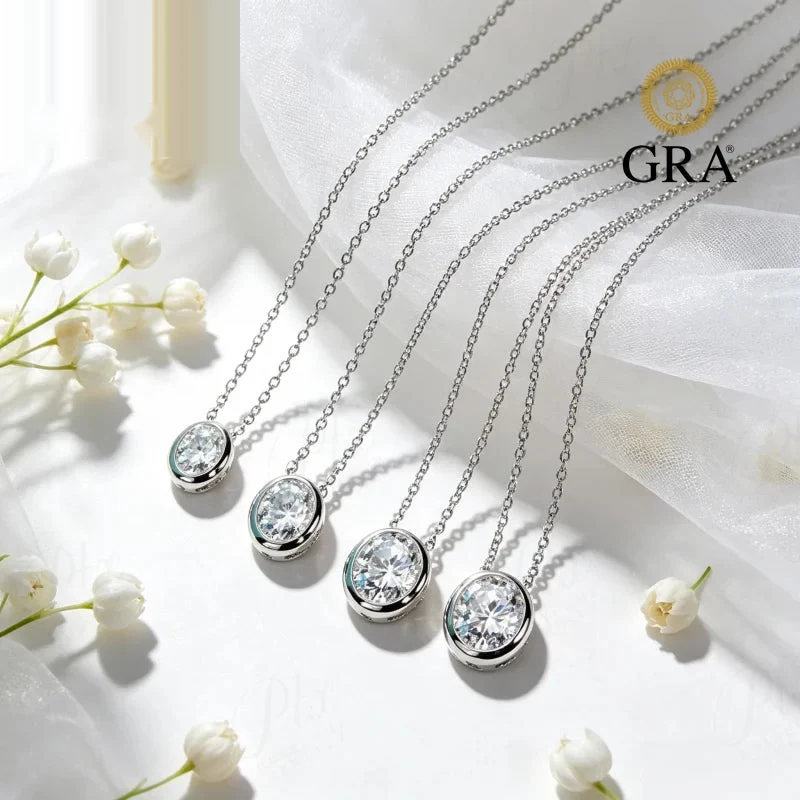
Every centre stone above 3 mm ships with a lab report (IGI or NGTC) that lists the stone's carat, dimensions and moissanite grade. The report number is engraved on the stone's girdle at the lab and is logged on the QC pack. If a stone arrives missing, the buyer can file a claim against the report number. We reference IGI's certification process for the report standard; moissanite reports are issued by IGI and NGTC, not GIA, because GIA grades natural diamonds.
QC photos: the buyer's evidence file
Before the box is sealed, we photograph every piece: a face-up shot, a profile shot, the engraving close-up, the alloy stamp, and a group shot of the whole order. Those photos are sent to the buyer the day the parcel leaves. If a piece arrives damaged, the buyer has a timestamped photo of the piece in perfect condition, which is what the courier claims team asks for first. Our render versus photo guide explains why the final photo is the delivery record, not the render.
Packaging: tamper-evident and layered
Every order ships in a tamper-evident box, with each piece in its own velvet pouch, the lab reports in a sealed envelope, and the commercial invoice in the outer packing sleeve. We do not ship loose pieces in a padded bag; loose pieces scratch each other in transit. The outer carton is double-walled and labelled with the declared value but not with the contents. Our casting and finishing write-up covers the incoming-material testing that backs the quality claim.
Receiving: the 48-hour window
We ask buyers to open the parcel within 48 hours of delivery and photograph the outer carton, the inner box and each piece. Any discrepancy (missing stone, cracked shank, wrong size) is filed within that 48-hour window with the courier and copied to us. Claims filed after seven days are usually denied by the courier, regardless of insurance. We hold a replacement run for every design on file, so a lost piece can be re-cast in 12 working days at the buyer's cost if the claim lapses.
What the insurance does and does not cover
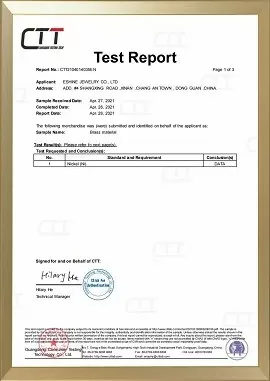
Shipping insurance covers loss in transit, total damage and customs seizure. It does not cover buyer-ordered changes after delivery, wear and tear, or stones lost after the customer has worn the piece. Buyers who want cover for end-customer wear need a separate retail jewellery insurance policy, which we note on the QC pack so the store can advise its customers. We reference the cargo insurance principle on Wikipedia only for background; the 48-hour receiving rule above is our own.
Do you ship insured to the US and EU?
Yes. Every parcel ships with full insurance at the commercial invoice value. The insurance premium is passed through at cost (roughly 0.6 percent of declared value). We do not ship uninsured.
What if a stone is lost in transit?
The buyer files the claim with the courier using the lab report number and the QC photos. We supply the invoice and the timestamped photo pack. Replacement stones are re-cast on a separate order if the claim takes longer than the buyer wants to wait.
Do you cover customs duty and import VAT?
No. Duty and VAT are the buyer's responsibility and are not part of the shipping insurance. We provide the HS code and the commercial invoice so the buyer can clear customs themselves.
Can I split a 100-piece order into two parcels?
Yes. We split into two 50-piece parcels, each separately insured. Splitting reduces the per-parcel declared value and the premium, and halves the loss exposure if one parcel is delayed.
Send us the order value and the destination. We return a proforma with the insurance premium, the lab report pack and the 48-hour receiving checklist. Ask us to insure your next custom moissanite shipment.
Frequently Asked Questions
Is moissanite a good diamond alternative for retail buyers?
Yes for price-sensitive customers who want brilliance and hardness. Moissanite ranks 9.25 on the Mohs scale, holds up to daily wear and costs a fraction of a natural diamond of the same size, so it resells fast in bridal and fashion lines.
What is the minimum order for wholesale moissanite?
MOQ starts at 50 pieces per design for stock items. Custom cuts and private-label settings usually start at 100–300 pieces depending on the mold.
Do you provide certificates with moissanite stones?
Yes. Every parcel ships with GRA or IGI documentation listing carat weight, color grade and cut. We recommend passing the certificate to your end customer for trust.
How long does sample and bulk production take?
Samples ship in 3–5 days. Bulk runs take 15–20 days under 500 pieces, and 25–30 days for custom work.