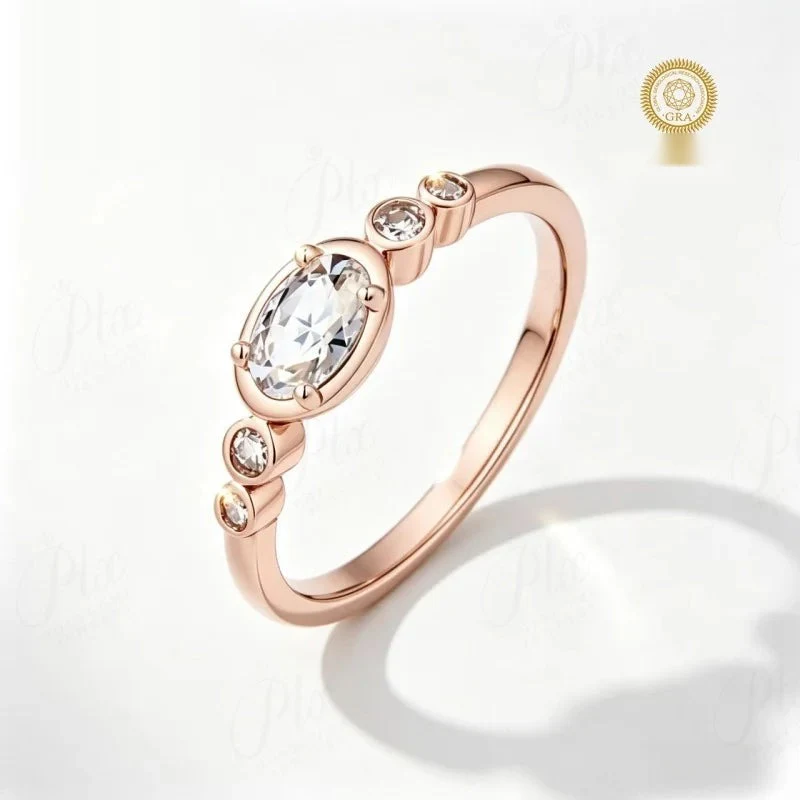
A new buyer rang in wanting a custom moissanite engagement ring. The sales call covered style, metal and stone, and ended with a warm thank you. What it never covered was the budget ceiling, the client's ring size, the delivery date, and whether the client worked with their hands. The CAD went to a 6.5 mm solitaire in 14k yellow gold; the client actually needed a bezel in white gold, and the delivery date was three weeks earlier than planned. The rework cost the buyer two weeks. The first call is where a custom order is won or lost, and it is not a style chat.
Below are the four numbers we lock on the first consultation call, with the rework each one prevents.
The budget ceiling, not the price point
Asking what is your budget gets a vague answer. We ask what is the most the client will spend, which locks the ceiling. A 6.5 mm moissanite in 14k gold and a 9x6 mm oval in platinum sit at very different build costs, and the ceiling decides which CAD we open. Buyers who skip this field design above the ceiling and redesign down. Our order intake process write-up shows the budget field on the intake sheet.
The delivery date and the working-backwards timeline
We ask for the event date and work backwards: CAD proof three to five working days, casting and setting seven to ten, finishing and photography three to five. A rushed order costs a 30 percent premium and still risks the date. Buyers who give the date late force us into rush production, covered in our rush order guide. The first call should fix the date, not the week before.
The ring size and the finger profile
Ring size is obvious; finger profile is not. A size six on a 15 mm knuckle fits differently from a size six on an 18 mm knuckle, and the shank width changes. We ask for the knuckle width and whether the client wears gloves or works with their hands, because that decides prong gauge and head height. The design process that follows the call is mapped in our ring design process overview.
The stone size and the daily-wear profile
Stone size is chosen, but the daily-wear profile is what protects it. A nurse or chef needs a bezel, not pav; a desk worker can wear a halo. We ask the client's profession on the first call because it changes the setting type, which we compare in our setting type overview. Moissanite's hardness, around 9.25 on Mohs per the moissanite entry, means the stone survives work, but thin pav channels do not.
What the first call does not decide
We do not lock the exact CAD on the first call. We lock the four numbers and open a design brief. The render comes back for the buyer to adjust, which is the proofing step covered in our 3D proof review guide. Buyers who expect a finished design after the first call will be disappointed; buyers who walk away with four locked numbers will ship on time.
How long should the first call last?
Twenty to thirty minutes. Longer means we are designing on the call instead of locking the four numbers.
What if the buyer does not know the budget?
We give a range: entry, mid and premium build for a 6.5 mm stone, and ask which range the client is in. That locks a ceiling without a number.
Can I change the design after the first call?
Yes, within reason, before CAD. After the wax is cut, changes cost rework. The proofing step is the place to adjust, not the first call.
Do you require a deposit on the first call?
No. We open the design brief on the call and take the deposit when the CAD is approved, per our payment and deposit guide on the site.
What we send after the call
Within one working day of the first call we email a one-page design brief: the locked budget ceiling, the event date, the ring size and knuckle width, the stone size, and the daily-wear profile. The buyer signs and returns it, and that signed brief is what CAD opens against. This prevents the situation where two buyers on the same account remember different numbers. If the client's taste changes after the brief is signed, we take the change before the wax is cut; after casting, changes cost a new build. The brief is also the document our quality team checks the finished ring against, as detailed in our custom order quality checks guide.
Send us the event date, budget ceiling and finger profile on the first call. We return a design brief and a working timeline before CAD opens. Book your first custom moissanite consultation call.
Frequently Asked Questions
Is moissanite a good diamond alternative for retail buyers?
Yes for price-sensitive customers who want brilliance and hardness. Moissanite ranks 9.25 on the Mohs scale, holds up to daily wear and costs a fraction of a natural diamond of the same size, so it resells fast in bridal and fashion lines.
What is the minimum order for wholesale moissanite?
MOQ starts at 50 pieces per design for stock items. Custom cuts and private-label settings usually start at 100–300 pieces depending on the mold.
Do you provide certificates with moissanite stones?
Yes. Every parcel ships with GRA or IGI documentation listing carat weight, color grade and cut. We recommend passing the certificate to your end customer for trust.
How long does sample and bulk production take?
Samples ship in 3–5 days. Bulk runs take 15–20 days under 500 pieces, and 25–30 days for custom work.