Threader earrings are the quiet minimalist staple that never quite gets the attention it deserves. There is no post backing, no bulky bead, just a thin chain that slides through the piercing and hangs naturally on both sides. The result looks lighter and more modern than a standard stud, and it pairs with almost any wardrobe. For buyers building a curated ear, threaders are a must; for sellers, they are an easy margin add-on once the styling details are right.
What a threader actually is
A threader is a fine chain with a small weighted or tapered end that makes it easy to pull through an ear piercing. It emerges on both sides, so one earring gives two hanging strands of unequal length. That asymmetry is the look. Because there is no heavy setting, the ear feels unburdened, which is exactly the appeal compared to a chunky sterling silver stud.
Length and weight make or break it
The most common complaint about threaders is that they either feel too short to notice or so long they catch on everything. Most buyers land between 3 and 4 inches total, long enough to dangle past the lobe but not long enough to tangle. Weight should be minimal; a heavy chain pulls and stretches the piercing. Solid 925 silver in a thin gauge is ideal, and hypoallergenic, which matters for sensitive ears already covered in hypoallergenic silver earrings for sensitive ears.
Wear them securely
Because there is no backing, a threader can slip out if it is brushed. Teach customers the simple habit: once pulled through, let the weighted end settle and check the chain sits evenly. Some designs add a tiny stopper or bead that can be positioned behind the lobe to hold the length. Advise removing them before sleeping or sports. A little instruction prevents the "it fell out" review that unfairly sinks an otherwise great product.
Styling for a curated ear
Threaders shine in a multi-piercing arrangement. Wear one threader in a lobe piercing and pair it with a small hoop or stud higher up, letting the long threader trail below. They also layer beautifully with huggies and climbers, fitting right into the ear curating with silver earrings trend. Keep the rest minimal so the threader's clean line is the statement. One threader, one stud, done.
The detail options that lift price
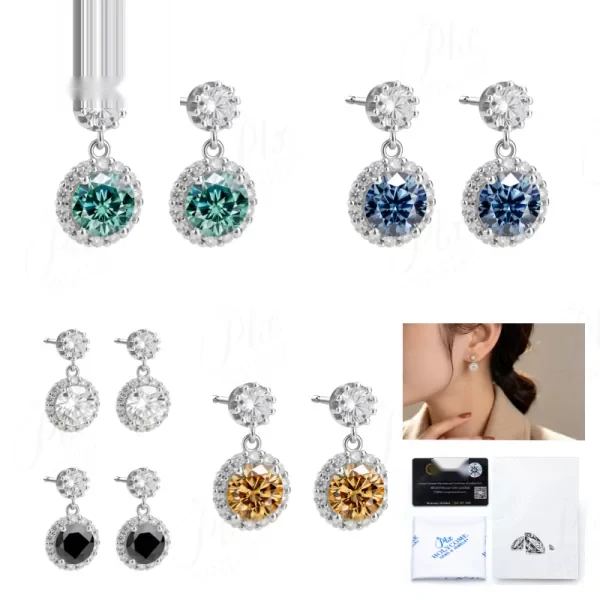
A plain silver threader is a baseline product. Add a single tiny moissanite set at the tapered end and the piece catches light like a falling star. A small bar, a star, or a thin dangling charm gives personality and raises the price point without bulk. These small upgrades are where repeat buyers return: once someone owns a basic threader, the next purchase is the beaded or jeweled version.
Why they keep selling
Threaders fill a gap between the stud and the dangle. They dress up a plain sweater as easily as an evening look, and they read as understated rather than trendy. That versatility means they do not date the way a loud seasonal earring does. A well-made silver threader is a staple a buyer keeps for years, which is exactly the kind of quiet product that builds a reliable catalog.
Why buyers come back for a second pair
The threader habit is contagious. Once someone wears one through a piercing and likes the light feel, they usually want a second length or a second finish. A shorter pair for everyday office wear, a jeweled pair for evenings, and a gold-toned option for mixing metals. That repeat purchase pattern is rare in earrings, where buyers often treat a pair as a one-and-done. Encourage it by stocking two lengths of the same design so the customer can build a small threader wardrobe.
Pairing with other piercings
Threaders are the flexible middle of a curated ear. Wear one in the lobe and a huggie in the helix, or stack a threader beside a small stud. The long, thin line draws the eye downward and elongates the face, which is why it photographs so well. It sits naturally alongside the cartilage and helix pieces covered in cartilage, helix, and conch silver earrings. Keep the rest of the ear quiet so the threader stays the focal point.
Common returns and how to prevent them
The two complaints you will see are "too short to notice" and "fell out." Both are solved on the product page. State the exact length in inches, recommend the 3 to 4-inch range for most buyers, and explain the simple no-back wear habit with a one-line tip. Add a stopper option for nervous first-timers. A buyer who knows what to expect rarely returns a piece they love.
The edge over a dangle
Threaders do what dangles cannot: they move with the wearer without the weight and bulk. They work at a desk, on a phone call, and in a restaurant, which is why they feel like an everyday luxury rather than an occasion piece. That versatility is the honest reason they keep finding new fans season after season.
If your earring section has only studs and hoops, the threader is the missing middle. Get the length right, explain the simple wear habit, and let the minimalist design do the rest.
The 92.5% silver composition and properties of sterling silver are described in the Wikipedia entry on sterling silver.
Frequently Asked Questions
What ring sizes can you supply in bulk?
US sizes 5–12 including half sizes. Send a size breakdown with your order and we cast to that curve; comfort-fit inner bands reduce resize requests.
Can I order a mixed size run instead of one size?
Yes. Mixed runs are standard for wholesale: specify quantity per size and we pack and label by size at no extra labor cost.
What is the MOQ for custom ring designs?
50 pieces per design for existing molds; 100–300 pieces when a new mold or CAD model is required.
How should I price rings for retail margin?
Most partners use a 3–4x markup on FOB cost for sterling and 2.5–3x for moissanite solos, which keeps landed cost under 30% of retail.