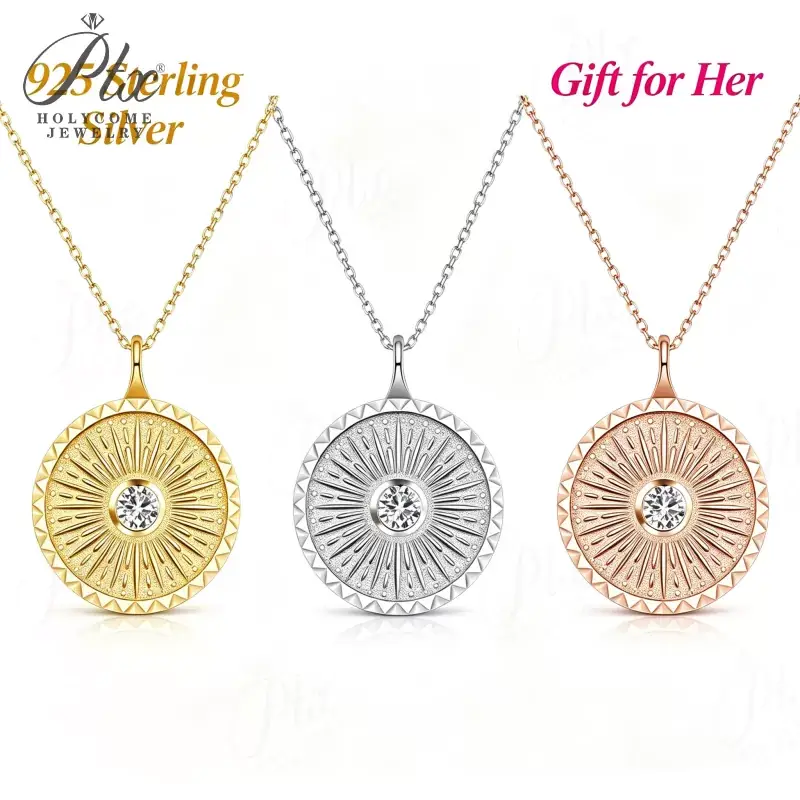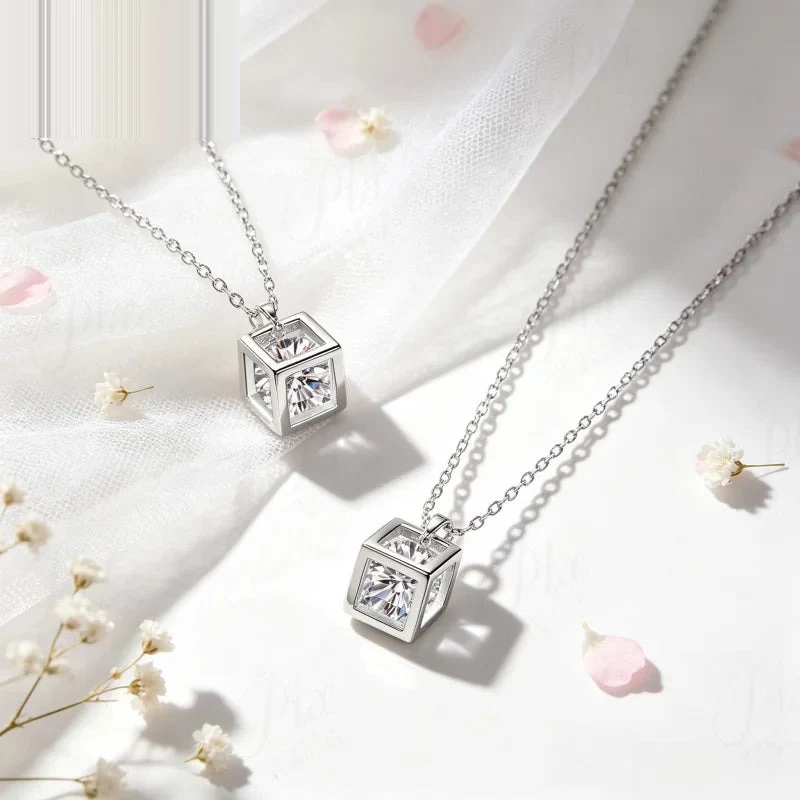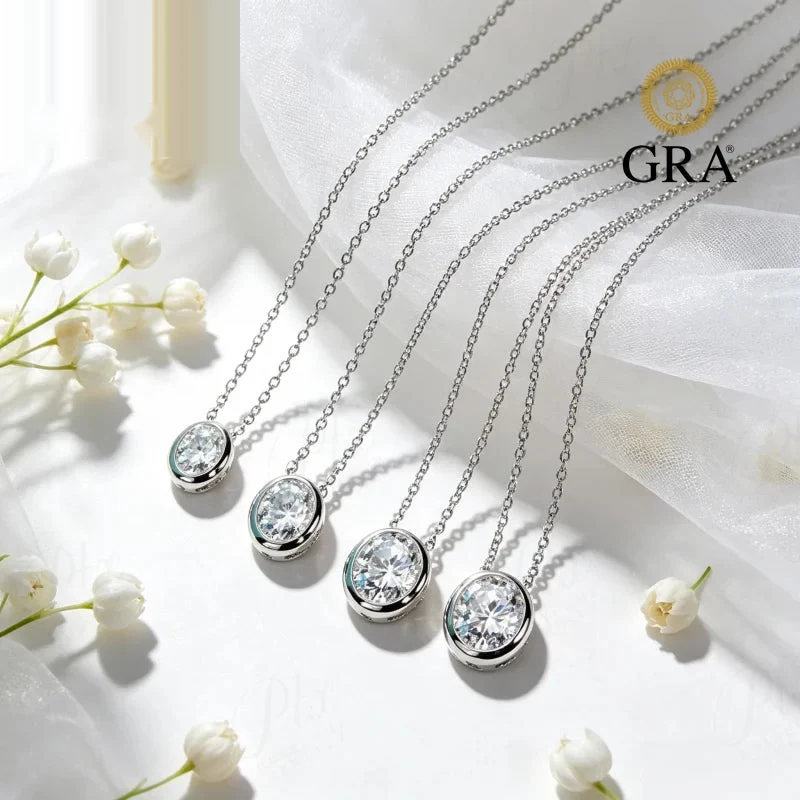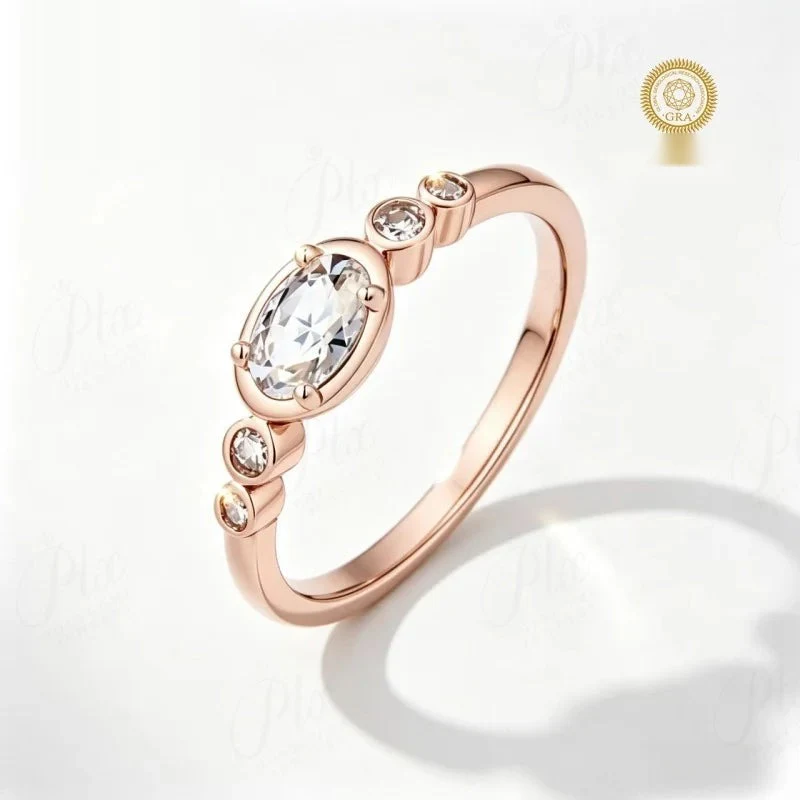
A buyer in Oslo ordered twenty solitaire pendants on a 16 mm round head. Six came back with the stone spinning around to face sideways on the chain. The head was not defective; the bail was sized for a 1.0 mm cable chain, and the buyer had swapped in a 1.5 mm snake chain that bound the bail half shut. The pendant tipped every time the client turned. The fix is never a heavier chain. It is matching the bail inner width, the chain gauge and the bail weight to the head weight, to three numbers.
If you have not settled the pendant head shape yet, our halo and centre-stone layout guide covers the head proportions. Below is how we pair the chain once the head is fixed.
Bail inner width: the number everyone misses
The bail must open at least 0.4 mm wider than the chain diameter, so the pendant can swing without binding. On a 1.0 mm cable chain we build the bail to 1.4 mm inner width. On a 1.5 mm rope chain the bail goes to 1.9 mm. A bail built too small is the reason pendants flip and twist, and it cannot be widened after the fact without rebuilding the head. We stamp the bail inner width on the order sheet so the buyer knows exactly which chain to supply.
Chain gauge by head weight
A 1 to 2 gram solitaire head hangs best on a 0.9 to 1.0 mm cable or figaro chain; the chain is light enough not to overpower the stone. A 3 to 4 gram halo head needs a 1.2 to 1.5 mm chain, or it rides up and crowds the collarbone. Anything heavier than 5 grams of head, like a pave frame pendant, wants a 1.5 to 1.8 mm rope or snake chain to sit flat. We warn buyers that a chain too thin for a heavy head stretches over time, and stretched chains are the number one warranty return on pendants. The chain material conventions we work to, including the nickel-release limits that matter for EU retail, are covered in the EU nickel directive; every chain we ship complies with that limit.
Length and drop: where the stone sits
On an 18 inch chain a 6.5 mm head lands at the hollow of the collarbone, the most flattering drop. On a 16 inch chain the same head rides higher, toward the base of the throat, which suits a smaller 5 mm stone. We quote the drop length for each head size so the buyer does not sell a 6.5 mm pendant on a 16 inch chain and expect collarbone placement. For the dimension detail on chain length and gauge pairing, our wedding band and pairing fit notes shares the same measurement discipline we use on pendants.
Fixed bail versus jump ring bail
A fixed bail soldered directly to the head is stronger but swings less, which makes the pendant sit straight. A jump-ring bail swings freely but can wear the jump ring thin over years. For pendants sold as heirloom pieces we default to the fixed bail; for fashion pendants we use the jump ring because it lets the stone catch light from every angle. The choice is noted on the order sheet so the QC bench knows which to inspect for wear.
Why does my pendant flip over on the chain?
Almost always a bail built too narrow for the chain, or a chain too thin for the head weight. Check the bail inner width first; it should be at least 0.4 mm wider than the chain diameter.
What chain length sells best?
18 inches is the default mover for solitaire pendants. 16 inches sells as a shorter, more formal length, and 20 to 24 inches for layering looks.
Can I supply my own chain?
Yes, and most of our buyers do. Send the chain gauge and we build the bail to match. Do not swap chain gauges after the order is placed without telling us.
Does the pendant head need to be balanced?
Yes. A head that is heavier on one side will always twist to the heavy side. We balance the head around the bail axis so the stone sits face-up at rest.
How pendant weight changes the wear feel
A 2 gram head on a 1.0 mm chain sits light and reads delicate, which suits a daytime look. A 4 gram head on a 1.5 mm chain has presence and reads evening. We warn buyers that a head heavier than the chain it hangs from pulls the chain oval over months, which is the same link-stretch problem we solve on our tennis bracelet builds. Match the chain to the head weight, not to the price tag.
Send us the head size and the chain gauge you plan to pair it with. We return the bail inner width and recommended chain gauge on the spec sheet before the head is cast. Ask us to match your next custom moissanite pendant to the right chain.
Frequently Asked Questions
Is moissanite a good diamond alternative for retail buyers?
Yes for price-sensitive customers who want brilliance and hardness. Moissanite ranks 9.25 on the Mohs scale, holds up to daily wear and costs a fraction of a natural diamond of the same size, so it resells fast in bridal and fashion lines.
What is the minimum order for wholesale moissanite?
MOQ starts at 50 pieces per design for stock items. Custom cuts and private-label settings usually start at 100–300 pieces depending on the mold.
Do you provide certificates with moissanite stones?
Yes. Every parcel ships with GRA or IGI documentation listing carat weight, color grade and cut. We recommend passing the certificate to your end customer for trust.
How long does sample and bulk production take?
Samples ship in 3–5 days. Bulk runs take 15–20 days under 500 pieces, and 25–30 days for custom work.