Shoppers who arrive at a jewelry store asking for a “two-carat moissanite” are already a little confused, and that confusion is completely understandable. Natural diamonds are sold by carat weight. Moissanite, because it is lab-grown and cut to precise millimeter dimensions, is almost always sold by physical size. The two systems talk past each other, and buyers leave guessing whether a 6.5 mm stone will feel big or small on their hand.
The good news is that a reliable conversion exists, and once you learn the common sizes, you stop thinking in carats and start thinking in millimeters — which is actually the more honest way to shop, since size on the finger is what the eye judges anyway.
The common equivalents
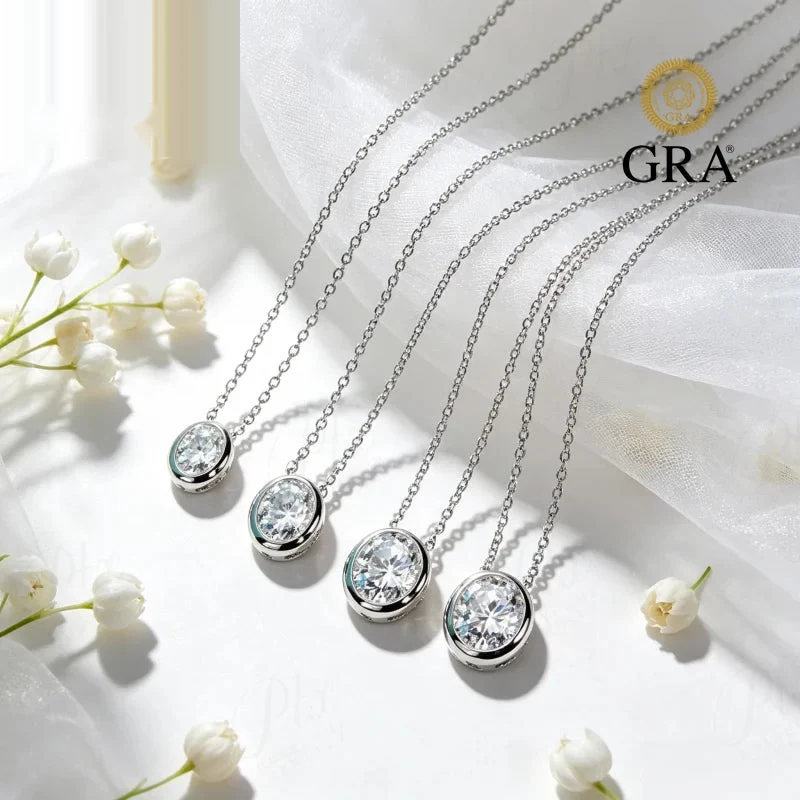
A round brilliant moissanite follows a rough but predictable scale. A 5 mm round sits near a half-carat diamond equivalent. A 5.5 mm reads like about 0.7 carats. The industry standard 6.5 mm round corresponds to roughly a one-carat diamond equivalent and is the single most popular engagement ring size on the market. From there, a 7.5 mm stone looks like about 1.5 carats, an 8 mm stone reads near two carats, and a 9 mm stone lands around three carats. Oval, cushion, and princess cuts of the same millimeter width occupy a similar visual range, though ovals look slightly longer and more slender on the finger.
Why the approximation? Because moissanite is less dense than diamond — its specific gravity is lower — so a moissanite stone of the same millimeter diameter actually weighs less than a diamond. The trade uses “diamond equivalent weight” to describe the visual comparison, which is the number shoppers should look for on a product listing. A listing that only says “8 mm” without the equivalent leaves a buyer unsure; listing both removes the guesswork.
How size reads on different hands
The millimeter number is only half the story. The same 6.5 mm stone looks modest on a size eight finger and dramatic on a size five. Finger width, knuckle size, and even the width of the band change the perception. A chunky 4 mm band shrinks the visual presence of the stone, while a delicate 1.5 mm band makes the exact same stone look larger. Our guide to band width and finger proportions walks through how these choices interact and how to balance them.
The practical move is to show the buyer their options on a mandrel or with a try-on set. Photos of stones on model hands help, but nothing beats a physical comparison between a 6.5 mm and a 7.5 mm side by side. Most people who think they want 8 mm end up choosing 6.5 mm once they see how it lives on a daily basis, and they are grateful for the honesty rather than disappointed.
Cut shape changes the visual size
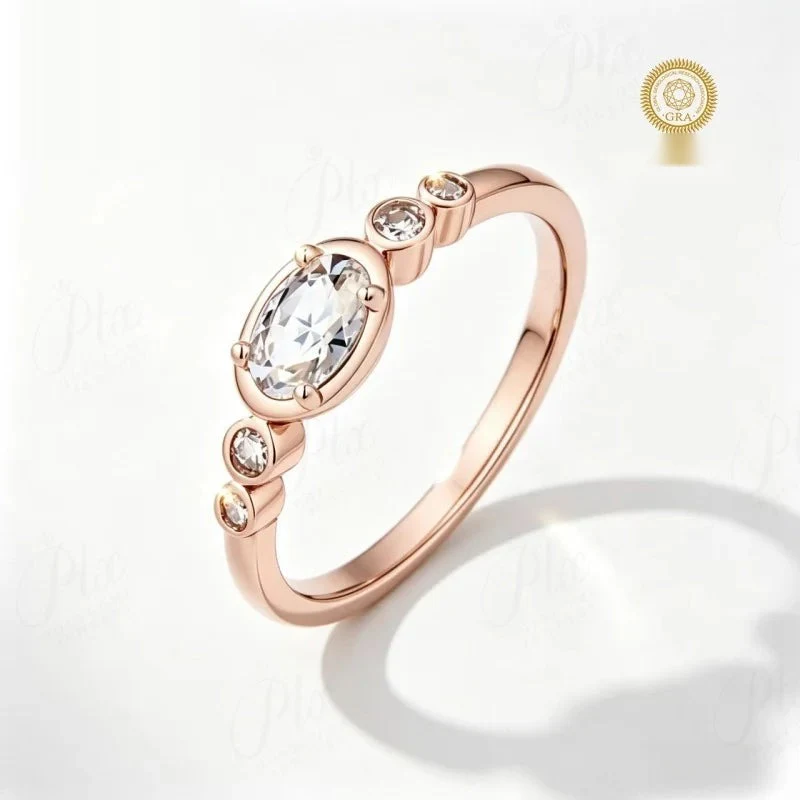
Two stones of the same millimeter width do not always read the same size on the finger. An oval cut, because it is longer, looks larger than a round of equal width and elongates the hand. A cushion cut, with its softer corners, can look slightly smaller than its measurements suggest. A princess cut reads crisp and modern and tends to look bigger than a round in the same budget. When a buyer asks for a size, show them the same millimeter in two different shapes so they can compare the silhouette directly. This is also where cut quality matters: a poorly cut moissanite leaks light from the sides and looks smaller and duller than its measurements promise, which is why buying from a vendor who shows real product photos beats buying from a generic listing.
Where to upsize and where to save
Because moissanite costs far less per visual carat than diamond, upsizing is affordable. A buyer budgeted for a one-carat diamond equivalent can step up to a 7.5 mm moissanite for the same money and gain real presence. The one caution: extremely large stones, above 9 mm, start to read as costume jewelry on smaller frames. Scale matters more than size. Pair the stone size with a realistic band and setting, and the ring looks intentional rather than oversized. A well-proportioned 6.5 mm on a slim band outclasses a 10 mm stone drowning on a petite hand.
Explain it clearly at the point of sale
List both numbers on every product page. Show the millimeter size, the diamond equivalent weight, and a photo on a standard finger. Shoppers who understand the conversion buy with confidence, and confident buyers return for wedding bands, pendants, and gifts. Stop arguing about carats, and start describing stones in the measurements the trade actually uses. It makes the decision easier, the expectations clearer, and the post-purchase regret noticeably lower.
For third-party reference, the Wikipedia article on moissanite details moissanite’s discovery, optical properties and use in jewellery.
Frequently Asked Questions
Is moissanite a good diamond alternative for retail buyers?
Yes for price-sensitive customers who want brilliance and hardness. Moissanite ranks 9.25 on the Mohs scale, holds up to daily wear and costs a fraction of a natural diamond of the same size, so it resells fast in bridal and fashion lines.
What is the minimum order for wholesale moissanite?
MOQ starts at 50 pieces per design for stock items. Custom cuts and private-label settings usually start at 100–300 pieces depending on the mold.
Do you provide certificates with moissanite stones?
Yes. Every parcel ships with GRA or IGI documentation listing carat weight, color grade and cut. We recommend passing the certificate to your end customer for trust.
How long does sample and bulk production take?
Samples ship in 3–5 days. Bulk runs take 15–20 days under 500 pieces, and 25–30 days for custom work.