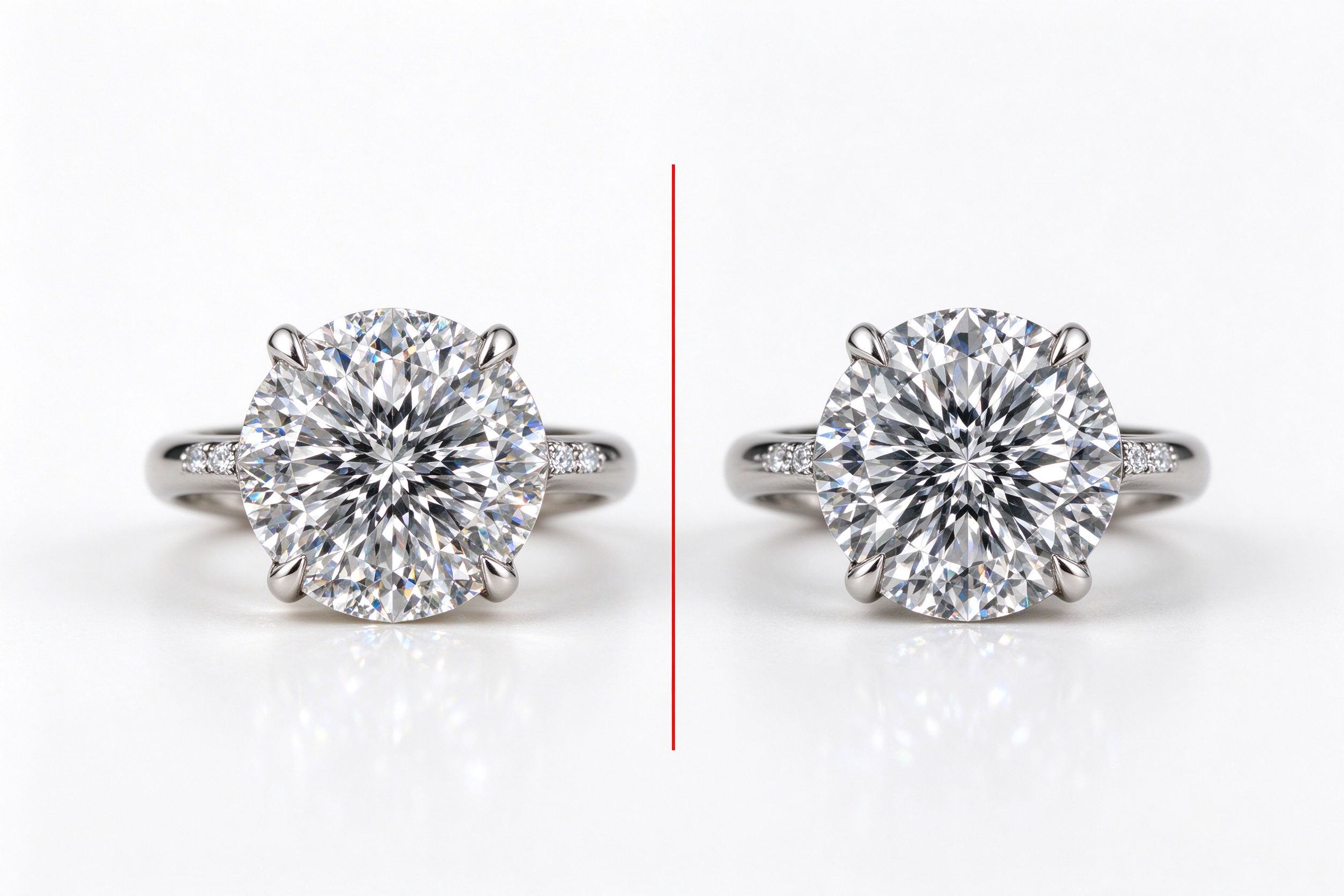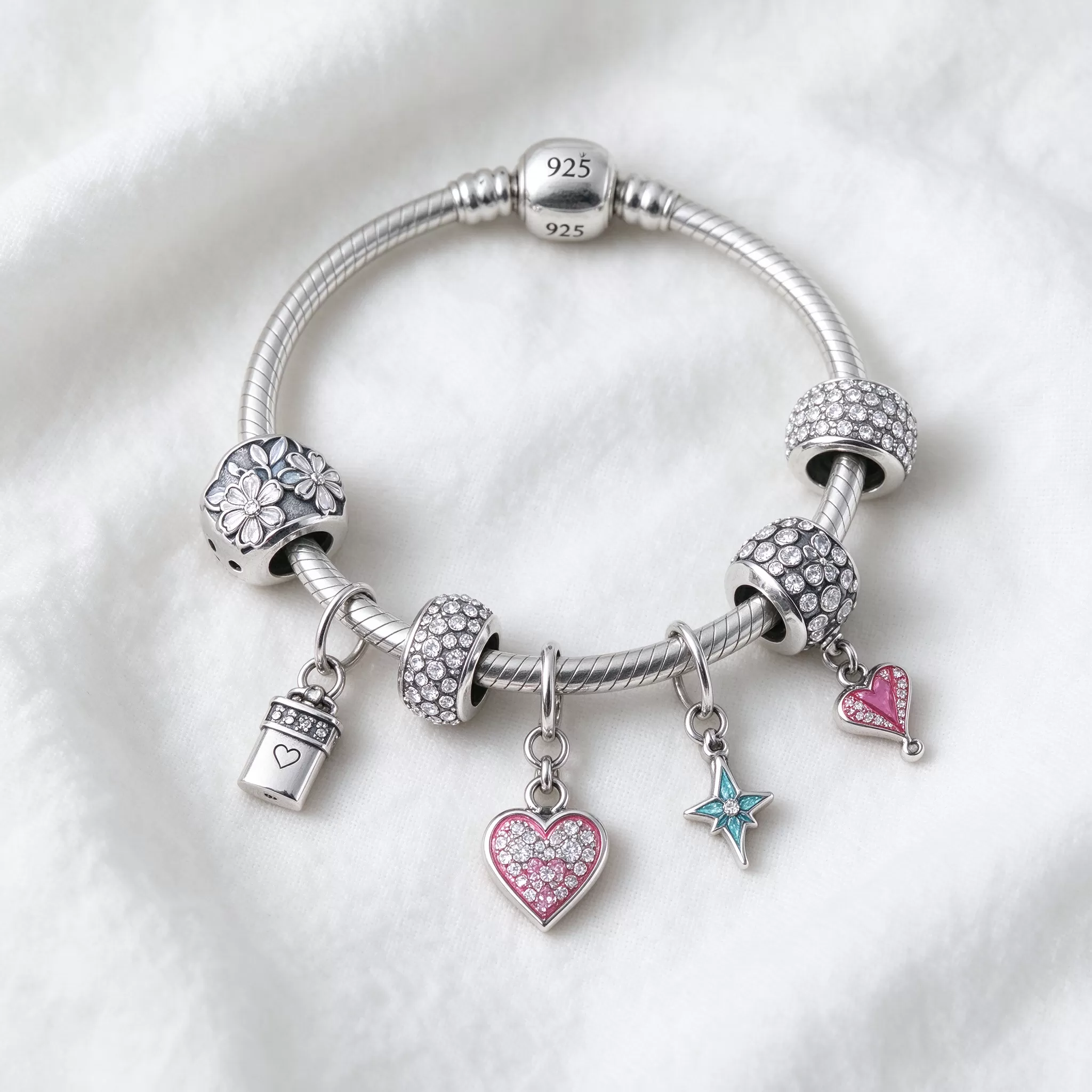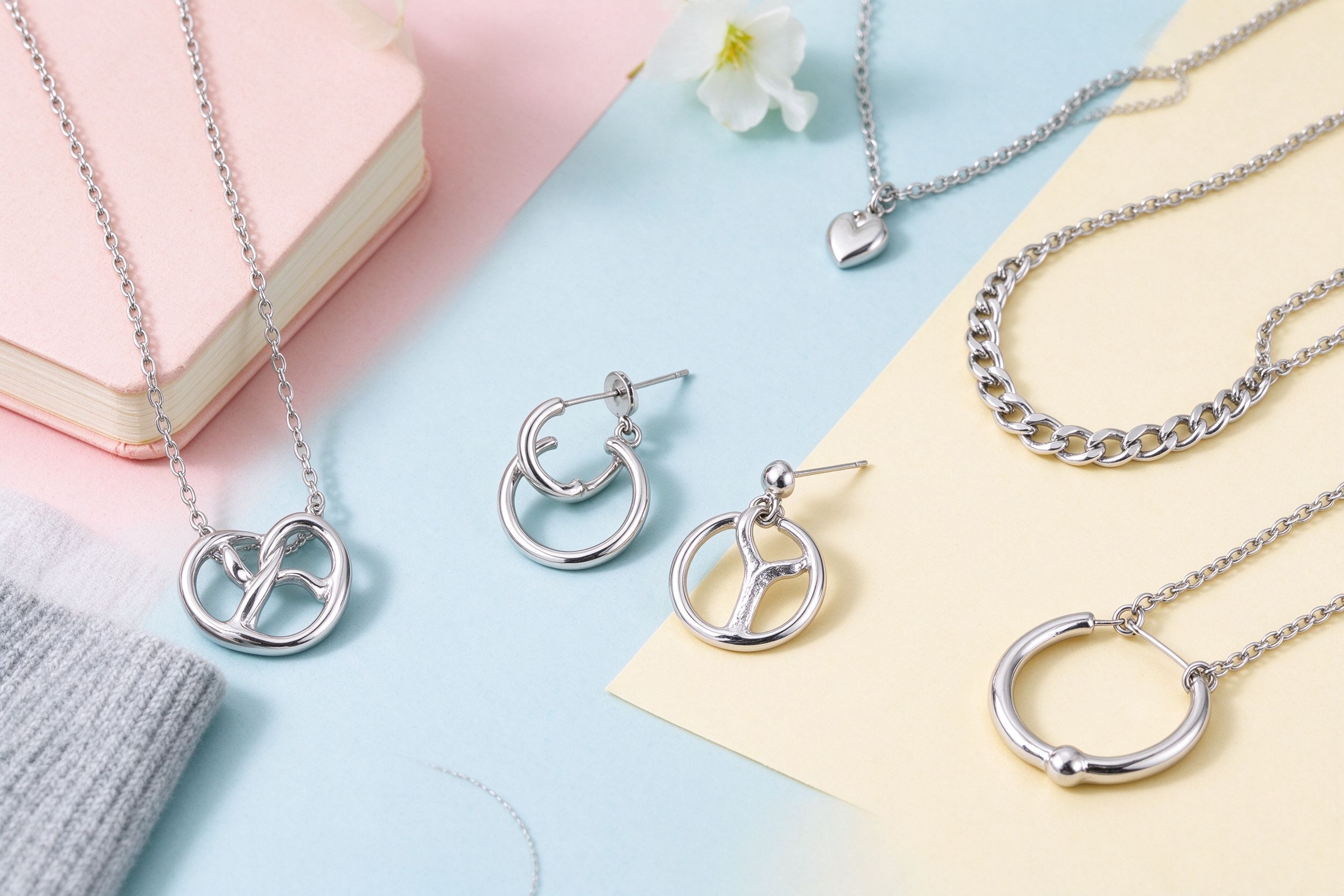
When a customer asks "is your moissanite D color?" they are borrowing language from diamonds. In moissanite, color grading works a little differently, but the question matters: the grade tells you how white or "ice white" a stone looks, and that changes how bright it appears in a silver setting. This guide explains what D, E and F actually mean for moissanite in sterling silver, so you can answer buyers confidently and stock the right grade.
What Color Grade Measures
Color grade describes the body color of the stone—how yellow, green, or gray it appears when viewed face-down against a white background. In diamonds, D is completely colorless and the scale moves down to Z. In moissanite, the same letter labels are commonly borrowed, but because moissanite is a different material, its base look is not identical to a diamond. The key point for buyers: higher grades (D/E) look whiter and brighter, while lower grades carry a warmer or more gray-green tone.
D, E and F: What Each Grade Means
- D color: the top grade, marketed as "ice white." It looks brightest and pairs beautifully with white-toned settings. Expect a slight inherent moissanite gray-green in some lights, which is normal and part of the stone's character.
- E color: near-colorless, visually almost identical to D to most eyes. It offers the best balance of premium look and cost.
- F color: a faint warm cast. It is still beautiful and works well in yellow-toned settings, but against bright silver it may read slightly softer.
For sterling silver, which is naturally white and bright, D and E grades make the stone look most brilliant. Our moissanite color and clarity guide goes deeper into grading sheets.
Why Cut Matters More Than Grade
A well-cut E grade stone often looks brighter than a poorly cut D. Moissanite is famous for fire (rainbow flashes) and brilliance, and the cut is what releases that light. Round brilliant cuts are the most forgiving and the brightest. Fancy shapes like oval and pear show more body color near the center, so a higher grade matters more for those. When sourcing, ask for the cut grade alongside the color grade. Our moissanite cuts guide explains shape by shape.
How the Silver Setting Changes Perception
The setting color affects how white the stone looks. Bright polished silver or rhodium-plated silver reflects light back through the stone and makes it appear whiter. Darker oxidization or yellow plating can warm the tone. For an "ice white" look, pair D/E moissanite with bright polished silver or white-gold-toned plating. This is the same logic behind our moissanite silver necklace range.
What to Verify Before You Stock
Not every supplier's "D" matches the next. When bulk buying:
- Request a photo of the stone face-down on white paper next to a known sample.
- Ask for the certification (GRA or similar) that lists color and clarity.
- Order one sample to compare in natural daylight and indoor light.
- Check for obvious gray-green "halo" that reads as dirty rather than clear.
Our guide to GRA-certified moissanite explains what the certificate should show.
Common Questions
Is D color moissanite worth the extra cost?
For silver and white-toned jewelry, D and E grades give the brightest, whitest look customers expect. E is often the best value because the difference from D is invisible to most buyers. F is fine in warmer settings or for budget lines.
Does moissanite ever look yellow?
Lower grades can show a faint warm or green-gray tone, especially in fancy shapes. Higher grades minimize this. A slight rainbow fire is normal and desirable; persistent yellow is not.
Can customers tell moissanite color grade at home?
Most can't tell D from E in normal wear. The grade matters more for your sourcing and marketing than for daily wear. For more on how it compares, read our moissanite versus diamond guide.
Color grade is a sourcing decision that shows in every photo. Stock D/E grades for silver jewelry, verify with samples, and customers get the bright, white sparkle they expect. See our moissanite jewelry guides for more.
Setting Expectations Around Inherent Tone
Even top-grade moissanite carries a very subtle gray-green undertone in certain lighting, which is a natural property of the material rather than a grading flaw. When you sell D and E stones, mention this honestly: under bright light the stone looks bright and white, while in dim side light a faint tone may appear. Setting this expectation prevents buyers from thinking they received a lower-grade stone. The rainbow fire of a well-cut moissanite is the feature customers love, and framing the inherent tone as part of the stone's character—rather than a defect—helps them appreciate it. Honesty at the point of sale builds long-term trust and reduces returns.