The attachment is the unsung hero of a charm bracelet. A beautiful charm that dangles off a weak ring ends up lost somewhere between the store and the customer's wrist. Understanding how charms actually attach—through jump rings, lobster connectors, or bead cores—helps you buy secure pieces and advise customers on daily wear. Here is the practical detail behind the hardware.
The Jump Ring: The Most Common Connector
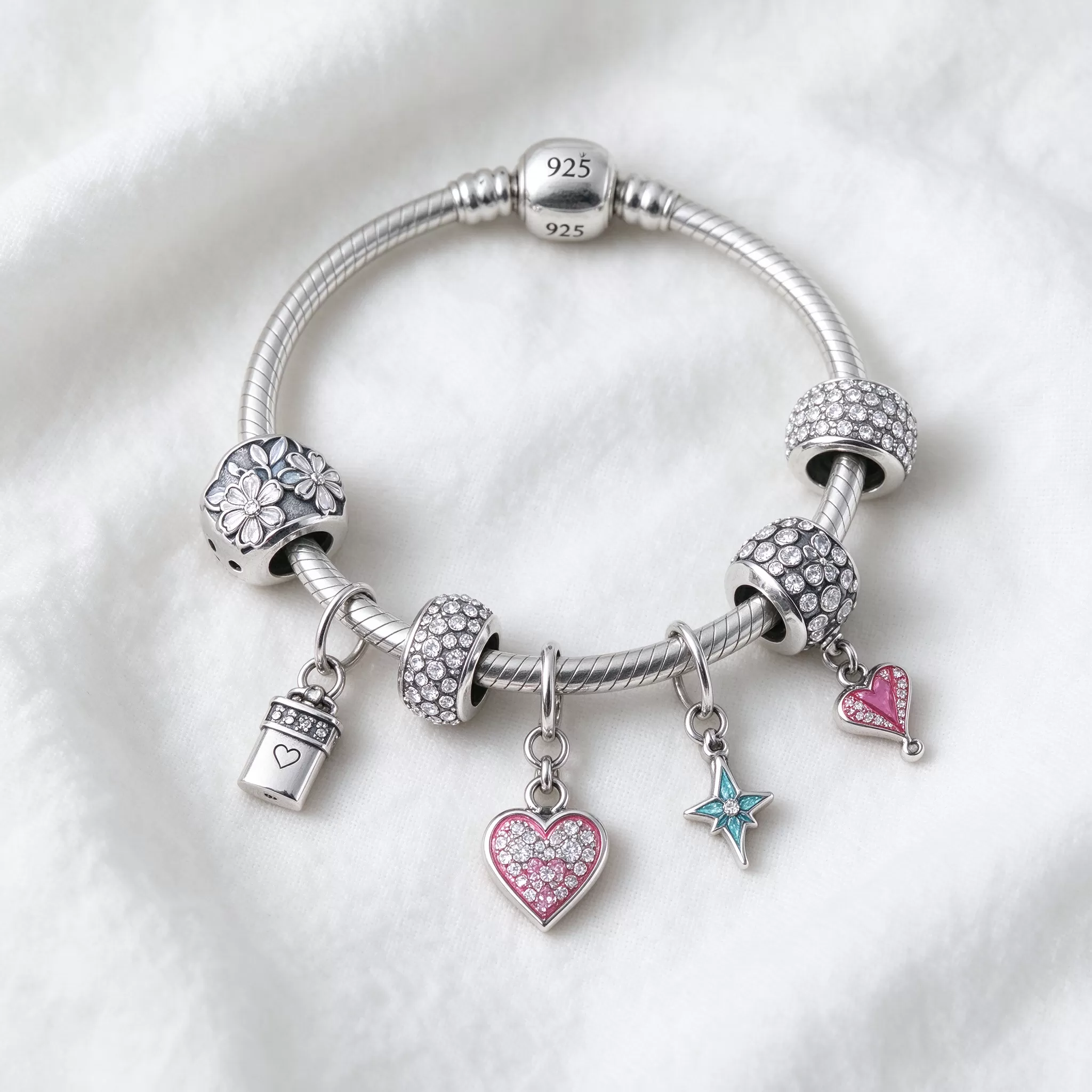
A jump ring is a small closed circle of wire that links the charm to the bracelet chain. On most traditional charm bracelets, the charm arrives with a jump ring already attached, and you open a link on the chain to thread it on. The key quality point is whether the ring is soldered shut or left as an open gap. Open jump rings can twist open over time; soldered ones never do.
- Soldered jump ring: strongest, permanently closed, best for valuable charms.
- Open jump ring: easy to add charms but can open with movement.
- Closed ring with a split: a middle ground; inspect the seam.

Lobster Clasp Connectors: Easy to Swap
Some charms come with a small lobster clasp on the end instead of a fixed ring. This lets customers clip and unclip charms whenever they like, which is great for a flexible bracelet. The trade-off is that a small lobster can be bumped open, so it suits light charms and careful wearers more than active hands.
European Bead Cores: The Sliding Fit
European charm beads attach differently: they have a hollow core that slides onto the bracelet chain. Security here depends on the chain and the stoppers. A threaded chain locks beads in place, while a smooth snake chain lets beads slide around. Silicone liners inside the bead grip the chain and stop sliding. When buying beads, check whether they have silicone inserts or threaded cores.
How to Add a Charm Without Tools
Customers want to add charms themselves. The easiest designs are:
- Lobster-clip charms: just clip onto any chain link.
- Openable ring charms: twist the ring open, thread, close.
- Beads with large cores: slide onto the chain.
For soldered-ring charms, a jeweler opens a chain link. This is a cheap service to offer in-store. Our charm sizing and clasp guide covers bracelet fasteners.
Keeping Charms Secure in Daily Wear
Advise customers to:
- Check jump rings once a month by gently tugging each charm.
- Avoid letting charms catch on gloves, scarves, or bags.
- Store the bracelet in a pouch so charms don't tangle.
- Have loose rings soldered by a jeweler rather than waiting for a charm to drop.
Our silver care guide has more daily-wear tips.
Common Questions
How do I know if a charm ring is soldered?
Look closely: a soldered ring has no visible gap seam. A bright seam or split line means it is an open jump ring that can twist. For valuable charms, choose soldered.
Can I attach a traditional charm to a European bead bracelet?
Yes, with a connector bead or a small lobster clip. Many customers mix both systems on one chain for a personalized look.
Do charms fall off easily?
With soldered rings and a well-made clasp, no. Cheap charms with thin open rings are the ones that drop. Buy quality and inspect the hardware. See our charm buying guide for what to look for.
The attachment hardware is where cheap and premium charms split apart. Buy soldered rings, offer easy connectors, and teach customers to check them—then their charms stay on the wrist and keep collecting. Explore our charm bracelet guides.
Offering a Charm-Reattachment Service
Over years of wear, a charm ring can open or a connector can bend. Offer a simple charm-check service where customers bring in their bracelet and you inspect every ring, tighten open loops, and solder any weak points. This is cheap for you and deeply appreciated by customers who have emotional attachments to their charms. Keep a small stock of replacement jump rings and lobster connectors so you can fix most issues on the spot. A charm bracelet that has been in a family for decades is a treasure, and helping maintain it builds lifelong loyalty that no marketing campaign can buy.