Charm bracelets come in two distinct design languages, and stocking the right one matters. European-style charm beads slide onto a thick chain and sit close to the wrist, while traditional dangling charms hang from small rings and swing as the hand moves. They attract different customers, suit different age groups, and even drive different buying patterns. If you are building a charm bracelet range, here is how to choose between them.
European Charm Beads: The Sliding Style
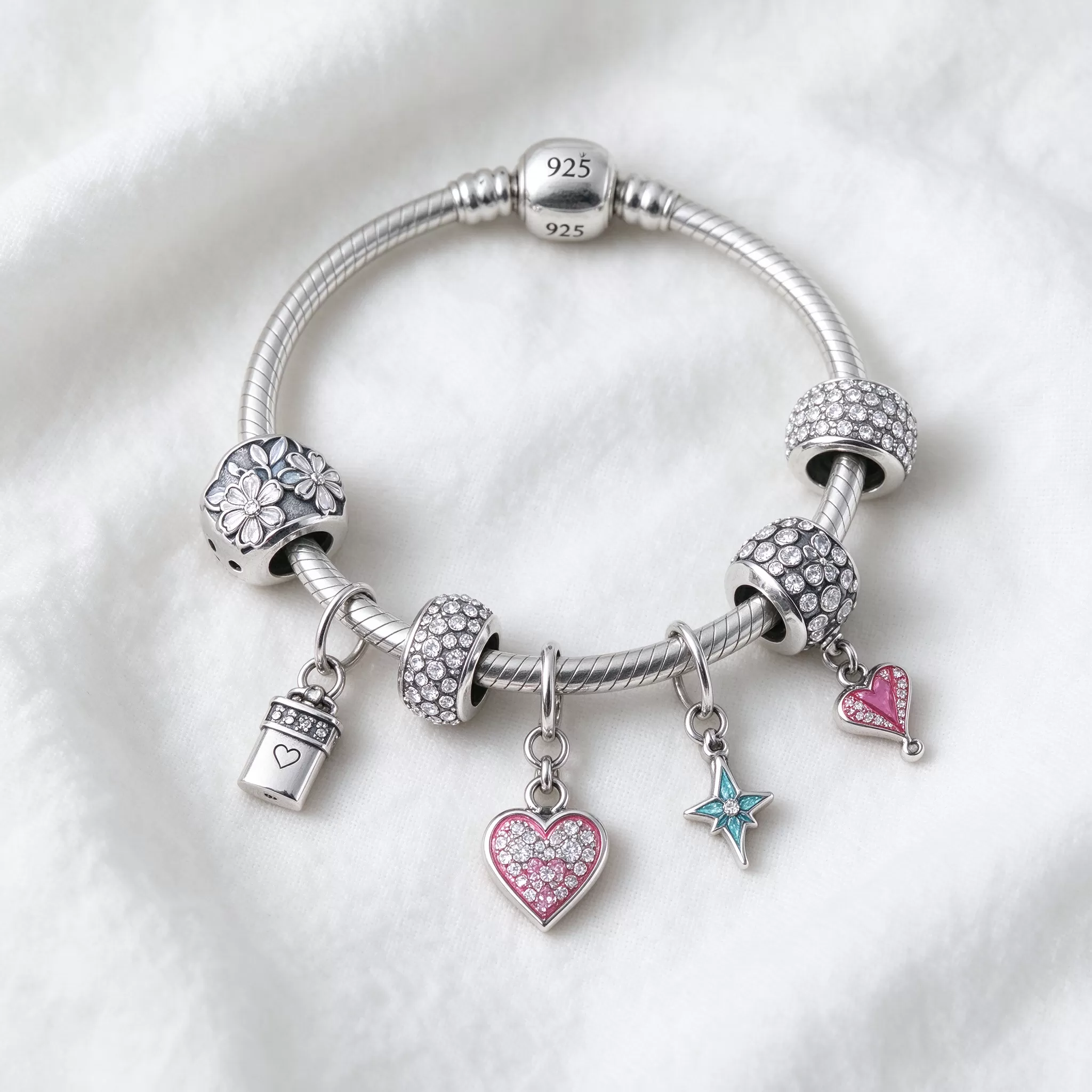
European charm bracelets use a thick snake or cable chain, and the beads have a large hole that slides onto it. Each bead is a decorative—often decorated with enamel, stones, or engraving—and they sit next to each other on the chain. Customers build a bracelet by adding beads for memories, holidays, and birthdays. This style is hugely popular with teens and adult collectors because the beads are colorful and interchangeable.
- Pros: colorful, collectible, easy to add, appeals to younger buyers.
- Cons: the thick chain is heavier; beads can be pricey individually.
- Best for: build-a-bracelet collectors, gift-by-occasion retail.
Traditional Dangling Charms: The Swinging Style
Traditional charms are small decorative pieces that hang from a ring at the end of a short connector, swinging freely from the bracelet chain. They are nostalgic—think tiny teapots, suitcases, or hearts—and carry deep personal meaning. This style appeals to a broader age range and is often passed down as a family piece.
- Pros: lightweight, nostalgic, personal, suits all ages.
- Cons: can catch on clothing; fewer "fashion" trend buyers.
- Best for: sentimental gifts, heirloom bracelets, adult customers.
Our vintage charm bracelet guide covers the nostalgic style in depth.
Which Customer Buys Which?
Match the style to the buyer rather than pushing your favorite.
- Teens and 20-somethings: European beads, colorful and stackable.
- Adults buying a "meaningful" bracelet: traditional dangling charms.
- Gift buyers for milestones: either works; beads for fun, charms for sentiment.
- Collectors: beads, because the open-ended collection format drives repeat visits.
Merchandising Both Sides
Smart retailers stock both and let customers choose. Display beads on a bead bar where shoppers can pick and choose, and display dangling charms on a board grouped by theme. Cross-sell by suggesting a bead for a hobby and a dangling charm for a memory. This is the approach in our charm merchandising guide.
Pricing and Margin Notes
Beads are sold individually, so the average order grows as customers add more. Dangling charms are also sold individually but at a lower price point, which makes them an easy add-on. Both models reward repeat visits, which is why charm bracelets are such a strong loyalty category—see our charm buying guide.
Common Questions
Can you mix beads and dangling charms on one bracelet?
Yes—as long as the chain style supports both. A European bead chain can also hold small dangling charms on connector rings. Mixing is actually a popular way to personalize.
Which style lasts longer?
Both are durable in solid silver. Dangling charms may need their little rings checked over time, while bead chains should be cleaned around the slides. Our silver care guide covers maintenance.
What is the starter piece to sell?
A plain silver chain with one starter charm or bead. Let the customer grow it. This mirrors our charm sizing and clasp guide.
European beads and dangling charms serve different moods. Stock both, display them well, and let customers build the bracelet that tells their story. Explore our charm bracelet guides for more.
Pricing and Margin Across Both Styles
Both bead and dangling charm models reward repeat visits, but they price differently. Beads sell individually at a modest price, so customers add one or two each visit, building a bracelet over time. Dangling charms are also low-price add-ons that pair with an existing chain. The margin lives in the starter chain and in the steady stream of charm purchases. Encourage customers to start with a chain and one charm, then revisit for holidays and birthdays. This recurring model turns a one-time sale into years of small purchases, which is why charm bracelets are a staple of profitable jewelry retail.
Which Age Group Buys Which
European charm beads tend to attract younger buyers who love colorful, collectible pieces and enjoy building a bracelet bead by bead. Traditional dangling charms appeal to a broader, often older audience who values nostalgia and storytelling. Both groups are worth serving, and many customers start with one style and eventually buy both. By stocking both bead and dangling options, you cover the whole market rather than limiting yourself to one demographic. Display them side by side so customers can compare and choose the feel that suits them best.