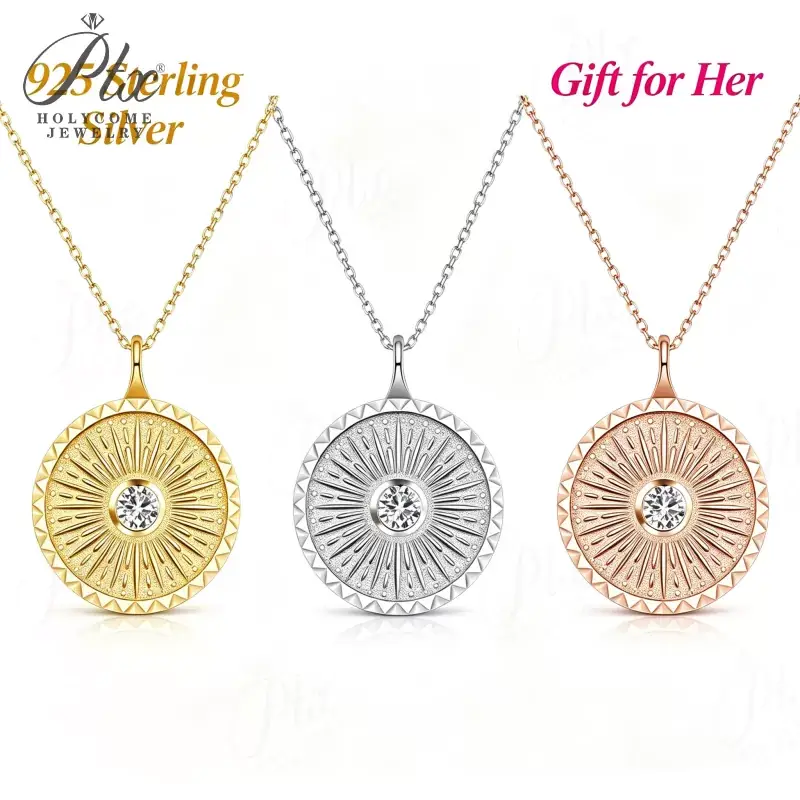
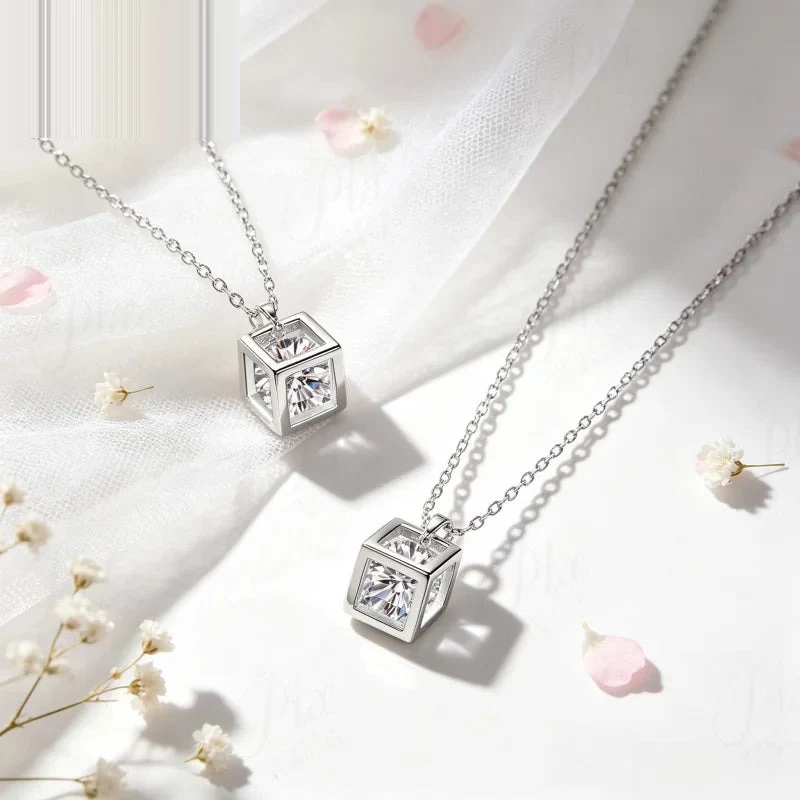
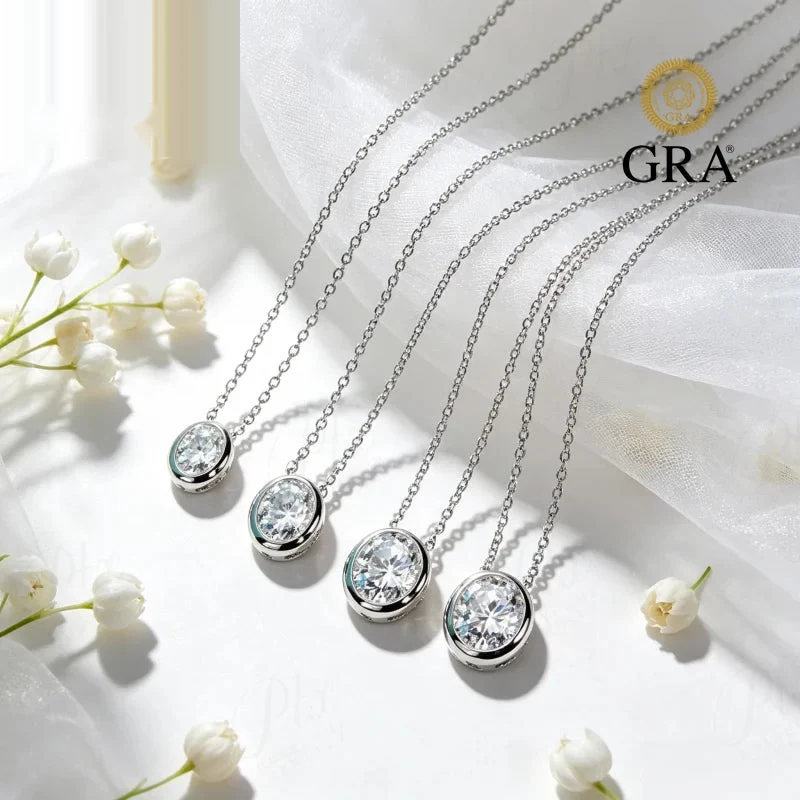
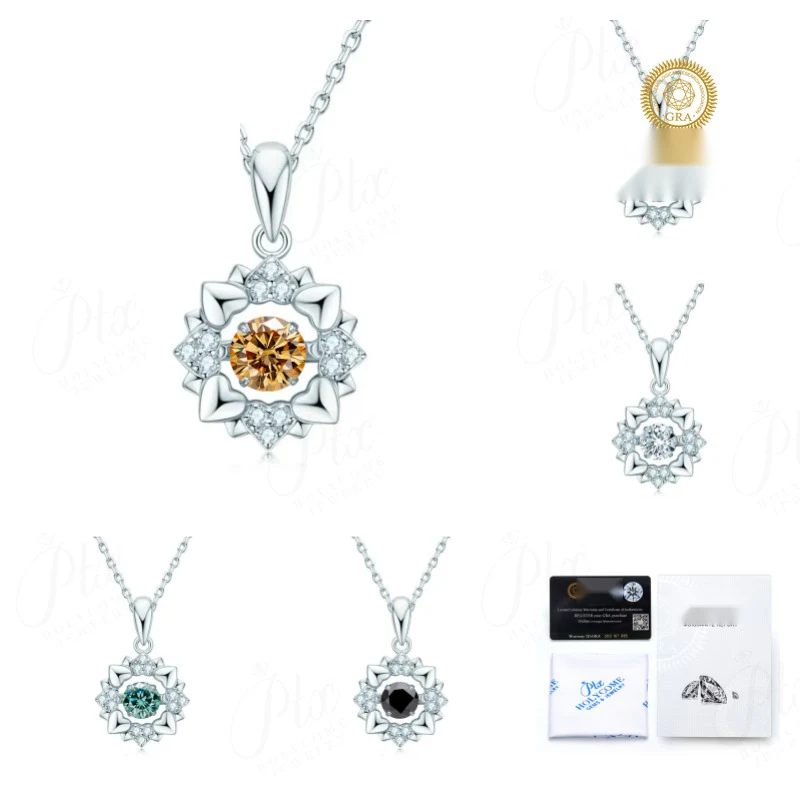
A jeweller in Sydney ordered fifty pendants on 1.2 mm cable chains. Fourteen pendants came back within a quarter: the chain twisted into kinks, the wear on the bail thinned to 0.3 mm, and on two pieces the spring-ring clasp popped open in the shower. The moissanite was fine. The chain spec was mismatched to the pendant weight and the bail wall.
Pendants are sold as a stone on a wire, but the chain carries the whole load. Below are the chain lengths, gauges and link types we quote before we solder the bail.
Length by neckline: 16, 18 and 20 inch
Sixteen inch sits at the collarbone and is the most common length for solitaire pendants under 1 carat. Eighteen inch drops 2.5 cm lower and is the length retailers sell to V-neck and blouse clients. Twenty inch is the length for pendants above 1.5 carat and for layering. We stock all three lengths as standard and quote a 2 inch extension chain for USD 0.80 per piece. Buyers should default to 18 inch on a first order; it sells through about 60 percent of the time.
Gauge scales with pendant weight
A 1 gram pendant rides safely on a 0.8 mm cable chain. A 3 gram pendant needs a 1.0 mm chain. Above 4 grams, we step to a 1.2 mm box chain, because cable links flex and stretch under heavy pendants. A 6.5 mm round moissanite on a 14K head weighs about 2.8 grams, so we pair it with a 1.0 mm chain. The rule on our spec sheet: chain gauge in mm multiplied by pendant weight in grams should stay under 3.5 for daily wear.
Link type: cable, box, snake, figaro
Cable chains are the default and cost the least. Box chains hold their shape under heavy pendants and are easier to repair. Snake chains sit flat against the skin but kink permanently if bent, so we do not recommend them for pendants over 2 grams. Figaro chains sell as a fashion look but are not load-rated for pendants above 3 grams. Our stone and chain matching guide lists the load rating per link type we use in production.
Bail and chain interface
The bail is where pendants fail. We build bails in 0.7 mm wire minimum, soldered closed, with an inner opening of 3.5 mm so a 1.2 mm chain passes without binding. Open bails (jump-ring style) are cheaper but twist and wear thin at the joint; we quote soldered bails as standard on pendants above 2 grams. Buyers should also look at our pendant design guide and our necklace chain and bail notes before choosing an open bail.
Plating and nickel release
Sterling silver chains are rhodium plated at 0.3 microns to slow tarnish. White gold chains are plated at the same thickness. For EU buyers, nickel release must stay under the 0.5 micrograms per square centimetre per week limit set out in the REACH nickel directive; we test every chain batch with a nickel spot test before packing. Buyers shipping to the EU should ask for the spot test result on the proforma.
Chain weight and pendant balance
A pendant that flips around on the neck reads as cheap. The flip happens when the pendant weighs more than the chain, or when the bail opening is too wide for the chain gauge. We pair pendants under 3 grams with chains that weigh at least 1.5 grams so the chain sits flat and the pendant faces forward. On pendants above 4 grams, we add a 0.5 mm weight to the back of the bail to balance the stone. Buyers selling to office wear should quote the balanced chain, not the lightest one, because returns on flipping pendants run about 6 percent of unbalanced orders.
What chain gauge pairs with a 7 mm pendant?
A 1.0 mm box or cable chain in 14K gold, or 1.1 mm in sterling silver. A 0.8 mm chain on a 3 gram pendant stretches within a year of daily wear.
Which chain length sells best?
Eighteen inch, at roughly 60 percent of pendant sales. Sixteen inch is the second; twenty inch is the layering length and sells to a younger demo.
Do snake chains tarnish faster?
No, but they kink permanently if bent and cannot be repaired. We do not pair snake chains with pendants over 2 grams because the kink risk is too high.
Can you supply the bail soldered closed?
Yes, as standard on pendants above 2 grams. Open jump-ring bails are available on request for fashion pieces, but we flag the wear risk on the order sheet.
Send us the pendant weight, neckline and destination market. We return a chain length, gauge and link type on the spec sheet before casting. Ask us to spec your next custom moissanite pendant chain.
Frequently Asked Questions
Is moissanite a good diamond alternative for retail buyers?
Yes for price-sensitive customers who want brilliance and hardness. Moissanite ranks 9.25 on the Mohs scale, holds up to daily wear and costs a fraction of a natural diamond of the same size, so it resells fast in bridal and fashion lines.
What is the minimum order for wholesale moissanite?
MOQ starts at 50 pieces per design for stock items. Custom cuts and private-label settings usually start at 100–300 pieces depending on the mold.
Do you provide certificates with moissanite stones?
Yes. Every parcel ships with GRA or IGI documentation listing carat weight, color grade and cut. We recommend passing the certificate to your end customer for trust.
How long does sample and bulk production take?
Samples ship in 3–5 days. Bulk runs take 15–20 days under 500 pieces, and 25–30 days for custom work.