A buyer in Munich wanted a daily-wear moissanite engagement line at a retail ceiling of USD 850. Sterling silver tarnished too fast for that price point, 18k gold pushed the ticket over budget, and 10k gold felt cheap on the finger. 14k gold landed exactly where the buyer needed it: hard enough for slim prongs, rich enough to read as fine jewellery, and priced so the margin stayed intact. 14k is the default alloy we build in for a reason, and the bench numbers below explain why.
If you are choosing between metals more broadly, our online design process covers when the alloy choice is locked. Below is the 14k case in detail.
What 14k gold actually is on the bench
14k gold is 58.3 percent pure gold alloyed with copper, silver and a small amount of zinc. That hardness gives 14k the tensile strength to hold 0.9 mm prongs tight around a moissanite girdle without bending under daily knocks. Pure karat convention, including the 585 parts-per-thousand marking, is explained on Wikipedia's karat reference. We stamp every ring 585 and keep the alloy within ISO 9202 tolerances, so the stamp means what it says for EU and US retail. The finish we choose, polished or matte, is held to the same standard across the batch.
14k versus 10k: where 10k falls short
10k gold is 41.7 percent gold, harder and cheaper, but the higher copper content makes it brittle. On a 0.9 mm prong, 10k wire snaps more often during setting and chips at the tip over years of wear. We see about twice the retipping rate on 10k prong heads versus 14k. The saving on material is real, but the warranty cost erodes it, which is why we do not recommend 10k for a prong-set engagement line. 10k has its place on plain bands and fashion pieces that do not hold stones.
14k versus 18k: where 18k reads soft
18k gold is 75 percent pure, richer in colour and softer. It is beautiful on a solitaire that is worn gently, but on a daily-wear ring with slim prongs it wears faster: prongs loosen, the shank flattens on the underside, and the ring needs retipping sooner. 18k also costs about 25 percent more in gold weight, which pushes the retail ticket out of the sub-USD 1,000 band most buyers target. We build 18k for clients who specifically want the deeper gold colour and accept the softer wear. For a comparison against the halo option, our halo and diamond-alternative guide sits next to this alloy choice on the order sheet.
14k colour and the moissanite face-up
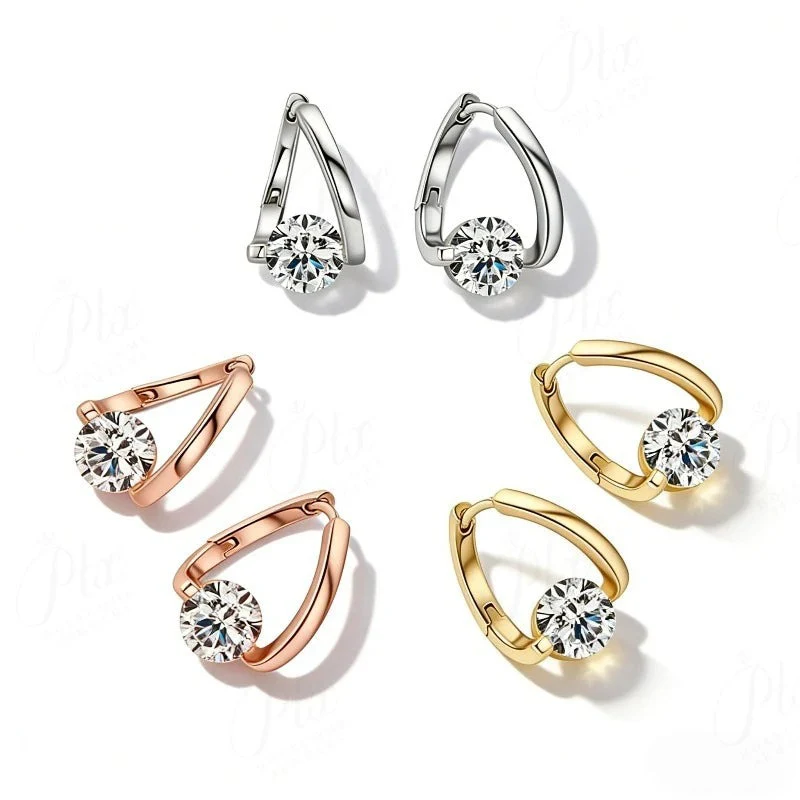
White 14k gold is rhodium plated, which gives the bright white face-up clients expect next to colourless moissanite. Yellow 14k gold warms the stone, which suits a warmer moissanite tone. Rose 14k gold reads romantic and sells to a younger client. We plate white 14k to a uniform rhodium thickness so the finish does not vary batch to batch. The nickel content in the alloy we use is held under the EU release limit, documented in the EU nickel directive, which matters because EU retailers cannot sell high-nickel alloys against skin.
Is 14k gold durable enough for daily wear?
Yes, that is exactly its sweet spot. It holds 0.9 mm prongs better than 18k and sets more cleanly than 10k, which is why it is our default for engagement lines.
Does white 14k gold tarnish?
The gold itself does not tarnish, but the rhodium plating wears thin over two to three years and shows the warm gold underneath. Re-plating is a small, routine service.
Can 14k gold rings be resized?
Yes, 14k resizes cleanly. It is more workable than brittle 10k and easier to size than dense platinum.
What stamped marking should the ring carry?
585 for 14k. We stamp it inside the shank and hold the alloy to ISO 9202 so the mark is truthful for customs and insurance.
How 14k holds up on resale and an insurance claim
Because 14k holds its karat mark and its finish better than 10k, the piece appraises higher and holds value longer at resale. A 10k band that has worn thin reads as lower-quality at the bench, which drags the valuation down. We pair every 14k build with the claim-ready appraisal so the stamped 585 mark backs the insured value. That combination is why 14k is the alloy we recommend when the client plans to keep, wear daily and insure the ring long term.
We quote the alloy, the prong gauge and the rhodium plating note on the same sheet, so the buyer sees the full build cost before CAD opens, not a surprise at the invoice.
Send us your target retail price and the wear profile. We return the recommended 14k alloy, prong gauge and plating note on the spec sheet before CAD opens. Ask us to spec your next 14k gold custom moissanite ring.
Frequently Asked Questions
Is moissanite a good diamond alternative for retail buyers?
Yes for price-sensitive customers who want brilliance and hardness. Moissanite ranks 9.25 on the Mohs scale, holds up to daily wear and costs a fraction of a natural diamond of the same size, so it resells fast in bridal and fashion lines.
What is the minimum order for wholesale moissanite?
MOQ starts at 50 pieces per design for stock items. Custom cuts and private-label settings usually start at 100–300 pieces depending on the mold.
Do you provide certificates with moissanite stones?
Yes. Every parcel ships with GRA or IGI documentation listing carat weight, color grade and cut. We recommend passing the certificate to your end customer for trust.
How long does sample and bulk production take?
Samples ship in 3–5 days. Bulk runs take 15–20 days under 500 pieces, and 25–30 days for custom work.