Layered Silver Necklaces
A single thin chain with one pendant used to be enough. Today, the most polished neck looks like a small constellation: three or four sterling silver chains at different lengths, each carrying its own pendant or texture, arranged so they never tangle. Layered silver necklaces are the default everyday look in 2026, and once you learn the formula, they are effortless. This guide covers the chain math, pendant choices and styling rules that make layering work, so you can build a look that reads as intentional rather than piled on.
The Formula for a Flawless Layer
The secret to good layering is spacing. Each chain should sit roughly two inches below the one above it, so every pendant is visible and no two pendants fight for the same spot. A starting formula is three chains: a 16-inch choker, an 18-inch princess chain and a 20-inch matinee chain. Add a fourth longer chain at 24 inches if you want drama. The two-inch gap ensures that even when you move, the pendants do not collide into one another. If pendants touch, the look stops being layered and starts being tangled.
The second rule is variety. If all three chains are the same texture, the stack looks like one heavy necklace that was accidentally draped. Mix cable, Figaro, rope and snake chains. The contrast in how light reflects off each texture is what makes the layer interesting. Our types of silver chains guide breaks down each weave so you can choose deliberately, from the classic cable to the structured box chain to the fluid snake.
The third rule is weight. Lighter chains sit closer to the neck; heavier chains hang lower. This natural weight separation prevents tangling better than any clip. If all your chains weigh the same, they twist around each other because they float at the same level. If one is a fine 1mm cable and another is a 2mm curb, they stay separated by gravity alone.
Chain Lengths and Where They Fall
Knowing where each length lands on the body prevents styling mistakes. A 14-inch chain sits tight like a choker and works best with crew necks or off-the-shoulder tops. A 16-inch chain rests at the base of the neck and flatters a V-neck. An 18-inch chain falls at the collarbone, the most universally flattering length. A 20-inch chain drops just below the collarbone and works with button-downs. A 24-inch chain reaches the sternum and adds vertical line.
| Length | Where It Falls | Best Neckline |
|---|---|---|
| 14 in | Base of neck | Off-shoulder, boat neck |
| 16 in | Just below throat | V-neck, crew |
| 18 in | Collarbone | Most everyday tops |
| 20 in | Below collarbone | Button-down, scoop |
| 24 in | Sternum | Sweaters, turtlenecks |
Our silver necklace length guide includes a printable measuring chart customers can use at home, so they can hold a tape measure around their neck and see exactly where each length will land before ordering. This is especially useful for online shoppers who cannot try chains on in person. The guide also covers how necklace length interacts with neckline height, so a 16-inch chain does not disappear under a turtleneck.
Pendant Choices That Pop
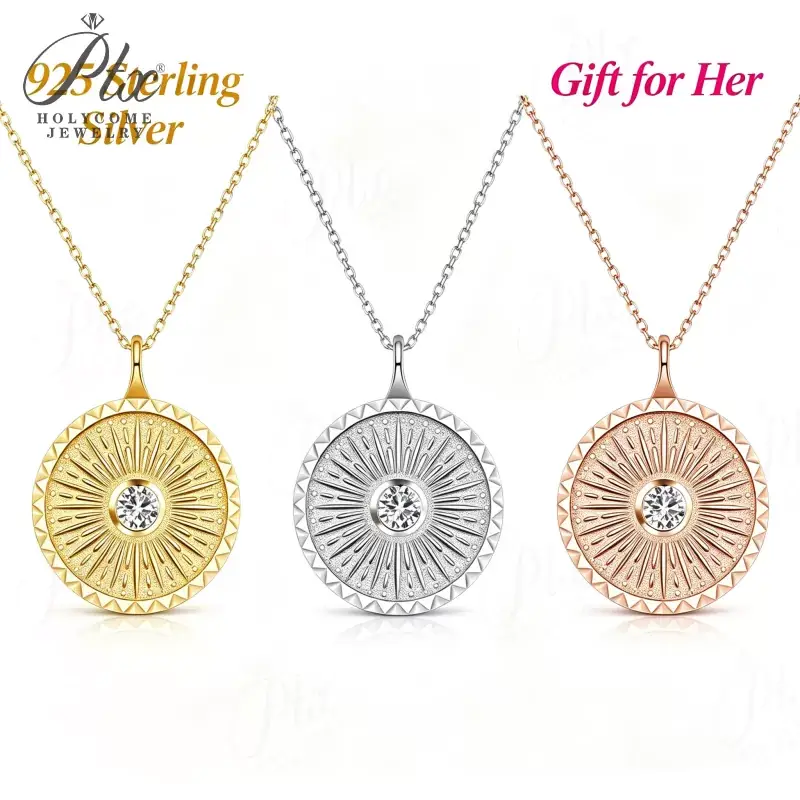
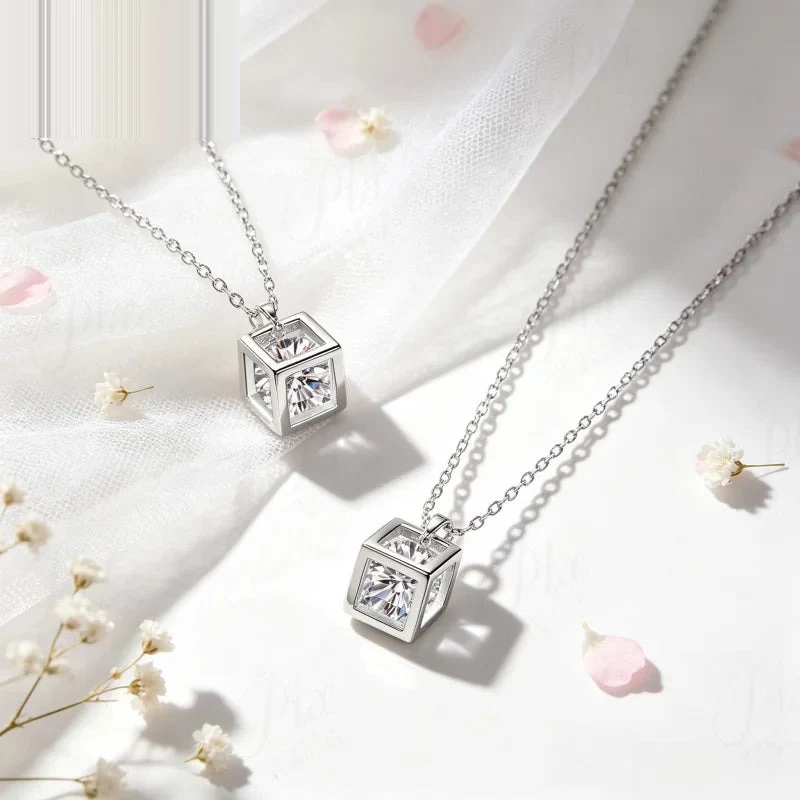
Pendants are where a layer expresses personality. The rule is one statement pendant per layer stack, not one per chain. Let the longest chain carry the hero: a small moissanite solitaire, a hand-stamped initial, a vintage locket or a geometric bar. The shorter chains carry tiny accents: a single bead, a thin charm, a small coin or nothing at all. Bare chains are important; they give the eye a rest between pendants. A stack where every chain has a pendant feels crowded and exhausting to look at.
Shape variety matters. A round pendant next to a geometric pendant reads as curated. A round pendant next to another round pendant reads as repetitive. If the hero pendant is a circle, choose an oval or a bar for the next layer down. Our sterling silver pendant guide covers the shapes that layer best, including the sizes that read as delicate rather than bulky on different necklines.
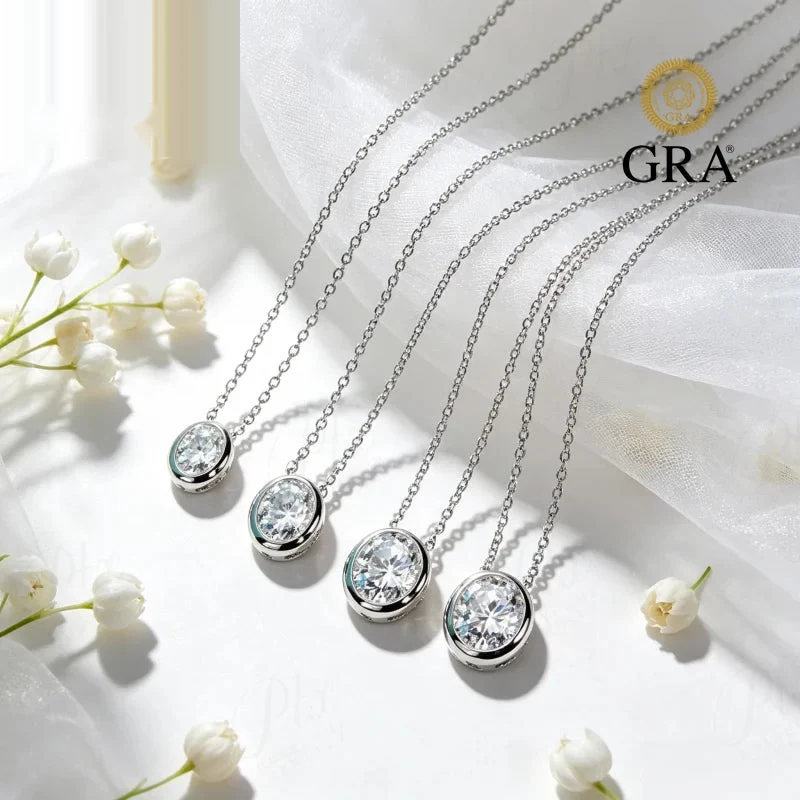
For customers who want sparkle without a pendant, a thin chain with spaced moissanite stations works beautifully. Three tiny stones at intervals on a 20-inch chain catch light as the head moves, without the weight of a single pendant. The moissanite pendant guide covers both pendant styles and station styles.
Mixing Chain Textures
Texture is the unsung hero of layering. A smooth snake chain next to a textured Figaro chain creates a rhythm that polished cables alone cannot match. The most successful stacks use at least three different textures: a smooth chain for the closest layer, a patterned chain for the middle, and a longer cable or rope chain for the drop. This also solves the tangling problem to some extent, because different textures slide past each other more easily than identical smooth chains.
Thickness variation is equally important. A 1mm choker, a 1.5mm Figaro and a 2mm cable chain create a visual gradient that reads as intentional. Matching all chains to the same thickness looks like a uniform rather than a layer. The no-tangle layering method covers texture matching in detail, including which chain weaves slide past each other best and which tend to knot.
Material finish also matters. A rhodium-plated bright chain next to an oxidized matte chain creates contrast that draws the eye down the stack. A brushed chain next to a polished chain reads as modern. If every chain is high-polish, the stack looks like it came in a single jewelry box; if finishes vary, it looks like a collection built over time.
No-Tangle Tips and Clasp Solutions
Tangling is the number-one complaint about layered necklaces. A few simple habits eliminate it. First, always clasp chains one at a time before putting them on, starting from the longest. Second, use a layer detangler clip that holds the longer chains at a fixed point on the shorter chain, so they cannot swing into each other. Third, choose chains with different weights; lighter chains sit closer to the neck and heavier chains hang lower, which naturally separates them.
Lobster clasps are easier to fasten alone than spring rings, especially on longer chains. If you struggle to clasp a 24-inch chain behind your neck, add a lobster clasp or use a front clasp that you can fasten at the collarbone and spin around. Our silver lariat and Y-necklace guide covers adjustable styles that eliminate clasp issues entirely, because you slide the knot to fit rather than fastening behind your neck.
Another pro tip: after clasping, hang the necklaces for a few minutes before putting them on, so any twists fall out naturally. If you put on a tangled stack, it stays tangled all day. If you hang it, gravity does the work. Storing layered necklaces on a stand rather than in a box also prevents tangling between wears.
Layering for Necklines and Occasions
The same stack does not work for every outfit. For a turtleneck, skip the choker and let two longer chains fall over the knit. For a button-down shirt, wear a shorter 16-inch chain inside the collar and a longer 20-inch chain outside. For an off-shoulder top, a single choker-length chain is enough; adding more competes with the exposed skin. For evening, replace everyday pendants with one moissanite pendant on the longest chain and keep the rest bare.
Workwear layering should stay subtle: two thin chains, no large pendants, nothing that clatters at a desk. Weekend layering can be bolder: add a charm chain, a lariat or a longer tassel. Our silver choker styling guide covers how to wear the shortest layer without looking costumey, which is the most common concern people have about chokers.
For weddings and formal events, replace silver with white rhodium plating or add a single moissanite pendant for extra sparkle. For beachwear, skip layering entirely and wear one longer chain on a leather cord, because sand and saltwater tangle and tarnish silver. The key is to treat the stack as a system you adjust, not a fixed set you wear identically every day.
Sterling Silver vs Plated for Layers
Because layered necklaces rub against skin and clothing all day, the metal matters. Sterling silver wears better than plated base metal, which turns green or flakes after months of daily friction. A set of three 925 chains costs more upfront but lasts for years and can be polished back to brightness. Plated chains are fine for occasional wear, but for a daily layer they will disappoint, and the green tint on the skin is a giveaway that the metal is not solid.
Silver also handles sweat and perfume better than fashion alloy. If you wear your layers to the gym, to sleep or through summer humidity, sterling silver is the only choice. Our 925 sterling silver guide explains the alloy composition and why it is the daily-wear standard, including why the small copper content is usually well-tolerated by sensitive skin.
Layering for Long Hair
Long-haired wearers face a specific layering challenge: chains get tangled in hair, especially when the head moves. The solution is to choose slightly heavier chains that sit firmly on the chest rather than floating against the neck, and to tuck longer layers inside a shirt or sweater when wearing hair down. A 1mm cable chain floats against the skin and catches on hair; a 1.5mm curb chain lies flatter and stays put. Chokers work well with long hair because they sit above the hairline, so they never tangle.
Pendants also help. A pendant adds weight to a chain, which pulls it down against the body and prevents it from floating into hair. If you have long hair, choose layered chains that each have at least a small pendant, even a bead, rather than bare chains. The weight difference is noticeable. The length guide covers which lengths work best with down-styles versus updos, because an updo exposes the whole neck and lets shorter layers shine.
Necklace Stands and Travel Storage
The way you store layered necklaces determines whether they are ready to wear in the morning or a knotted mess. A necklace stand with separate hooks for each chain prevents tangling between wears. Hang the longest chain on the lowest hook, the shortest on the highest, so they do not overlap. This also turns the jewelry into a visual display, which makes it easier to choose a stack each morning.
For travel, use a jewelry roll with separate pockets for each chain. Never throw layered necklaces into a cosmetics bag, because they will knot beyond repair. A simple paper towel roll, with each chain fastened and tucked inside, also works for short trips. The extra two minutes of careful packing saves thirty minutes of untangling at the hotel. The cleaning guide covers how to remove tarnish after travel, especially if the necklaces have been exposed to airplane cabin air or hotel humidity.
The Psychology of Layered Jewelry
Layered necklaces are not just a styling trick; they reflect how people want to present themselves. A single necklace can signal one thing: minimalism, elegance, effortlessness. Multiple layers signal complexity, personal history and curation. Customers who layer are saying that their identity is not reducible to one piece, and that they have built a collection over time. This is why layering resonates so strongly with a generation that curates its wardrobe, its bookshelf and its home aesthetic.
Retailers who understand this psychology sell layers as a starting point, not a finished look. Instead of selling a three-chain set as the only option, sell one chain at a time and let customers add to it. The first chain is the entry purchase; the second and third are emotional additions that mean more because they were chosen over time. This is the same logic that drives charm bracelet loyalty, applied to the neck. The layering trend overview covers how this psychology drives basket size across jewelry categories.
Layering with Pendants vs Bare Chains
The ratio of pendant chains to bare chains determines whether a layer looks curated or cluttered. The most successful layers have one pendant and two bare chains, or two pendants and one bare chain. Three pendants on three chains is too much, because every chain is competing for attention. The eye needs bare chains to rest on between pendants, which is why minimalist layers often look better than maximalist ones.
Bare chains are also the most versatile. A bare cable chain can be worn alone, layered, or have a pendant added later. Buying bare chains gives you the most flexibility to rearrange the stack over time. The pendant guide covers which pendants work best as the single hero piece in a layer, and the chain guide covers which bare chains drape most beautifully on their own.
Necklace Layering for Men
Men are layering necklaces too, though with fewer pieces than women. The men look is usually two chains: a 16-inch silver chain against the neck and a 20-inch chain with a small pendant or dog tag. The chains are thicker than the womenswear equivalent, usually 2 to 3mm, so they read as substantial. The aesthetic is borrowed from hip-hop and workwear, but toned down for everyday office wear.
Men should avoid more than two chains, because three starts to look like costume. The two-chain layer works best over a t-shirt or an unbuttoned collar, not under a dress shirt. The men silver guide covers chain lengths and weights that sell for male customers, who often prefer box or curb chains over delicate cable. The length guide covers how men should measure their neck, because men necks are longer than women and the same chain length lands differently.
Frequently Asked Layering Questions
Customers new to layered necklaces ask the same questions. How many chains is too many? Three is the sweet spot; four is a maximum. Can I layer silver with gold? Yes, but repeat the mixed metal across at least two pieces. How do I stop chains from tangling? Use different weights, different textures and a layer clip. Can I layer a pendant with a watch? The watch is on the wrist, so it does not conflict. What length should the shortest chain be? Sixteen inches is the most versatile starting point.
The most common concern is whether layering looks messy. The answer is that a two-inch gap between chains and varied textures keeps it curated. If it looks messy, you have too many pendants or chains of the same length. The layering method guide covers the exact formula, and the length guide covers measuring. The chain guide covers which weaves tangle least.
Building Your Layered Look
If you are new to layering, start with two chains, not four. A 16-inch plain cable and an 18-inch Figaro with a small bar is enough to read as layered without overwhelming. Wear that for a month. When it feels natural, add a third longer chain. The point is not to replicate a stylist look overnight; it is to build a neckline that works for you. Layered silver is one of the most forgiving jewelry trends, because you can rearrange, add and remove pieces until it feels right. The result is a neckline that looks collected rather than copied.
Once the layering habit forms, it is hard to go back. A single necklace looks bare. A bare neck feels unfinished. The three-chain layer becomes the default, and you adjust the pendants to match the outfit rather than starting from scratch. This is the goal: jewelry that you choose without thinking, that works with your wardrobe, and that feels like an extension of how you get dressed in the morning. Layered silver is not a costume you put on; it is a system you live in.
The beauty of layered silver is that it grows with you. Start with two plain chains, add a pendant for a birthday, add a longer chain for a holiday, and over years the layer becomes a personal archive. Each chain has a memory: this one from a first job, that one from a trip, the other from a gift. The stack is not just jewelry; it is a timeline worn on the chest. That emotional weight is why layered necklaces have replaced single pendants as the default, and why the trend shows no sign of slowing.
For retailers, the layered necklace trend is a multi-sales engine. A customer who buys one chain comes back for the next. The average order value grows with each visit. Brands that offer mix-and-match chains, pendants and lengths win the customer for life. The custom necklaces guide covers how to offer personalized lengths and pendants, and the stocking guide covers which chain lengths sell best. The layer is not a single product; it is a system that customers build over time.
The easiest way to start layering is to look in your own jewelry box. Most people already own two or three chains that were bought separately. Put them on together, adjust the lengths, and see what you have. The first layer is rarely perfect, but it is a starting point. Over time, you will learn which combinations work for your neckline, your wardrobe and your life. Layered silver is one of the most democratic jewelry trends, because anyone with two chains can participate, and the look improves with personal curation rather than budget.
The key insight is that layering is not about buying more. It is about wearing what you already own in a new way. A drawer full of single pendants becomes a layered look overnight. This is why the trend has spread so quickly: it requires no new spending, just a little experimentation. Once you see how two chains sit together, you will never go back to one. The neck feels bare without the vertical line, and a single pendant looks like a statement from another decade. The layered neck is now the default, and it is here to stay.
Care for Layered Chains
Layered chains need more care than a single necklace because more surface area touches skin and air. Wipe each chain with a soft cloth after wearing to remove oils and perfume. Store them flat in separate compartments rather than in a tangled heap, which prevents both tangling and tarnish. Polish with a silver cloth every few weeks, and avoid dips that strip the patina from textured chains. Our how to clean silver necklaces guide has chain-specific tips, including how to clean fine cable chains without pulling links apart.
For added sparkle in a layer, a moissanite pendant on silver gives the longest chain a reason to be noticed. The combination of thin plain chains and one sparkling pendant is the most popular layered look in 2026, because it feels both curated and effortless. It is also the easiest to replicate: start with two thin silver chains, add one moissanite pendant on the longest chain, and the stack works.
Related Articles
Independent background on moissanite — how its hardness and refractive index compare with diamond — is documented in the Wikipedia article on moissanite.
Frequently Asked Questions
Which chain lengths should I stock first?
16 to 18 inch covers most necklines and gift purchases. Add 20 inch for layering sets and 24 inch for pendant lines.
Are your chains nickel-free and hypoallergenic?
Yes. Sterling silver is 92.5% silver; stainless lines use 316L. Both are nickel-safe for reactive customers when plated correctly.
Can necklaces be personalized?
Laser engraving on pendants and clasps is available from 50 pieces, with 3–5 day turnaround on the engraving step.
What is the bulk lead time?
15–20 days under 500 pieces; 25–30 days for custom pendants or new molds.