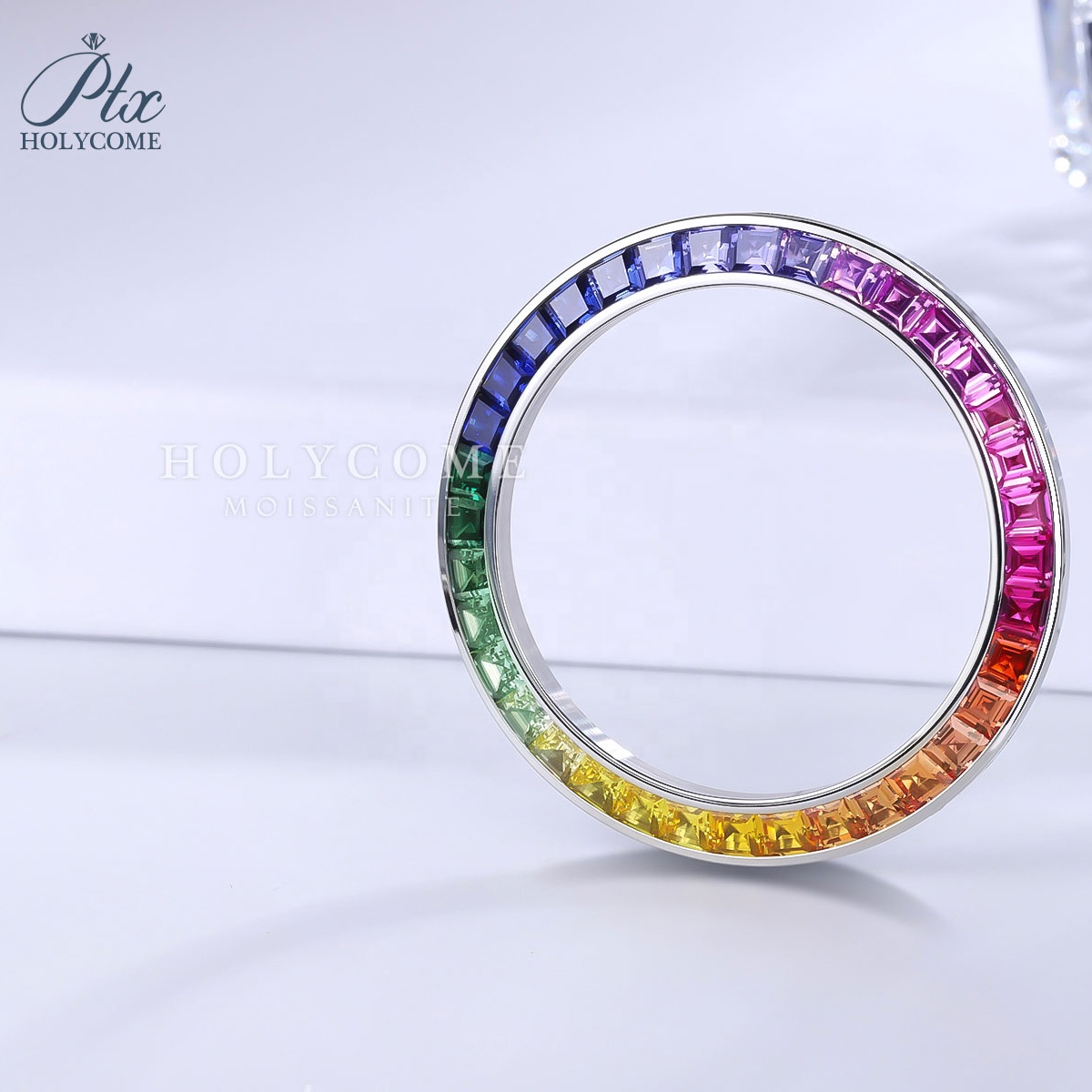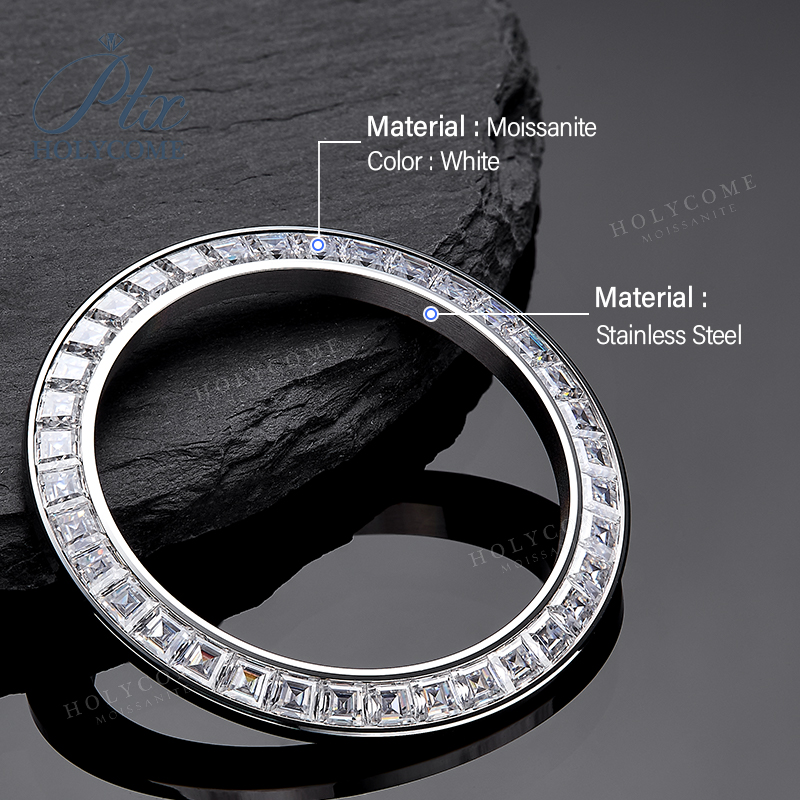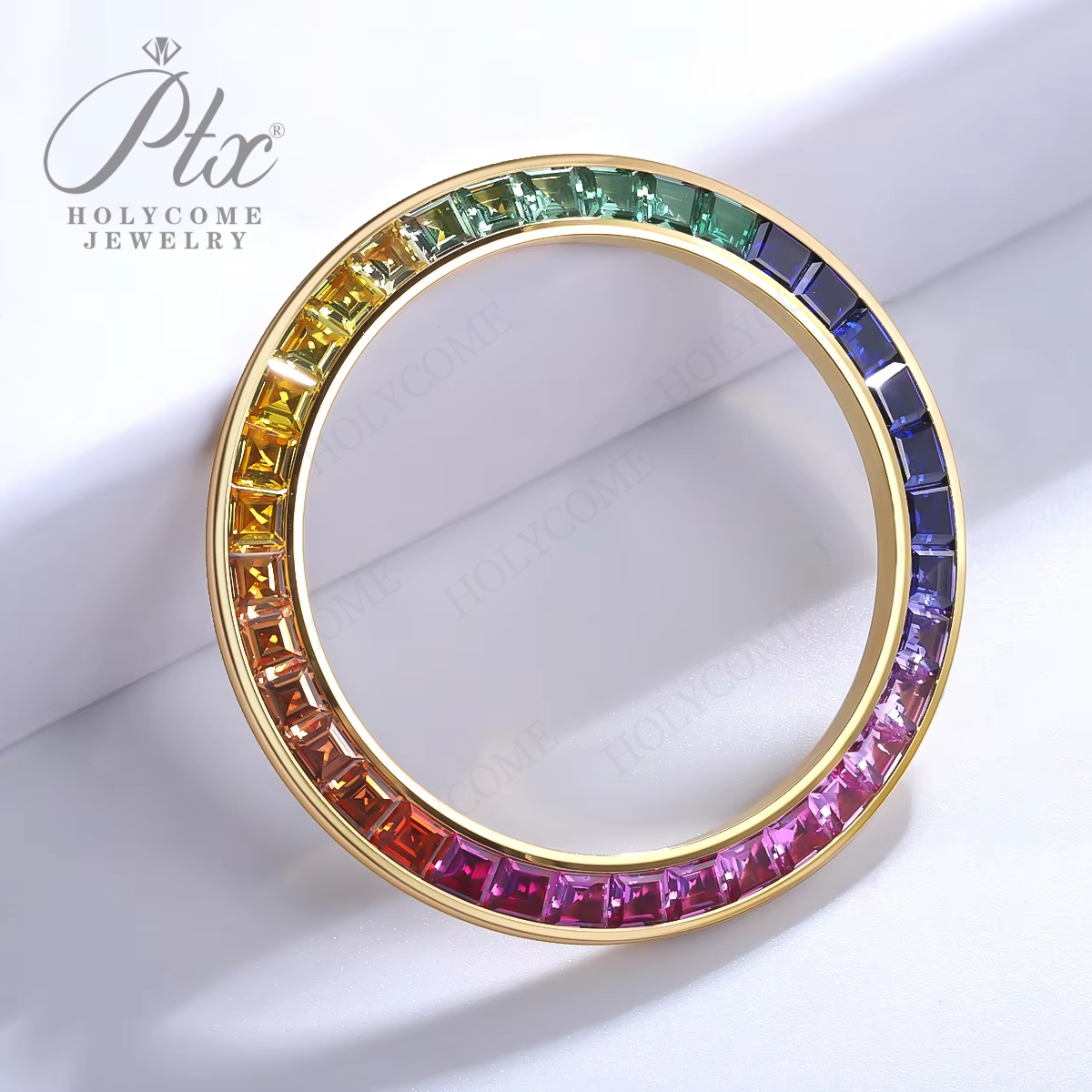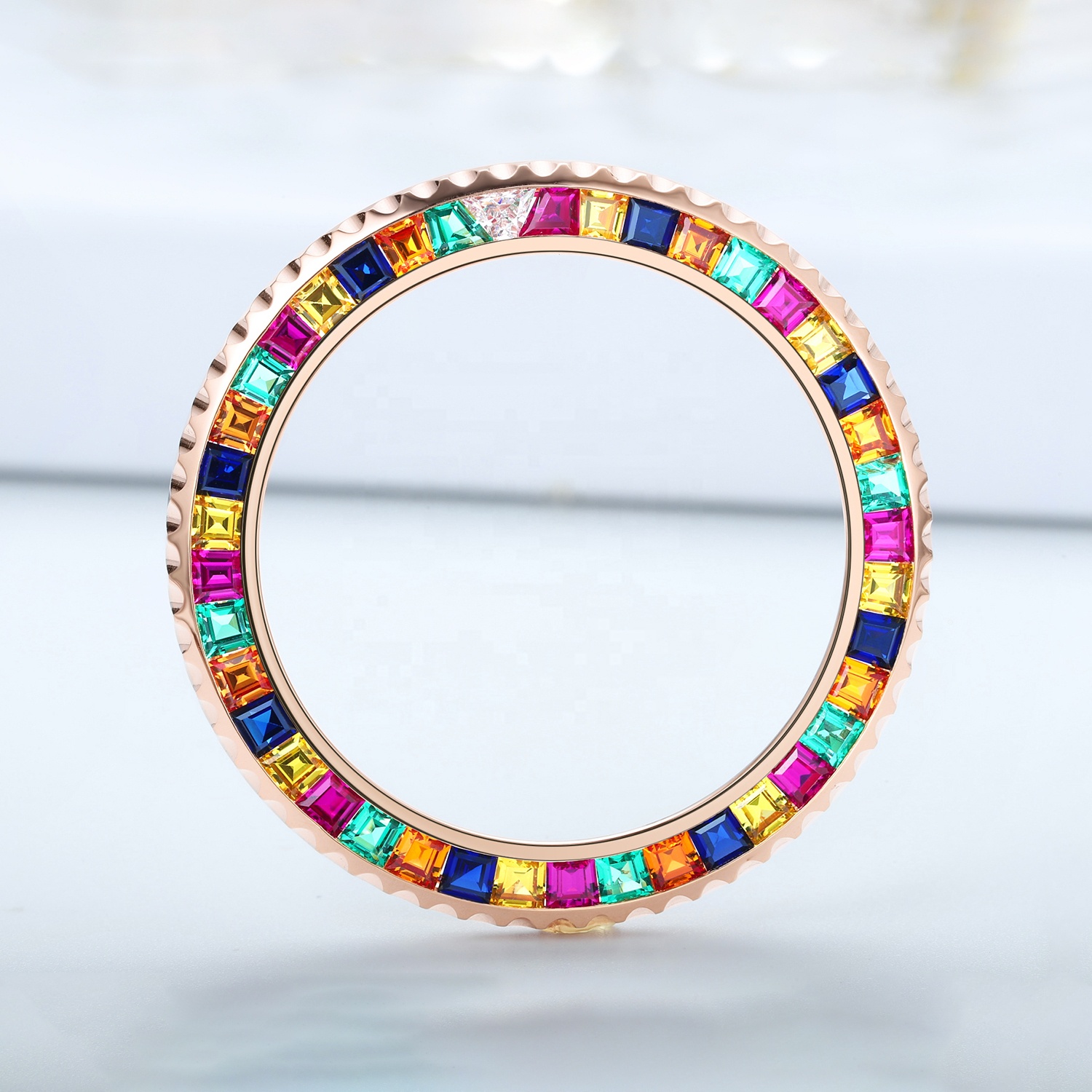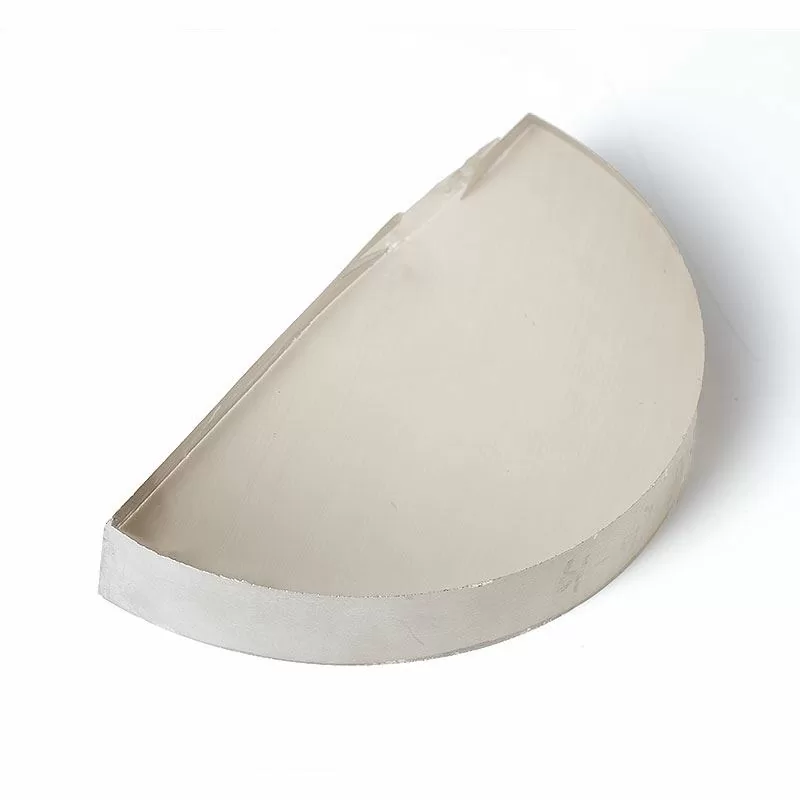
The first question on a synthetic stones quote is rarely the price. It is how few pieces you can buy to test the line before committing a season's budget. A supplier that cannot answer that in one line is still selling a catalog, not production.
What a realistic MOQ looks like for synthetic stones
On synthetic stones, a workable trial order sits at 30 pieces per design and per size run. That number covers a casting batch, a plating batch and a QC pass without forcing the factory to hold stock it cannot sell. Below 30, most workshops either refuse or quote a sample price that hides the real unit cost.
Production MOQ starts at 100 pieces and reaches a stable unit price near 300. The gap between the two is not a discount trick; it is the cost of setting up the line, mixing the alloy and running the first inspection.
Put the gram weight per size on the PO, not an average. Cost and feel both follow weight, and an average hides the size that breaks the margin.
The trial order is a paid interview
Treat the first 30 pieces as information, not revenue. You are buying four answers: whether the plating thickness matches the sample, whether the stone setting survives a drop test, whether the size run is consistent, and whether the carton arrives on the date promised.
Buyers who skip the trial order and go straight to a container load are the ones who discover a loose-stone lot at 500 pieces, when the rework cost is already six figures of inventory.
| Order tier | Pieces per design | Unit coefficient | Stage |
|---|---|---|---|
| Trial | 30 | 1.00x | First lot, full inspection |
| Production | 100 | 0.92x | Repeat line, AQL sampling |
| Program | 300 | 0.86x | Quarterly forecast, priority slot |
Read the table as a checklist rather than a recommendation. The right row depends on the price band, the wear pattern and the channel you sell into.
Ask for the plating thickness in microns, then test the contact points on the first lot. A thirty-second cloth rub shows colour transfer before a customer does.
When to move from trial to standing order
Move when three consecutive lots clear your incoming inspection without a credit note, and when the factory hits the promised ship date twice in a row. Until both are true, keep the order at trial volume and keep a second approved supplier warm.
A standing order on synthetic stones usually means a rolling 90-day forecast with a firm 30-day window. That structure lets the factory buy alloy and stones ahead of the run without guessing.
Reorder thresholds and stock cover
Set the reorder point from sell-through, not from gut feel. If a design moves 40 pieces a month and the factory needs 20 days, the reorder point is 40 pieces plus safety stock, not the MOQ of 100.
Holding one extra month of the top three designs costs less than an air freight rescue in Q4, and it protects the listing rank you spent the year building.
The specification is the product. Two pieces built to the same six lines are the same product even when the price differs; two built to different lines are not.
What to check before the order
Run the five checks below in order. The first two protect the money, the last three protect the launch date.
- Ask for the MOQ per size, not per design; a ring run splits across sizes.
- Confirm whether the trial price includes the plating and the stone setting.
- Put the reorder window in writing before the first PO.
- Ask what happens if a size sells out mid-season.
- Keep two approved suppliers for the top three designs.
If a supplier cannot answer three of the five, treat the quote as a starting point rather than a plan. Ask again in writing and keep the answer with the PO.
Frequently Asked Questions
What is a normal MOQ for synthetic stones wholesale?
Most factories quote 30 pieces per design for a trial and 100 for production. Anything far below that usually means a stock item, not a made-to-order run.
Can I mix sizes inside the synthetic stones MOQ?
Yes, but ask for the split rule first. Many factories count the total pieces and allow a size curve, while others count each size separately.
Does the trial order cost more per piece?
It normally runs at full unit price, without the tier discount. That premium buys the inspection data you need before scaling.
How long does a synthetic stones trial order take?
Plan on 15 to 25 days from approved sample to shipment, plus transit. A promise of seven days on a made-to-order run is a red flag.
Should I sign an annual volume commitment?
Only after two clean repeat lots. A commitment signed before the first inspection transfers all the risk to you.
How many suppliers should I keep?
Two approved sources for the top three designs, one for the tail. The second source is what keeps pricing honest.
Send the synthetic stones design, target retail price and size curve. We return the MOQ sheet, the tier pricing and a sample date within one business day. See the full range at Synthetic Stones and HOLYCOME.
The short version: specify the number, seal the sample, inspect against both. Everything else is negotiation.