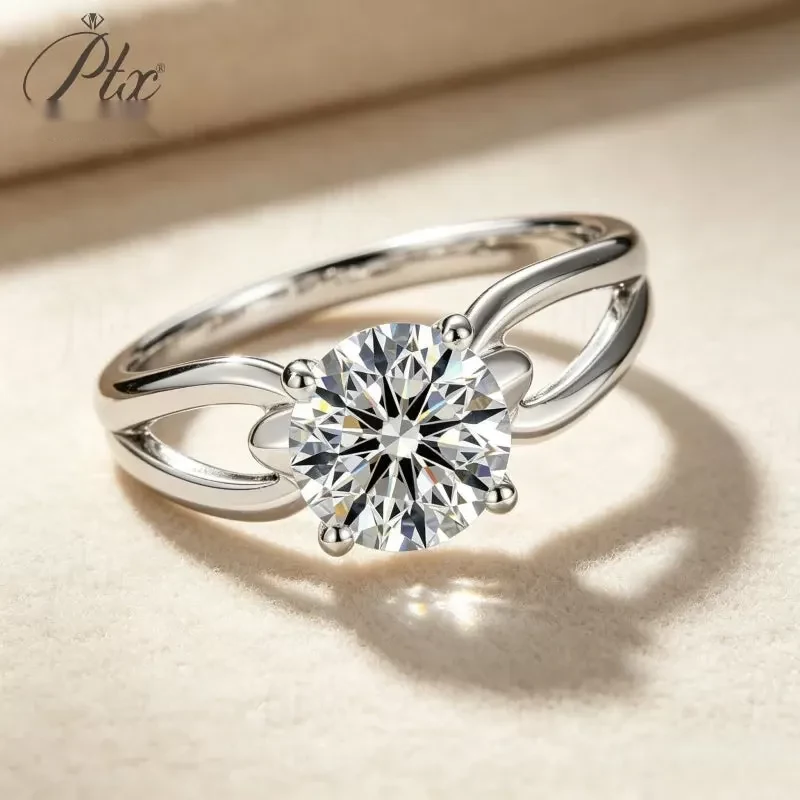
A solitaire engagement ring is beautiful on its own, but many brides feel something is missing on the wedding finger. That gap is exactly what a ring guard or enhancer band solves. It is a curved or fitted band designed to sit snugly on either side of an engagement ring, turning a lone solitaire into a complete, bridal-set look. For retailers, it is one of the easiest upsells in the ring category.
What a ring guard actually does
There are two jobs here. The first is visual: the enhancer adds width and sparkle on both sides of the center stone, making the whole ring read larger and more deliberate. The second is protective: a fitted band on either side cushions the solitaire and helps keep it from knocking against hard surfaces. Some customers buy a guard purely for the look; others buy it because their engagement ring feels too narrow on a wider finger.
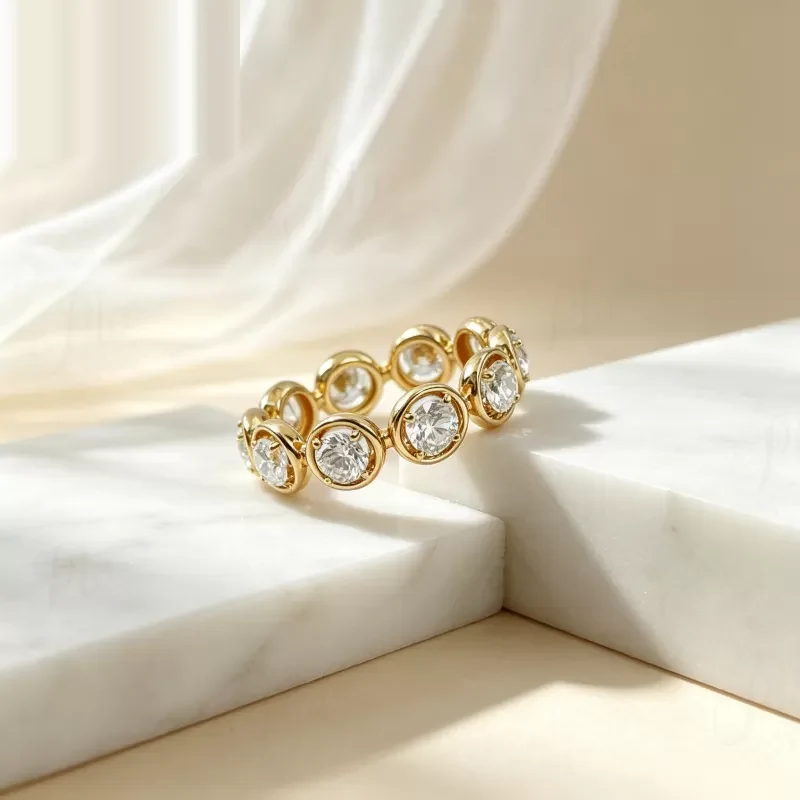
If the goal is continuous sparkle, an enhancer set with stones overlaps naturally with moissanite eternity bands in silver. The difference is that an enhancer is shaped to cradle a specific ring, while an eternity band is straight and sits beside it.
The three common enhancer styles
- Curved contour band that arches to follow the bottom of a solitaire. The most natural-looking option, it fits like it was made for the ring.
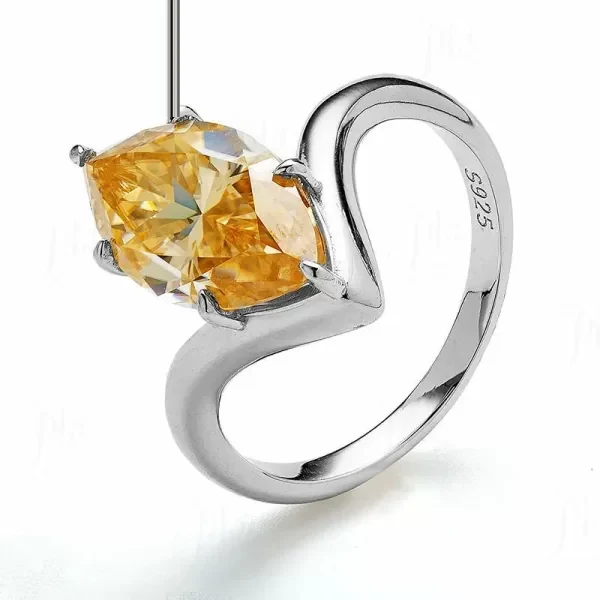
- V-shaped or chevron band that points toward a pointed center, such as a pear or marquise. It emphasizes the shape rather than hiding it.
- Wrapped guard, a single U-shaped band that slips around the engagement ring to hold it in place. This doubles as a sizing fix when a ring is slightly loose. For sizing problems more broadly, see when and how to resize a silver ring.
Fit is everything
An enhancer only looks right if it matches the engagement ring precisely. The curve must hug the band with no gap, and the stones should line up at the same height. A poorly fitted enhancer gapes, twists, and catches. Because engagement ring bands vary in thickness, customers should measure both rings together before ordering. This is also why band proportions matter: a wide solitaire needs a wider enhancer, and a slim solitaire needs a slim one. We cover finger and band proportion logic in ring band width and finger proportions.
Why sterling silver is a smart enhancer material
Enhancers are often bought as an affordable finishing touch rather than a high-investment piece. Sterling silver delivers the bright white look, takes rhodium plating beautifully, and costs far less than platinum or solid gold. A silver enhancer lets a bride complete her set without stretching the wedding budget, and it matches the white stones of a moissanite ring seamlessly. For the wider trend of paired bands, our notes on budget moissanite silver wedding sets show how enhancers fit into a full bridal look.
Selling the enhancer the right way
Show the ring both alone and with the enhancer. The before-and-after is the entire sale. Most customers do not realize how much a solitaire needs framing until they see it. Keep enhancers in the same metal tone and stone style as your engagement rings so they mix easily, and stock a few widths to fit different solitaire band thicknesses.
Care is the same as any silver ring: gentle soapy cleaning, stored apart to avoid scratching. A fitted set that touches all day will pick up fine scratches, which is normal patina rather than damage.
Ring guards and enhancers are a quiet high-margin category. They solve a real visual problem, upsell a completed bridal set, and let budget brides achieve the full look. Frame the before-and-after, fit accurately, and the enhancer sells itself.
When a guard is the better choice than a resizing
Sometimes a ring guard solves a problem that resizing cannot. If an engagement ring spins or slips on a slightly loose finger, a fitted guard holds it centered without a jeweler cutting the band open. This is especially useful for customers who do not want to alter an emotional piece. A guard also adds width to a ring that feels too narrow, which is a common request from people with larger fingers who love a dainty solitaire. Frame the guard as both styling and function: it completes the bridal look and stabilizes the ring in one affordable move. Just confirm the guard fits the exact band shape, since a curved enhancer for a straight band will never sit flush. Done right, it is the finishing touch that makes a solitaire feel like a full, intentional set.
Merchandising the guard alongside solitaires
The easiest way to sell enhancers is to display them touching the rings they pair with. A solitaire on a stand, with its matching guard clipped beside it, immediately shows the completed look. Train staff to mention the guard at the fitting, because most customers never ask for one until they see it. Keep a few common curves in stock so you can offer an instant upgrade on the day of purchase rather than a special order. Presented this way, the guard becomes a natural finishing touch instead of an afterthought, and average order values climb without extra advertising.
The 92.5% silver composition and properties of sterling silver are described in the Wikipedia entry on sterling silver.
Related reading: Stackable Sterling Silver Rings: How to Build a Balanced Ring Stack, 925 Silver Rings Sizing and Fit: The Complete Buyer's Guide, Stackable Silver Rings: How to Build a Ring Stack That Works.
Frequently Asked Questions
What ring sizes can you supply in bulk?
US sizes 5–12 including half sizes. Send a size breakdown with your order and we cast to that curve; comfort-fit inner bands reduce resize requests.
Can I order a mixed size run instead of one size?
Yes. Mixed runs are standard for wholesale: specify quantity per size and we pack and label by size at no extra labor cost.
What is the MOQ for custom ring designs?
50 pieces per design for existing molds; 100–300 pieces when a new mold or CAD model is required.
How should I price rings for retail margin?
Most partners use a 3–4x markup on FOB cost for sterling and 2.5–3x for moissanite solos, which keeps landed cost under 30% of retail.