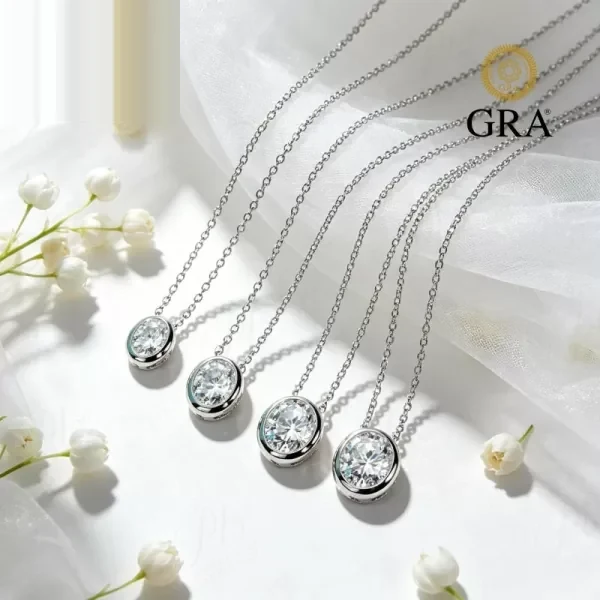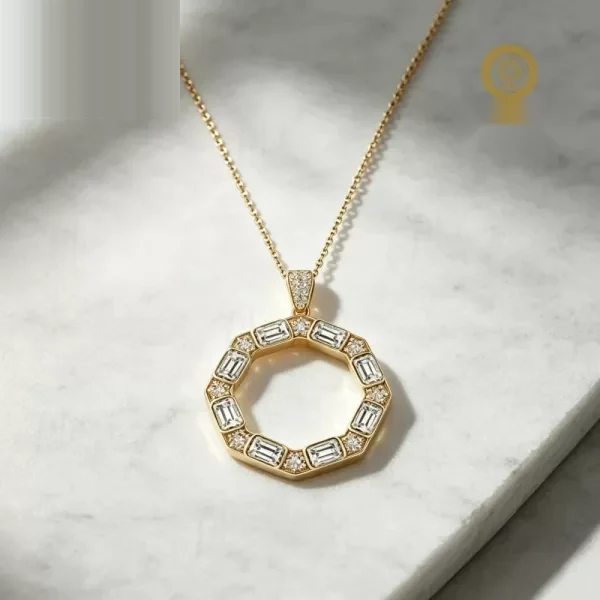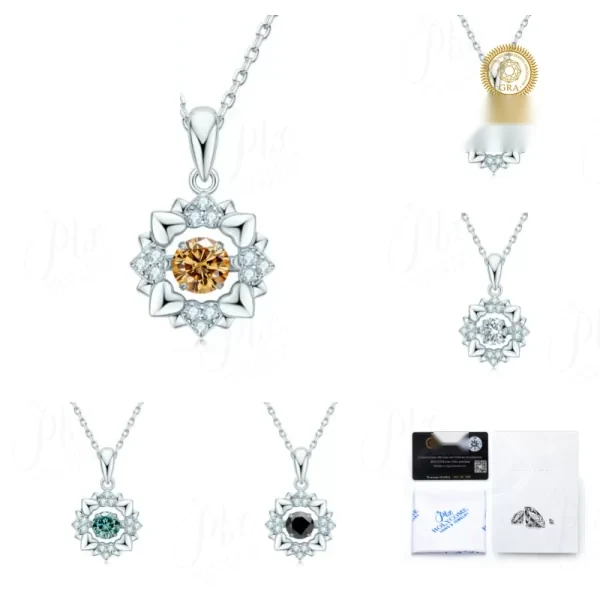
Most silver necklaces disputes are not about workmanship. They are about a standard that was never written down. An AQL sheet turns 'it looks off' into a measured accept or reject decision both sides can live with.
What AQL actually means on jewelry
AQL is the acceptable quality limit: the percentage of defects a lot may carry and still pass. On silver necklaces, AQL 2.5 for major defects and AQL 4.0 for minor is the common commercial setting.
The number matters less than the definition. A loose stone is a major defect. A 0.2 mm polish mark on the gallery is minor. Write both into the sheet.
Compare five cost lines instead of two totals. Metal, stone, labour, finishing and overhead explain a gap that a single number hides.
The four defect classes
Critical: sharp edge, wrong alloy, missing stone, nickel release above limit. Major: loose stone, wrong size, plating skip visible at arm's length. Minor: light polish mark, small bubble in the plate. Cosmetic: a mark only visible under a loupe.
Each class needs its own limit and its own remedy. A silver necklaces lot that fails critical fails entirely, whatever the AQL number says.
| Defect class | Example | Limit | Remedy |
|---|---|---|---|
| Critical | Wrong alloy, missing stone | 0 | Reject lot |
| Major | Loose stone, wrong size | AQL 2.5 | Remake or credit |
| Minor | Plating skip, light mark | AQL 4.0 | Price allowance |
| Cosmetic | Loupe-only polish mark | Not counted | Note only |
Read the table as a checklist rather than a recommendation. The right row depends on the price band, the wear pattern and the channel you sell into.
Keep the CAD file and the mould receipt. Ownership is a document, not an understanding.
Sampling that matches the lot size
For 50 pieces, inspect all. For 500, sample 50 by ISO 2859 general level II. For 5,000, sample 80. Inspect by size run and by design, not from one mixed tray.
Photograph the defects you find, with the PO number in frame. A claim without a photo pack is a conversation, not a claim.
Making the standard stick
Put the AQL sheet in the PO as an annex. Require the factory's own inspection record with the carton. Hold the last 10 percent payment against the inspection result.
That structure is what turns a silver necklaces QC clause from a sentence into a lever.
Most claim conversations end when the measurement is sent. Calipers and a 0.01 g scale settle in one email what adjectives settle in five.
What to check before the order
Run the five checks below in order. The first two protect the money, the last three protect the launch date.
- Write the defect definitions into the PO annex.
- Sample by size run, not from one tray.
- Photograph every defect with the PO number.
- Hold final payment against inspection.
- Keep the factory's own QC record with the carton.
If a supplier cannot answer three of the five, treat the quote as a starting point rather than a plan. Ask again in writing and keep the answer with the PO.
Frequently Asked Questions
What AQL should I use for silver necklaces?
AQL 2.5 major and 4.0 minor is the common commercial setting. Critical defects are zero regardless of the AQL.
Do I need a third-party inspection?
For the first two lots, yes. After that, your own incoming check plus the factory record is usually enough.
What counts as a loose stone?
Any stone that moves under light finger pressure, or shows a gap at the prong seat. Test every stone in the sample, not one per tray.
How do I handle a failed lot?
Reject, document, and agree remedy in writing: remake, credit or rework at the factory's cost. Do not accept a discount on a critical defect.
Can QC be done at the factory?
Yes, and it should be, but your inspection is the one that releases payment. Two checks catch more than one.
How many suppliers should I keep?
Two approved sources for the top three designs, one for the tail. The second source is what keeps pricing honest.
Send the silver necklaces spec. We return the AQL annex with defect photos, sampling plan and the remedy matrix you can attach to the PO. See the full range at Silver Necklaces and HOLYCOME.
The short version: specify the number, seal the sample, inspect against both. Everything else is negotiation.