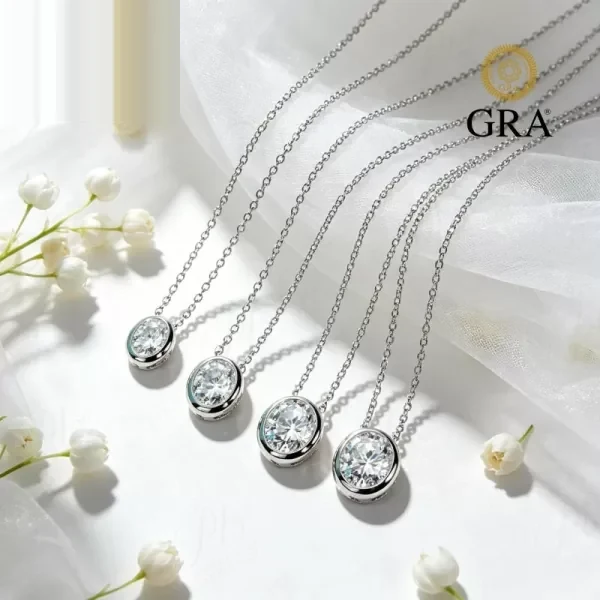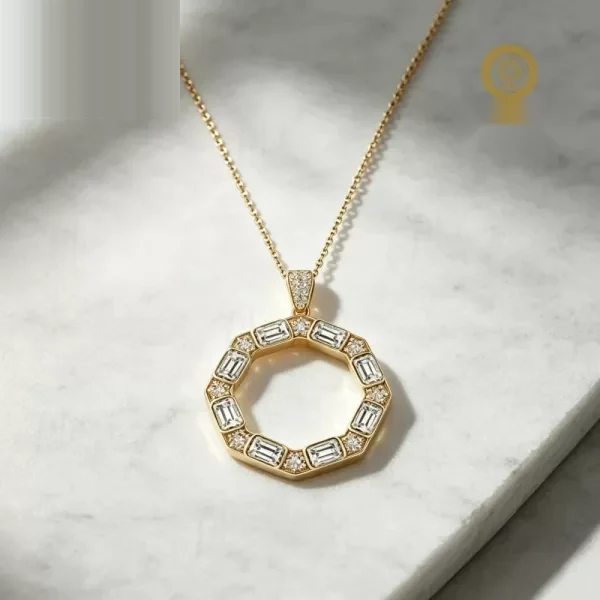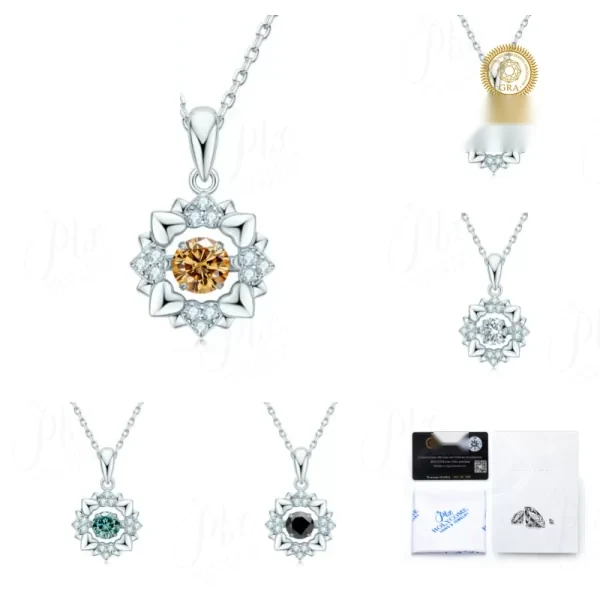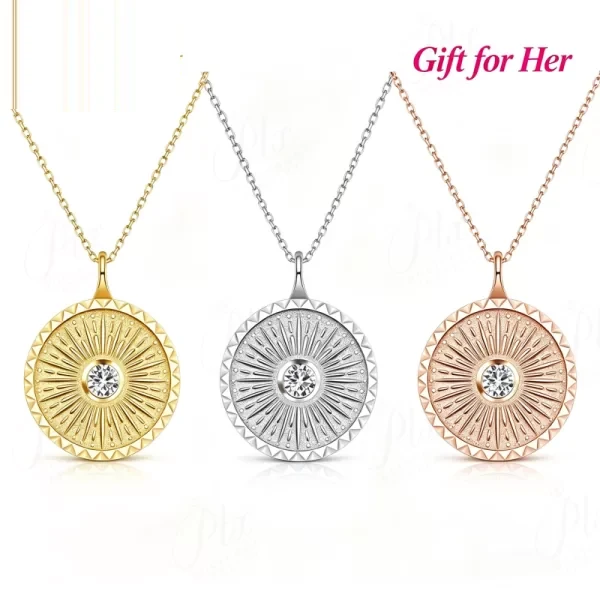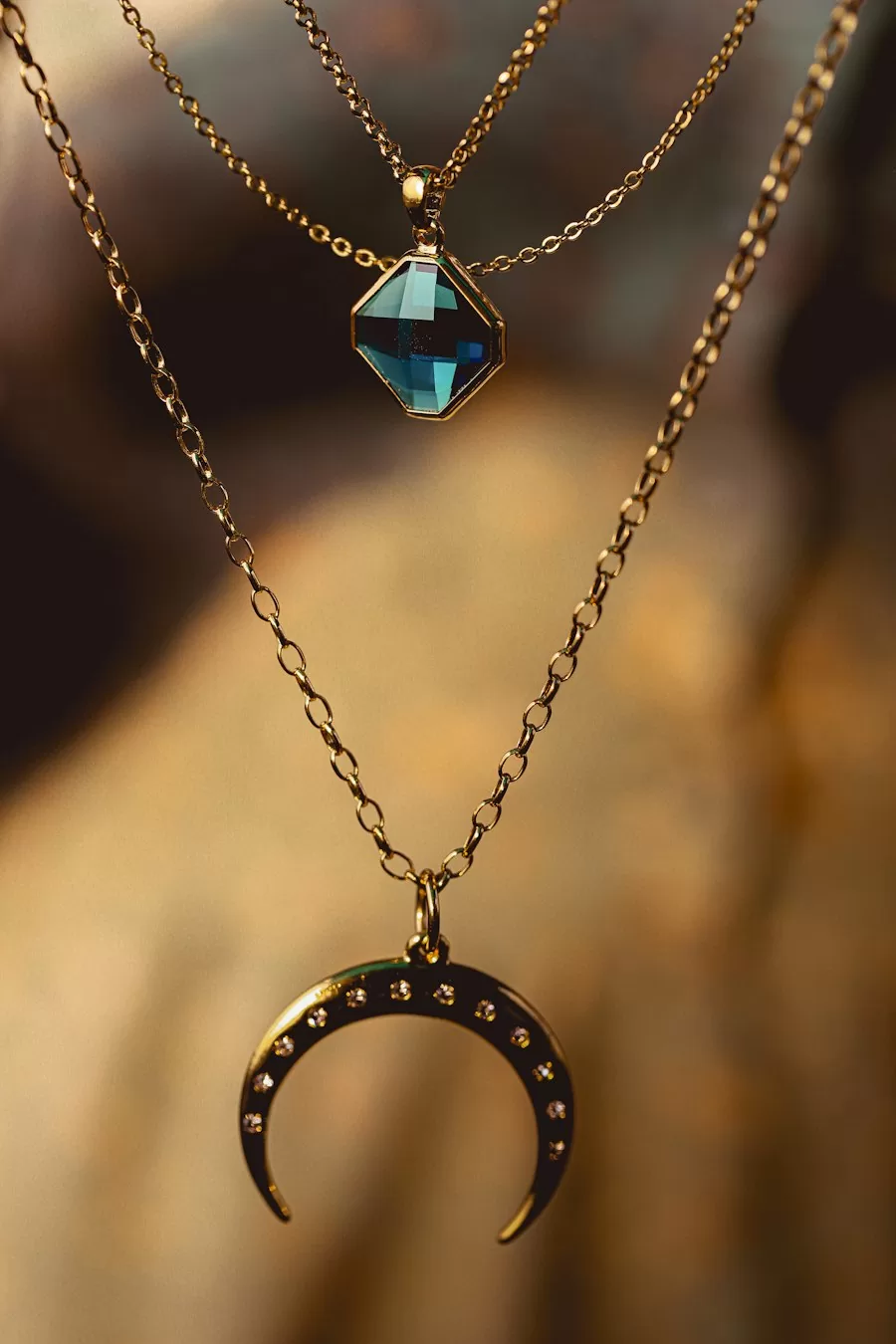
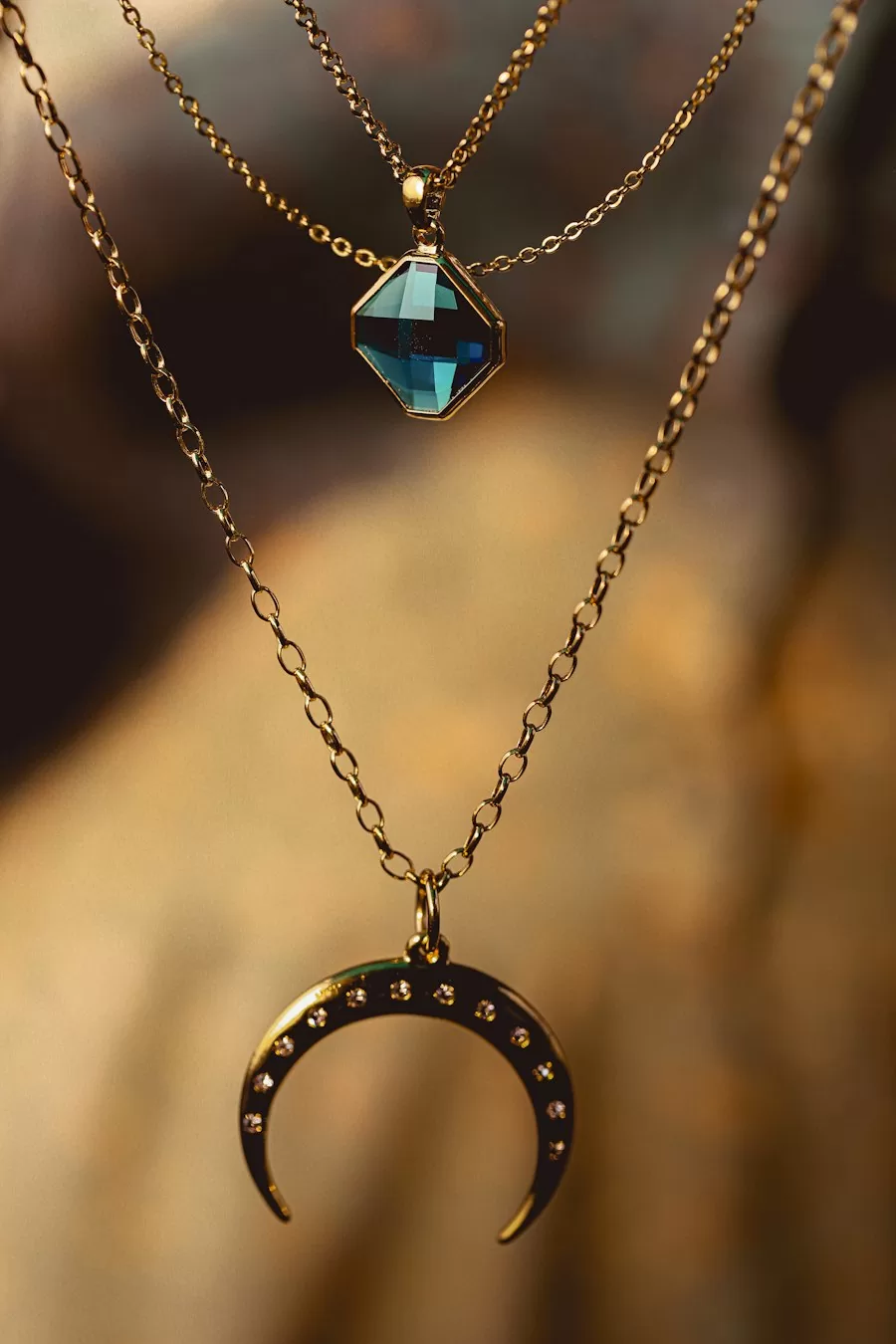
You have chosen a pendant you love, slipped it onto whatever chain was in the box, and something feels slightly wrong. The pendant flips backward, the chain tangles, or the whole piece looks heavier on top than it should. Almost never is the pendant at fault. The chain is the unsung half of the equation, and matching it well is a skill that takes minutes to learn.
The bail test first
Before anything else, look at the bail, the loop at the top of the pendant that the chain passes through. Measure its opening against your chain. A chain that is too wide will not thread through, or will thread stiffly and make the pendant stick at an angle. A chain that is dramatically too thin will let a heavy pendant spin and flip.
Rule of thumb: the chain should slide through the bail with a little room, but not rattle. If the bail is tiny, a delicate cable or snake chain is your friend. If it is large and bold, you can carry a thicker rope or Cuban link.
Matching weight and proportion
A chunky pendant on a paper-thin chain looks unbalanced, and a dainty charm on a heavy chain swallows the design. Match the visual weight of the pendant to the gauge of the chain. Small, lightweight pendants belong on thin chains; substantial or stone-set pendants need a chain with enough body to support them.
This is also a durability issue. A heavy pendant on a flimsy chain puts repeated stress on one link, which is exactly where chains break. For an education on the structures themselves, start with the types of silver chains and their typical strength.
Chain style changes the look
Cable chains are simple, light, and let the pendant be the star. Box chains are stiffer and hold a pendant facing forward, which solves the flipping problem. Rope chains add texture and work best with simpler pendants. Snake chains sit sleek against the skin but kink easily, so handle them gently. A busy chain and a detailed pendant compete; when the pendant is intricate, choose a quiet chain.
Length sets the mood
Where the pendant lands changes the entire look. An eighteen-inch chain sits near the collarbone, the most versatile everyday length. A shorter, sixteen-inch chain sits higher and works with open necklines. Longer, twenty-four-inch chains create a dropped, layered feel. The full breakdown is in the silver necklace length guide, but the quick version: match the drop point to where you want the pendant to draw the eye.
Finish and metal tone
If your pendant is rhodium-finished white silver, keep the chain the same finish for a seamless look. Mixing a warm gold-toned pendant with a cool silver chain can work as a deliberate style choice, but it reads as intentional only when the rest of the outfit supports it. For a clean, quiet result, match tones. Check that both pieces are solid 925 and finished consistently so they tarnish at the same rate.
Clasp placement matters too
A pendant that slides freely can drift to the side if the clasp is heavier than the chain links. Some people thread a shorter pendant chain so the clasp sits behind the neck and out of sight, or use a slider that keeps the pendant centered. If your pendant keeps migrating, the fix is often as simple as choosing a chain that sits a touch stiffer, like a box chain.
Build it as a set
When to go thicker, when to go finer
A pendant that holds a larger moissanite stone, or that is itself wide and architectural, needs a chain with visual weight so the piece does not look like it is floating. A tiny delicate charm, by contrast, disappears on a chain that competes for attention. The simplest test is to hold the pendant and chain together: the chain should read as a support, not as a feature. If your eye goes to the chain instead of the pendant, thin it down.
Layering pendant chains without tangling
If you want to layer a pendant necklace with another chain, stagger the lengths by at least two inches so the pendants do not stack on top of each other. A shorter chain with a small pendant and a longer plain chain is easier to wear than two pendants fighting in the same zone. Many chains now come with adjustable extenders, which let you fine-tune the drop point without buying a new length.
The easiest way to avoid all of this is to buy the pendant and chain as a matched set, where the supplier has already balanced weight, bail, and length. When you mix and match, you get more personal styling, but you take on the fit checks yourself. Either way, once the proportions are right, the pendant finally sits the way it was designed to.
Independent background on moissanite — how its hardness and refractive index compare with diamond — is documented in the Wikipedia article on moissanite.
Frequently Asked Questions
Which chain lengths should I stock first?
16 to 18 inch covers most necklines and gift purchases. Add 20 inch for layering sets and 24 inch for pendant lines.
Are your chains nickel-free and hypoallergenic?
Yes. Sterling silver is 92.5% silver; stainless lines use 316L. Both are nickel-safe for reactive customers when plated correctly.
Can necklaces be personalized?
Laser engraving on pendants and clasps is available from 50 pieces, with 3–5 day turnaround on the engraving step.
What is the bulk lead time?
15–20 days under 500 pieces; 25–30 days for custom pendants or new molds.