Buyers often ask the same question before committing: will this stone actually survive my life? The good news is that moissanite is among the most wearable gems on the market. It is hard, it resists heat, and it does not crack the way softer stones do. But "durable" does not mean "indestructible," and the setting matters just as much as the stone. Let's separate the facts from the marketing.
Where moissanite sits on the hardness scale
Mohs hardness measures how easily a surface scratches. Moissanite comes in around 9.25, just below diamond at 10 and well above sapphire at 9. For everyday context, that means it shrugs off contact with keys, countertops, and most kitchen surfaces. Anything softer than the stone—including gold, silver, and most dust—will not scratch it. You can read the full ranking in our Mohs scale guide. Opal, pearl, and turquoise sit far lower and need special handling; moissanite does not.
How it compares to diamond and CZ
- Diamond (10): Slightly harder and tougher than moissanite, but also several times the price. Moissanite's extra fire means it actually flashes more color than a diamond in sunlight.
- Moissanite (9.25): Nearly as scratch-resistant as diamond, with stronger brilliance. It can occasionally take a chip along a sharp edge under a hard blow, but this is rare with normal wear.
- Cubic zirconia (8–8.5): Softer, cloudier, and prone to scratching and dulling within months of daily wear. This is the gap that justifies choosing moissanite over CZ—see our moissanite vs. CZ comparison.
What can still damage a moissanite ring
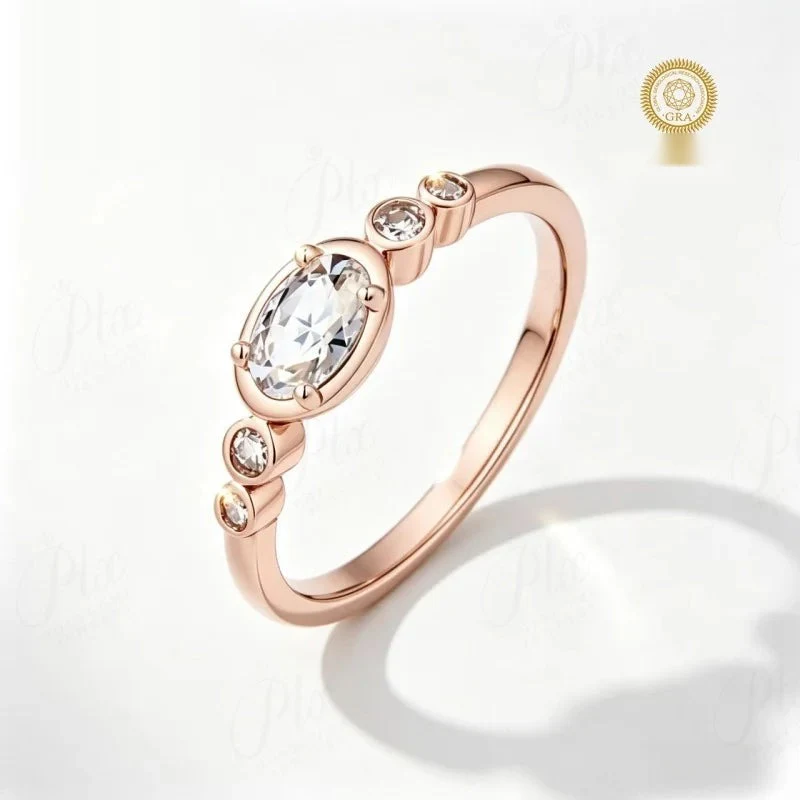
The stone itself is tough, but two weak points remain. First, a direct, sharp strike against a hard surface—a hammer, a tile floor at the wrong angle—can chip any gem, moissanite included. Second, and far more common in real life, the setting gives up before the stone does. Prongs bend, pavé stones loosen, and the rhodium plating on sterling silver wears thin. A loose prong is how a center stone is lost, so check prongs every few months.
Daily activities: what's safe
- Working out: Fine for lifting, running, and yoga. Remove rings for rock climbing or contact sports where hands take direct impacts.
- Cooking and cleaning: Safe, but dish soap and lotion build up a film that mutes sparkle. Wash the ring with warm soapy water now and then.
- Gardening: Soil pressure can bend thin prongs. Better to take the ring off.
- Swimming: Chlorine is not hard on moissanite, but cold water makes fingers shrink and rings slip—a real cause of lost rings in pools.
- Hand creams and perfume: Spray perfume before putting jewelry on to avoid a hazy buildup.
Caring for sterling silver settings
Because most everyday moissanite rings in this price range sit in 925 sterling silver, care is really about the metal. Silver tarnishes on contact with sulfur in the air, lotions, and some foods. Wearing the ring actually slows tarnish compared to leaving it in a drawer, because skin oils polish the surface. When it does dull, a gentle polish with a silver cloth restores the shine. Our silver jewelry care guide and how to clean sterling silver rings cover the exact steps.
Storage matters more than people think
Moissanite will not scratch itself, but it can scratch softer jewelry tossed into the same box. Store the ring in its own pouch or compartment, away from other pieces. This also keeps the stones from knocking against each other overnight. For travel, a small padded case prevents prongs from bending in a bag.
The bottom line
How fire behaves over time
One worry buyers have is whether moissanite's extra rainbow flashes fade. The answer is no—the fire comes from the stone's optical properties, not a coating that wears off. What does change is the thin layer of soap, lotion, and skin oil that builds on the surface and diffuses light. A cloudy-looking moissanite is almost always dirty, not degraded. A quick soak in warm soapy water with a soft brush under the stone restores the original flash. This is why regular cleaning matters more than any special storage ritual.
When to leave the ring at home
There are a handful of activities where even a tough ring is better off in a jewelry box: weightlifting with barbells, rock climbing, pottery, gardening, and any DIY work with a hammer or drill. The risk is not the stone scratching—it is a sudden force bending a prong or catching the ring on equipment. A two-second pause to slip the ring into a pouch beats a trip to the jeweler to reset a lost stone.
Moissanite is durable enough for the ring you never want to take off. It outlasts cubic zirconia by years, shrugs off scratches, and holds its fire. Treat it like the fine jewelry it is—check the prongs, clean the film off, and skip the handful of genuinely risky activities—and a silver moissanite ring will look just as bright on your fifth anniversary as it did on the day it arrived.
The 92.5% silver composition and properties of sterling silver are described in the Wikipedia entry on sterling silver.
Frequently Asked Questions
Is moissanite a good diamond alternative for retail buyers?
Yes for price-sensitive customers who want brilliance and hardness. Moissanite ranks 9.25 on the Mohs scale, holds up to daily wear and costs a fraction of a natural diamond of the same size, so it resells fast in bridal and fashion lines.
What is the minimum order for wholesale moissanite?
MOQ starts at 50 pieces per design for stock items. Custom cuts and private-label settings usually start at 100–300 pieces depending on the mold.
Do you provide certificates with moissanite stones?
Yes. Every parcel ships with GRA or IGI documentation listing carat weight, color grade and cut. We recommend passing the certificate to your end customer for trust.
How long does sample and bulk production take?
Samples ship in 3–5 days. Bulk runs take 15–20 days under 500 pieces, and 25–30 days for custom work.