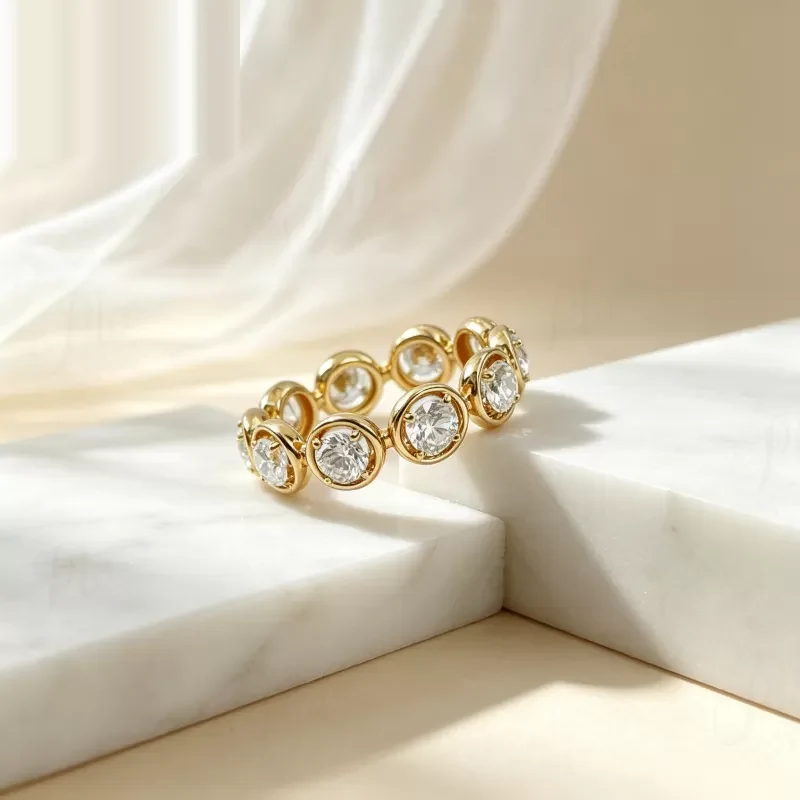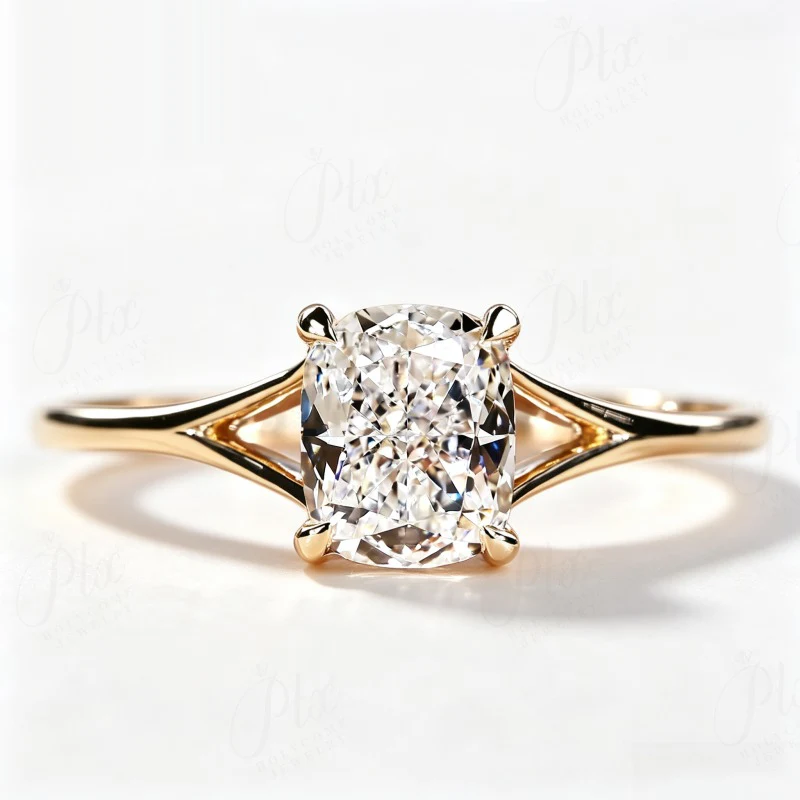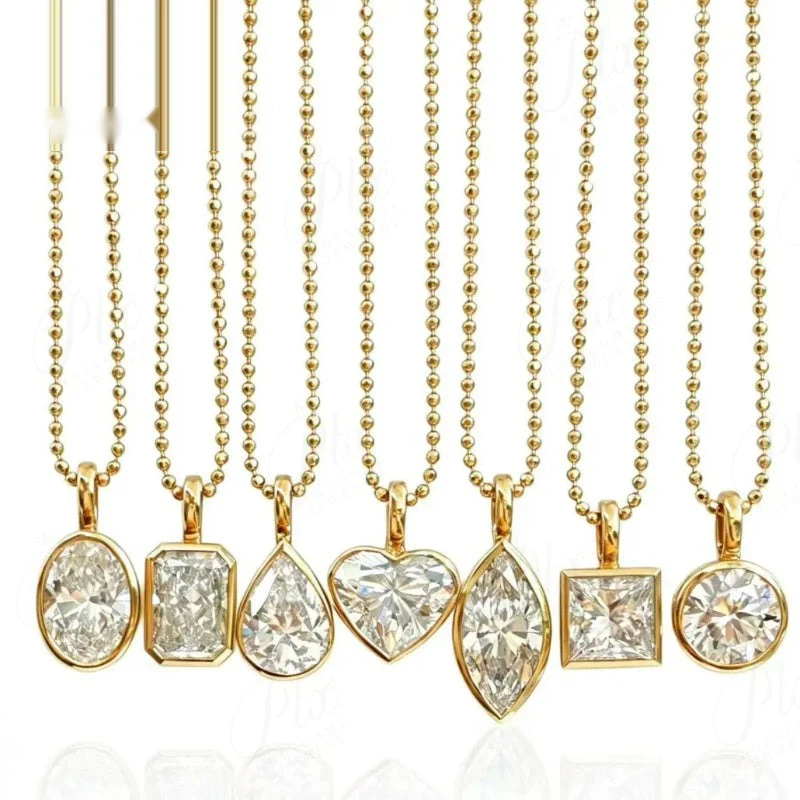
If you have ever held a pocket diamond tester to a moissanite ring and watched the needle swing straight into the "diamond" zone, you already know the problem: these little devices do not actually identify a stone as diamond. They only measure one physical property, and moissanite shares enough of that property to fool them.
For jewelry buyers and small retailers, this matters. Relying on a $20 tester to authenticate inventory is a risky habit. Let's walk through what the tool is really doing, why it stumbles on moissanite, and how to verify stones the right way.
What a thermal diamond tester actually measures
Most consumer diamond testers are thermal conductivity testers. You touch a heated tip to the stone and the device watches how quickly that heat moves away from the tip. Diamonds conduct heat exceptionally well, which is one of their defining physical traits. Glass, cubic zirconia, and most simulants absorb or slow that heat, so the tester reads them as "not diamond."
On its own, thermal conductivity is a decent filter. It separates diamond from cheap fakes quickly and without scratching the gem. But it has always relied on an assumption: that only diamond conducts heat that fast.
Where moissanite breaks the assumption
Moissanite is silicon carbide, grown in a laboratory under high heat and pressure. Like diamond, it is an excellent thermal conductor. Its thermal conductivity lands in the same high range as a diamond, so a thermal tester touching a clean moissanite stone will often light up exactly as it would on a real diamond. The device literally cannot tell the two apart on heat alone.
Some older testers behave unpredictably instead: they flash an error, give a partial reading, or demand that you retest. That inconsistency is frustrating in person and worse in product listings. A customer testing their new ring at home may panic, assume they bought a fake, and open a dispute.
The newer testers that do help
A second generation of tools adds an electrical conductivity check. Diamond is an electrical insulator, while moissanite is a semiconductor. A combo tester that measures both heat and electricity can therefore separate the two: high heat plus low electrical conductivity points to diamond, while high heat plus measurable conductivity points to moissanite. These dual testers are far more reliable, but they are still a screening tool, not a certificate.
Even then, results depend on technique. A cold stone, a loose stone on a poor surface, or a tip that has not made full contact can skew the reading. Moist fingertips and thin settings add noise. Professionals use testers as a first pass, then confirm with optics and paperwork.
Optical clues you can see without tools
Moissanite has a higher refractive index and stronger dispersion than diamond, which means it throws noticeably more rainbow "fire." Under bright light, a moissanite stone often flashes colored facets in a way a diamond does not. Viewed through the top, moissanite can also show doubled facet reflections because of its crystal structure, especially under magnification. These cues are subtle to untrained eyes, but they are consistent.
That optical exuberance is also why moissanite is so popular in the first place. Customers buy it for the sparkle, not to pass as a diamond, and brands that are transparent about the stone build more trust than those pretend otherwise.
Why certification beats any pocket tool
The dependable way to verify a moissanite piece is the paperwork. Reputable lab-created moissanite ships with a grading report such as a GRA certificate that notes carat, color grade, clarity, and cut. Matching the certificate number to the stone or packaging is far more convincing than a tester reading. For background on how these reports work, see our guide to moissanite certification and grading reports.
Because the stone is man-made, origin is not the question it is for mined diamonds. The real quality variables are color grade, cut precision, and whether the supplier used genuine moissanite rather than a cheaper simulant. Understanding what moissanite is and where it comes from helps you ask the right questions of any vendor.
What this means for your store
If you sell moissanite in 925 silver, set expectations up front. In your listings and care cards, mention that basic diamond testers are not conclusive and that your pieces ship with certification. Preempting the "my tester said this isn't real" message prevents returns and protects your ratings. It also signals that you know your product deeply, which shoppers reward.
Treat a tester as a quick sanity check, never as proof. Pair it with certificates, honest descriptions, and optical knowledge, and you will authenticate inventory with confidence.
For third-party reference, the Wikipedia article on moissanite details moissanite’s discovery, optical properties and use in jewellery.
Frequently Asked Questions
Is moissanite a good diamond alternative for retail buyers?
Yes for price-sensitive customers who want brilliance and hardness. Moissanite ranks 9.25 on the Mohs scale, holds up to daily wear and costs a fraction of a natural diamond of the same size, so it resells fast in bridal and fashion lines.
What is the minimum order for wholesale moissanite?
MOQ starts at 50 pieces per design for stock items. Custom cuts and private-label settings usually start at 100–300 pieces depending on the mold.
Do you provide certificates with moissanite stones?
Yes. Every parcel ships with GRA or IGI documentation listing carat weight, color grade and cut. We recommend passing the certificate to your end customer for trust.
How long does sample and bulk production take?
Samples ship in 3–5 days. Bulk runs take 15–20 days under 500 pieces, and 25–30 days for custom work.