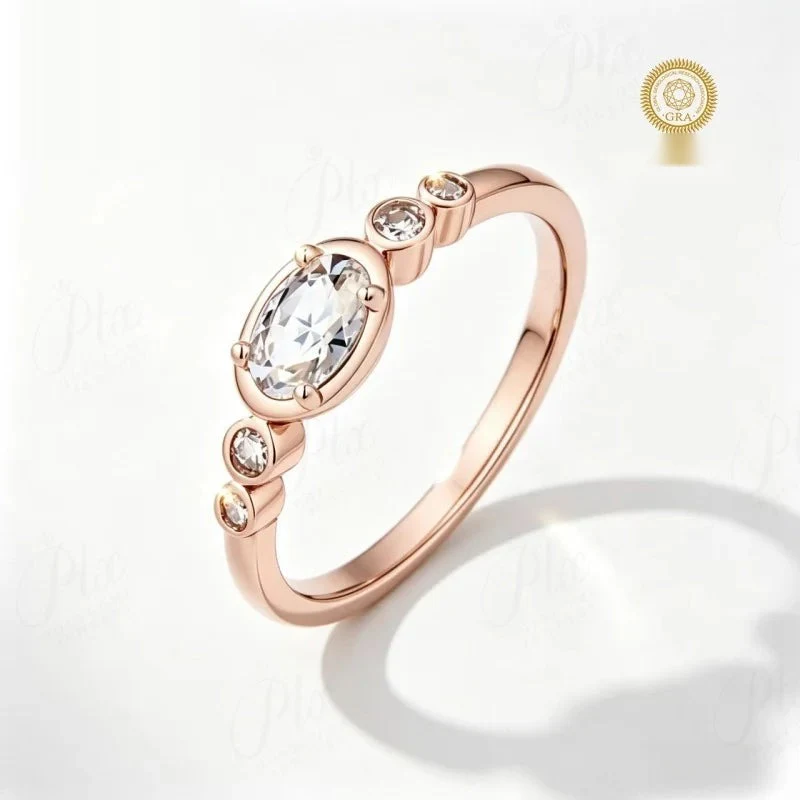
One of the first questions serious buyers ask is not about price or sparkle. It is quieter, and more practical: will this ring actually survive my life? A moissanite ring in sterling silver is priced for everyday affordability, but affordability only matters if the piece holds up to keyboards, grocery carts, door handles and the hundred small impacts a hand absorbs in a normal day. The good news is that moissanite itself is remarkably tough. The more nuanced truth is that durability has two parts, the stone and the setting, and they do not fail on the same schedule.
The stone: one of the hardest you can buy
On the Mohs scale of mineral hardness, moissanite sits around 9.25, just below diamond at 10 and well above sapphire, ruby and virtually every colored gem. In plain terms, that means moissanite resists scratching from normal household surfaces. Keys, coin pockets, plastic and most counter finishes will not abrade the surface the way they would a softer stone. A well-set moissanite can be worn for years without losing its polish or developing a frosted face-up look.
What moissanite does have is more fire and brilliance than diamond, which is exactly why people choose it. It is also thermally conductive, which is why a standard diamond tester can flag it as diamond, a point we cover in our guide on moissanite testing facts. None of this affects durability. It only means the stone performs beautifully under real-world light.
The setting: where sterling silver shows its age
Here is the honest part. Sterling silver (ISO 925 sterling silver standard) is softer than platinum or 14k gold, and that softness shows in how the mounting wears over years of contact. Thin prongs can wear down, band edges can thin, and a rhodium plating flash will eventually need refreshing. None of this means silver is a poor choice. It means buyers should choose settings that are built for daily wear rather than for occasional elegance. A thick comfort-fit band, rounded edges, and well-formed prongs will outlast a delicate, knife-edge design by a wide margin.
If a customer wants a ring they never take off, recommend a bezel or semi-bezel setting that protects the stone on all sides, and a band with enough width to resist bending. Delicate pave designs look stunning, but they are better suited to pieces that see desk-and-dinner use than to hands that garden, box or lift weights.
What actually breaks a ring in daily use
Most ring damage is not slow aging. It is one specific moment. A prong catches on a sweater cuff and bends open. A hand slams against a car door. A phone drops and the finger takes the impact. The stone rarely chips in these moments. The prong loosens, and then the stone wobbles. This is why periodic checks matter: a quick look every few months to confirm the center stone does not twist, and a once-a-year professional prong tightening, will prevent the vast majority of lost stones.
Removing rings for heavy lifting, manual work, or applying creams and sprays is the habit that separates rings that last from rings that need repair. It is not about fragility. It is about protecting the small metal parts that hold the piece together.
The bottom line for everyday wear
A moissanite ring in 925 sterling silver will absolutely survive daily wear for the office, errands, travel and most social occasions. The stone will not scratch, and the metal will hold its shape if the design is sensible. What buyers should budget for is an occasional rhodium refresh and a prong check, not a replacement ring. Treated as a daily companion rather than a fragile treasure, moissanite and sterling silver is one of the most durable combinations available at its price point.
How daily wear actually ages a silver ring
Real-world aging follows a predictable pattern. In the first year, a rhodium-flashed silver ring looks almost new. Around the second year, the plating begins to wear thin on the high-contact edges, and the piece may start to look slightly warmer than a fresh rhodium finish. By year three or four, a professional polish and replating brings it back to showroom condition. This cycle is normal and inexpensive compared with repairing a bent shank or replacing a lost stone. Selling customers on this maintenance reality up front prevents disappointment later, because they know what to expect rather than assuming the ring will never change.
The habits that protect the ring are the same ones that protect any fine jewelry: take it off for manual work, keep it away from chemicals, and store it separately so it does not scratch against other pieces. Daily wear is not the enemy. Neglect is. A moissanite silver ring that is worn, cleaned occasionally and checked once a year will look good for many years, which is exactly the value proposition that makes this category so popular with buyers who want beauty without the fragility of a high-end diamond piece.
Frequently Asked Questions
Is moissanite a good diamond alternative for retail buyers?
Yes for price-sensitive customers who want brilliance and hardness. Moissanite ranks 9.25 on the Mohs scale, holds up to daily wear and costs a fraction of a natural diamond of the same size, so it resells fast in bridal and fashion lines.
What is the minimum order for wholesale moissanite?
MOQ starts at 50 pieces per design for stock items. Custom cuts and private-label settings usually start at 100–300 pieces depending on the mold.
Do you provide certificates with moissanite stones?
Yes. Every parcel ships with GRA or IGI documentation listing carat weight, color grade and cut. We recommend passing the certificate to your end customer for trust.
How long does sample and bulk production take?
Samples ship in 3–5 days. Bulk runs take 15–20 days under 500 pieces, and 25–30 days for custom work.