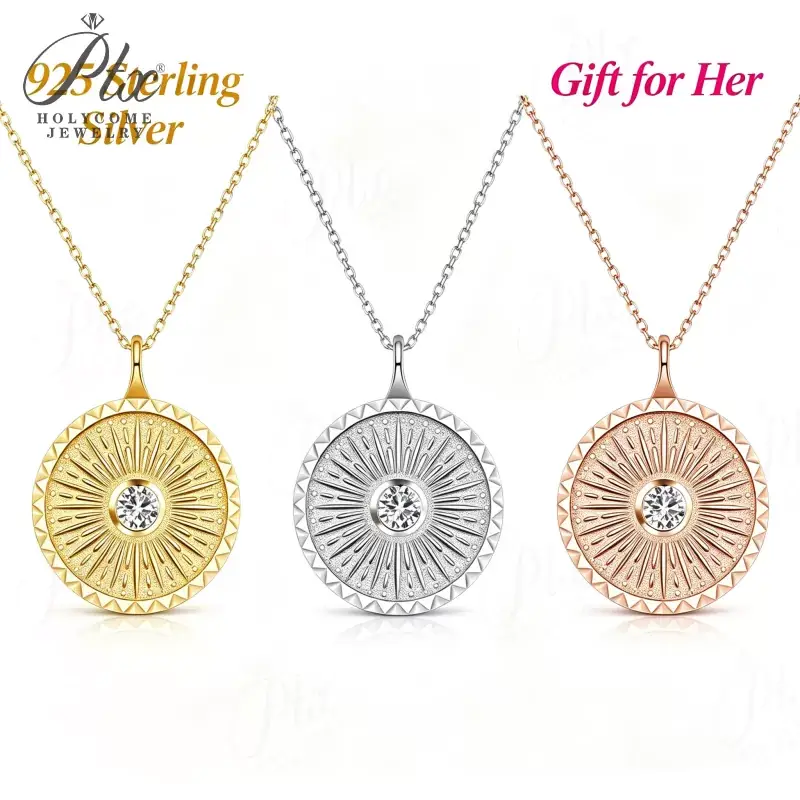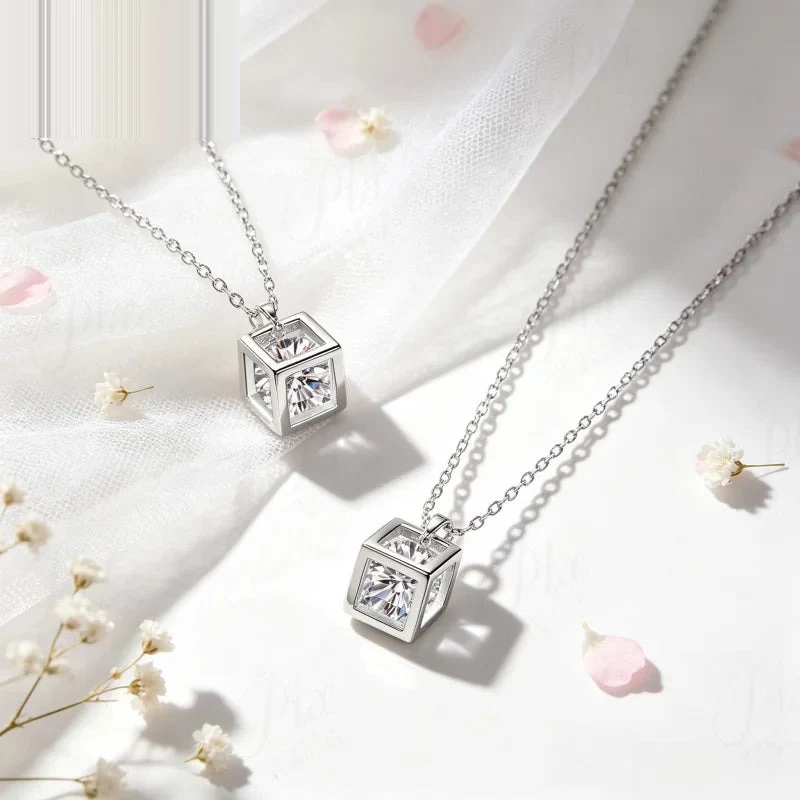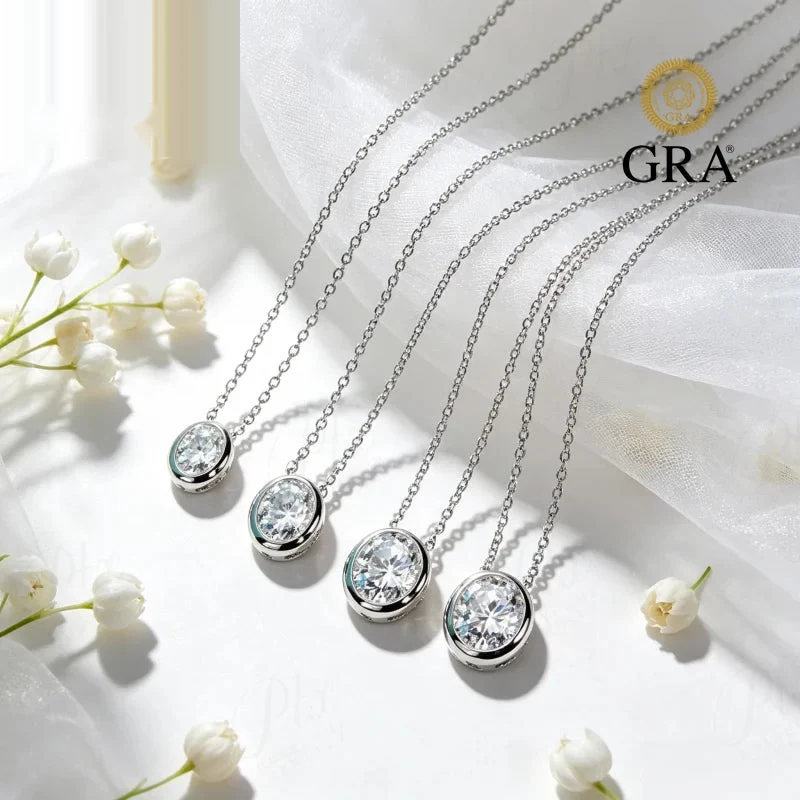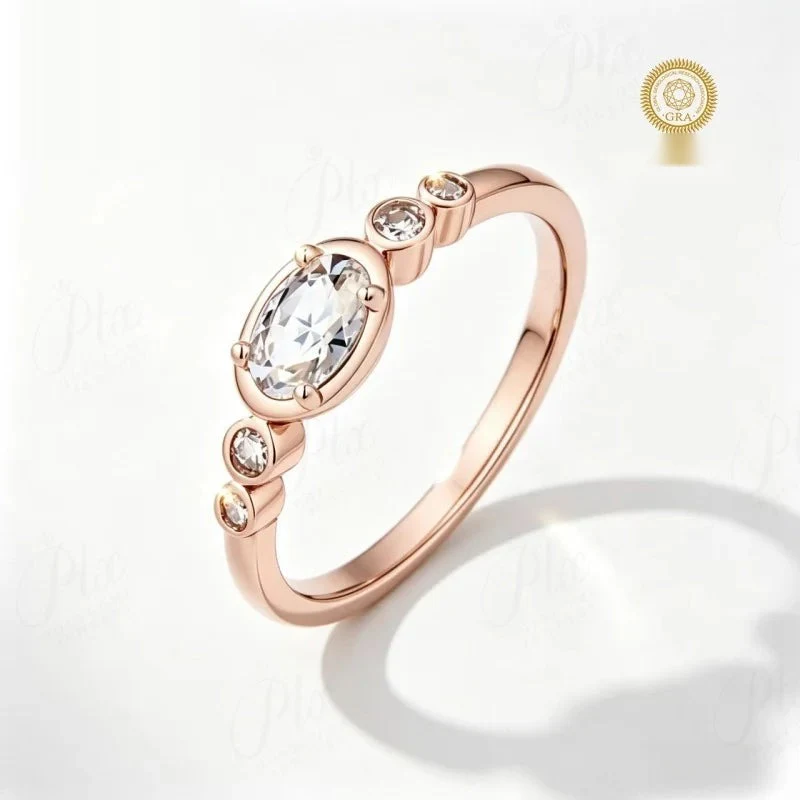
When a shopper first looks at a moissanite listing, the number throws them off. Where a diamond ring says "1.0 carat," a moissanite listing says "6.5 mm." That jump from carats to millimeters is one of the most common points of confusion in the category, and it is also an easy one to fix. Once you understand how moissanite is measured, you stop guessing at size and start matching expectations, which directly cuts returns.
The reason for the switch is physics. Moissanite is less dense than diamond, so a stone that weighs the same carats does not look the same size. A one-carat diamond and a one-carat moissanite are not visually comparable, which is why sellers measure moissanite by diameter in millimeters instead. The practical translation most shoppers want is the "diamond equivalent" size: roughly a 6.5 mm round moissanite reads like a one-carat diamond, a 5 mm like a half carat, and an 8 mm like roughly two carats. Exact equivalents shift by cut and setting, so treat these as close guides, not promises.
Why does this matter beyond curiosity? Because size is emotional. A buyer comparing moissanite vs diamond often wants the visual presence of a certain carat, and listing only millimeters leaves them unsure. The best product pages show both: "6.5 mm round, approximately 1 ct diamond equivalent." Add a coin or a finger-width reference photo, and the mental math becomes instant. Shoppers who can picture the size on their finger buy with confidence and keep the ring.
Size also interacts with cut and setting. A round brilliant looks larger in diameter than an Asscher or emerald cut of the same mm, because step cuts face up smaller. An oval or pear shape stretches the eye and reads bigger than a round of the same carat-equivalent, which is why oval moissanite has become a favorite for buyers who want presence on a budget. The moissanite cuts and shapes guide is worth keeping open while you explain this to customers, because cut choice is really a size-perception choice.
Setting style changes the perceived size too. A bezel setting wraps metal around the stone edge, which can make it look slightly smaller and more protected. A solitaire with slim prongs shows more of the stone and makes it look larger, while a halo of small moissanites extends the outline dramatically. If a customer wants the biggest visual impact at the lowest cost, a halo or an oval shape delivers more apparent size than simply upsizing the center stone.
One honest note for retailers: do not overstate equivalents. Saying "looks exactly like a 2 carat diamond" sets up disappointment on first wear. Better wording is "approximately a 2 carat diamond in visual spread," which sets expectations a seasoned buyer respects. This kind of clarity is the same trust that makes moissanite certification reports meaningful; both are about reducing ambiguity, not inflating claims.
Other shapes have their own mm rules. An oval of roughly 8 by 6 mm reads like a one-carat center while looking larger because of its elongated outline. A pear or marquise of similar mm stretches even further down the finger. Cushion and radiant cuts face up somewhere between a round and an oval. Because shoppers often shop by "I want a one-carat look," give the mm range for each shape on the product page, not just the round equivalent. A customer who loves ovals does not benefit from a round-only conversion table, and that mismatch is a quiet source of disappointment.
Weight itself is rarely the selling point. Unlike diamond buyers, who chase carat as a status number, moissanite buyers usually care about presence and sparkle, not the carat figure. Lead your product copy with the visual size, the cut, and the setting, and treat any carat equivalent as a footnote. If a customer specifically asks about weight to compare with a partner's diamond, give them an honest range rather than a precise fake number. This restraint builds the kind of trust that makes buyers choose moissanite again for an anniversary band or a gift.
When in doubt, go slightly larger. On the finger, moissanite reads a touch smaller than its mm number suggests because it is a touch denser than shoppers expect, so a 7 mm stone often feels like a comfortable everyday size rather than a bold one. Many buyers wish they had chosen the next size up, not the smaller one. Point this out in your sizing guide and you reduce the regret that leads to exchanges.
For a shopper, the takeaway is simple: stop fixating on carats and start asking for millimeters. Ask the diameter, the cut, and the setting, and picture the stone on your own finger width. For a retailer, the takeaway is just as simple: list mm, list the diamond equivalent, show a size reference, and your size-related returns will drop sharply.
Gemstone grading terminology used here follows the Gemological Institute of America’s gem encyclopedia.
Frequently Asked Questions
Is moissanite a good diamond alternative for retail buyers?
Yes for price-sensitive customers who want brilliance and hardness. Moissanite ranks 9.25 on the Mohs scale, holds up to daily wear and costs a fraction of a natural diamond of the same size, so it resells fast in bridal and fashion lines.
What is the minimum order for wholesale moissanite?
MOQ starts at 50 pieces per design for stock items. Custom cuts and private-label settings usually start at 100–300 pieces depending on the mold.
Do you provide certificates with moissanite stones?
Yes. Every parcel ships with GRA or IGI documentation listing carat weight, color grade and cut. We recommend passing the certificate to your end customer for trust.
How long does sample and bulk production take?
Samples ship in 3–5 days. Bulk runs take 15–20 days under 500 pieces, and 25–30 days for custom work.