Some earrings look gorgeous on a friend and odd on you, and it is rarely about the earrings. It is about geometry. Jewelry sits right next to your face, so its shape either balances your features or exaggerates them. You do not need to follow rules rigidly, but knowing how shape interacts takes the guesswork out of choosing hoops, studs, and drops in sterling silver.
First, find your face shape
Pull your hair back and look in a mirror. Compare the width of your forehead, cheekbones, and jaw. A face roughly as wide as it is long with soft edges tends toward round. A long, narrow face leans oval or oblong. A strong, square jaw reads square. A wide forehead tapering to a narrow chin reads heart. Most people land somewhere between these, and that is fine; treat the shapes as guides, not labels.
Round faces: add length and angles
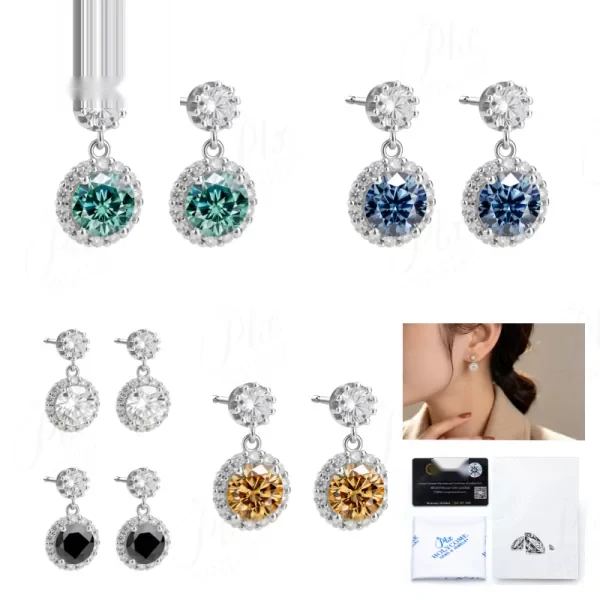
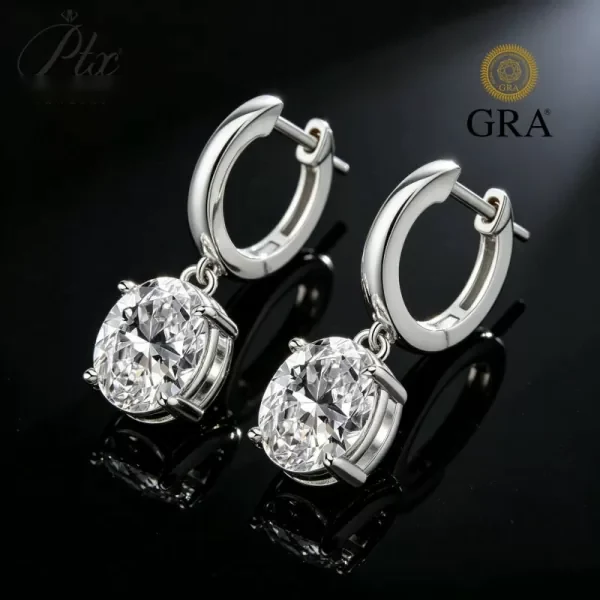
Round faces have soft curves and even width. The goal is to introduce vertical lines and angular shapes that elongate the face. Long drops, slender dangles, and linear earrings draw the eye up and down. Oversized round hoops can echo the face's roundness, so choose elongated or structured shapes over huge circles. Our silver drop and dangle earrings are a strong starting point.
Oval faces: the flexible shape
Oval faces are balanced and can wear almost anything. Small hoops, studs, and statement drops all work. If you have an oval face, you have permission to experiment with the trends others tiptoe around, from small huggies to bold statement pairs.
Square faces: soften the jaw
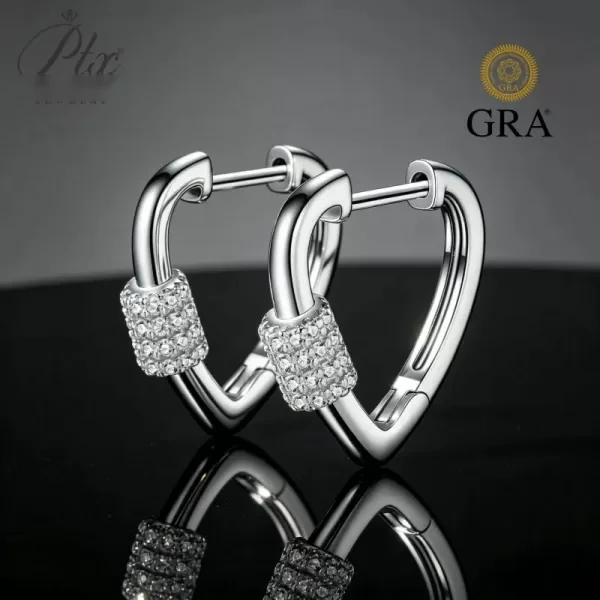
Square faces have a strong jawline and a broad forehead. The aim is to soften those angles with curves. Rounded hoops, teardrop dangles, and soft circular shapes contrast the jaw gently. Very geometric, sharp-edged earrings can echo the squareness, so lean toward curved and rounded forms. Size matters too: a medium hoop, sized to your features, is explained in the silver hoop earring size guide.
Heart-shaped faces: widen the lower face
Heart faces have a wider forehead and a narrower chin. The goal is to add width and softness around the jaw and chin. Chandelier-style drops that flare out toward the bottom balance the shape. Small studs and delicate hoops also work, as they do not add weight at the forehead. Avoid huge, top-heavy earrings that widen the upper face further.
Long or oblong faces: bring width
A long face benefits from horizontal, wider earrings that add breadth. Medium hoops, clustered studs, and button-style earrings shorten the visual line. Extremely long drops will lengthen the face further, so keep the earring closer to the earlobe.
The common-sense rules underneath
Beyond face shape, a few principles apply to everyone. Balance scale with your features: small studs on small earlobes, proportionate hoops on larger ones. Consider your neckline: an open neckline gives room for longer drops, while a high collar pairs better with studs or huggies. And if you have multiple piercings, treat the whole ear as one composition.
Hypoallergenic matters too
None of this advice helps if your ears react. Sterling silver is naturally gentler than plated base metal, which is why it is the go-to for sensitive ears. If you have had reactions before, the full picture is in hypoallergenic silver earrings for sensitive ears.
Size matters as much as shape
Even the right-shaped earring can look off if it is the wrong scale. Tiny studs disappear on larger features, and oversized hoops overwhelm small, delicate ears. A useful rule is to scale the earring to your overall bone structure: finer features carry small to medium pieces, while stronger features carry bolder ones. When in doubt, choose the size that balances your jaw rather than your earlobe alone, because the eye reads the whole face at once.
Neckline and hairstyle partners
An updo or short hair puts the ears on full display, so a statement drop becomes the focal point it was designed to be. Long hair worn down tends to cover earrings, so a hoop or stud that peeks through the hair reads better than a dangle that gets hidden. Similarly, a high neckline pairs with studs or small hoops, while an open neckline invites longer drops. Treat hair and neckline as part of the styling equation, not afterthoughts.
Building a flexible earring drawer
You do not need a different pair for every face-shape rule. A small set of studs, a medium hoop, and one pair of drops covers nearly every occasion and face shape. Because sterling silver is affordable and hypoallergenic, you can own all three without the cost of fine gold. Start with those basics, add one statement pair for special days, and you will always have something that flatters.
Face shape is a starting point, not a cage. The best earring is the one you love wearing, but a little geometry helps narrow the huge field of choices down to the few that will flatter you most.
The 92.5% silver composition and properties of sterling silver are described in the Wikipedia entry on sterling silver.
Frequently Asked Questions
What ring sizes can you supply in bulk?
US sizes 5–12 including half sizes. Send a size breakdown with your order and we cast to that curve; comfort-fit inner bands reduce resize requests.
Can I order a mixed size run instead of one size?
Yes. Mixed runs are standard for wholesale: specify quantity per size and we pack and label by size at no extra labor cost.
What is the MOQ for custom ring designs?
50 pieces per design for existing molds; 100–300 pieces when a new mold or CAD model is required.
How should I price rings for retail margin?
Most partners use a 3–4x markup on FOB cost for sterling and 2.5–3x for moissanite solos, which keeps landed cost under 30% of retail.