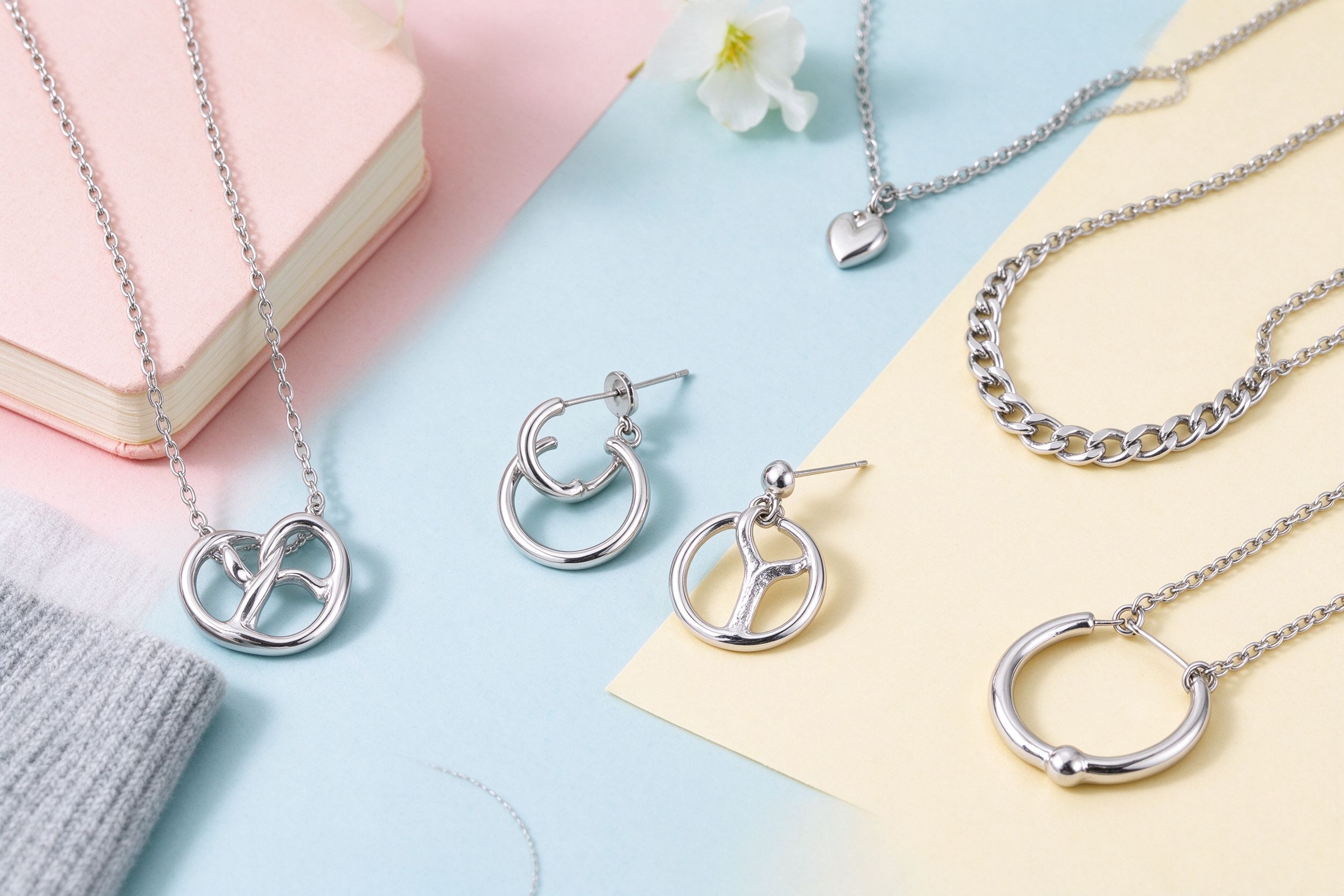
An earring back is the tiny piece that stops a lifetime piece from slipping out and vanishing. Most customers never think about them until they lose an earring, which is exactly why retailers who understand earring backs sell more pairs and get fewer "one earring went missing" messages. The back determines whether a hoop stays on during a workout, whether heavy drops feel secure, and whether a child's first earrings stay put. Here are the common types in sterling silver and how to choose between them.
Butterfly Push-Back: The Standard
The butterfly back (also called a push-back) is the most common: a small winged metal piece that pushes onto the post and grips it by tension. It is lightweight, cheap, and comfortable for light stud earrings. The catch is that the grip weakens over time, and a bump can slide it off.
- Best for: light studs, everyday small earrings.
- Strength: moderate; fine for sedentary wear.
- Watch for: after a year, replace backs that feel loose.
Because the post goes through the back and then into the ear, silver posts matter for sensitive ears. Our guide to hypoallergenic silver earrings covers which metals prevent reactions.

Screw-Back: The Most Secure Stud
A screw-back has a small thread on the post, and the back screws down onto it. It cannot slide off, which makes it the top choice for valuable stud earrings, children's earrings, and people who hate losing pieces. The trade-off is speed: you have to line up and twist, which is slower than pushing on a butterfly.
- Best for: diamond/moissanite studs, children, security-first buyers.
- Strength: highest—won't come off by accident.
- Watch for: cross-threading can damage the post; handle gently.
Locking Backs: Earring "Nut and Bolt"
Locking backs (also called clutch backs or safety backs) are a two-part design that clicks shut around the post and stays until you release a small lever. They are popular on heavier stud earrings and on earrings for people who move a lot. They feel snug against the earlobe and rarely fall off.
Saddle and Bullet Backs: Comfort for Lobes
A saddle back is a curved, cup-shaped back that spreads pressure across the earlobe instead of pinching a small point. This makes it the most comfortable back for heavy drops and for people with soft or stretched lobes. Bullet backs are a rounded version used on fine studs.
- Saddle back: best for heavy, dangling earrings; distributes weight.
- Bullet back: sleek, comfortable for fine studs.
- Rubber backs: soft, cheap, comfortable but not for valuable pieces.
Hoop and Huggie Closures
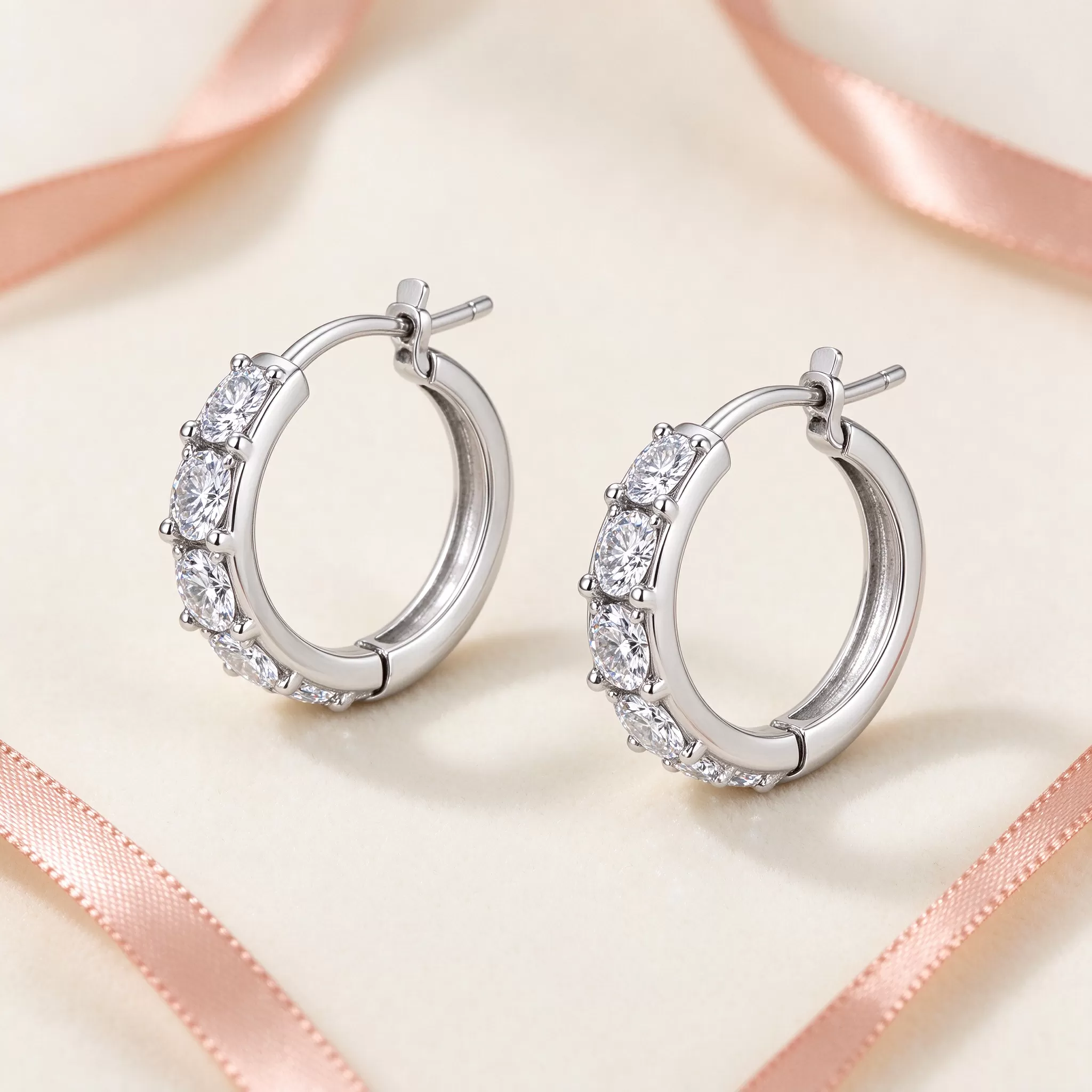
Hoops and huggies use a post-and-click or hinge closure rather than a separate back. The post usually slots into a little clasp at the other end of the hoop. When buying hoops, check the tension of that clasp—a loose hinge means the hoop opens in a pocket. Our hoop earring size guide covers closure feel by hoop size.
How to Recommend a Back by Buyer
- Everyday light studs: butterfly push-back is fine.
- Valuable or heirloom studs: screw-back.
- Heavier drops, soft lobes: saddle back.
- Kids, active wearers: locking back.
Common Questions
Why do my earring backs keep falling off?
Push-backs loosen over time as the metal tension fatigues. The fix is to swap in a new back or upgrade to a locking or screw-back. Keeping a spare pack of silver backs in-store is a great customer service gesture.
Are rubber backs safe?
Rubber backs are comfortable and cheap, but they degrade and can catch on hair. Use them as a comfort liner or travel back, not as the only security for valuable earrings.
Can I change the back on my existing earrings?
Almost always, yes. As long as the post is a standard thickness, a new back slides right on. It is a free upsell that keeps customers coming back. Explore our stud earring guide for more styling tips.
The right back is the cheapest insurance an earring can have. Stock silver backs, explain the options at the counter, and you'll lose fewer pairs and build trust with every sale. Browse our earring guides for more.
Keeping Spare Backs in Store
A small but powerful service is keeping a jar of sterling silver backs at the counter. Customers lose backs all the time, and a free replacement turns a frustrated shopper into a loyal one. Offer butterfly backs for light studs, locking backs for heavier pieces, and rubber comfort backs for sensitive lobes. This costs almost nothing but creates a reason for customers to come back. When you sell a pair of studs, include an extra back in the box as a thoughtful touch. Over time, these little service gestures build more trust than any advertising, and they position your store as the place that actually takes care of its customers after the sale.