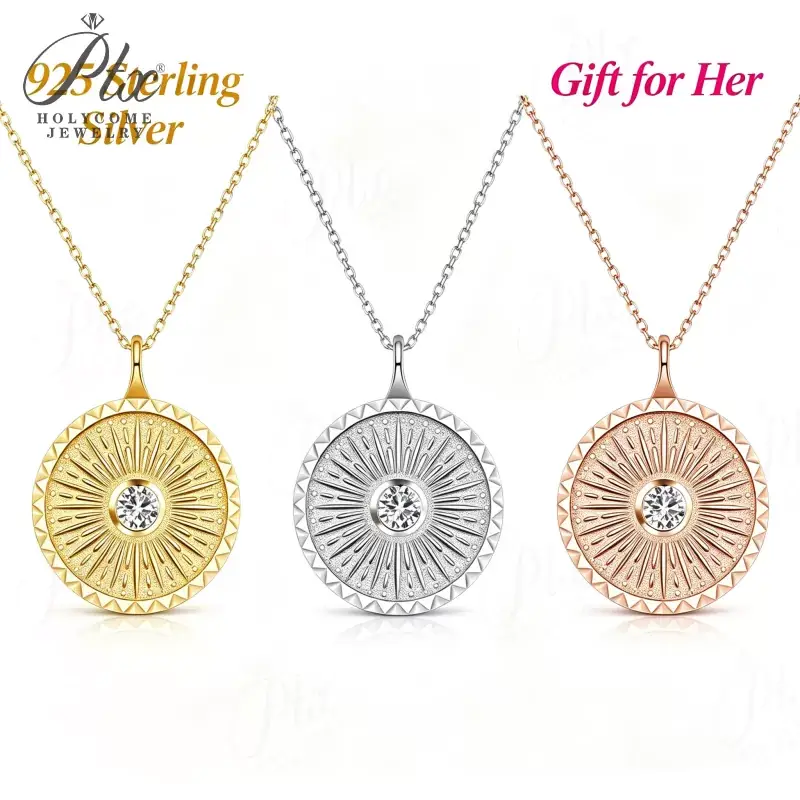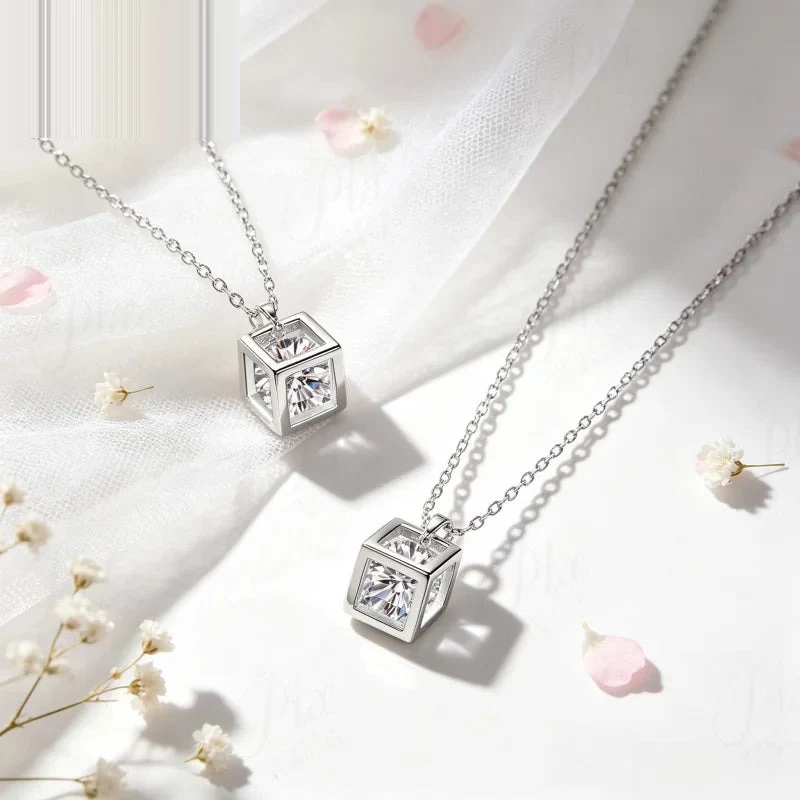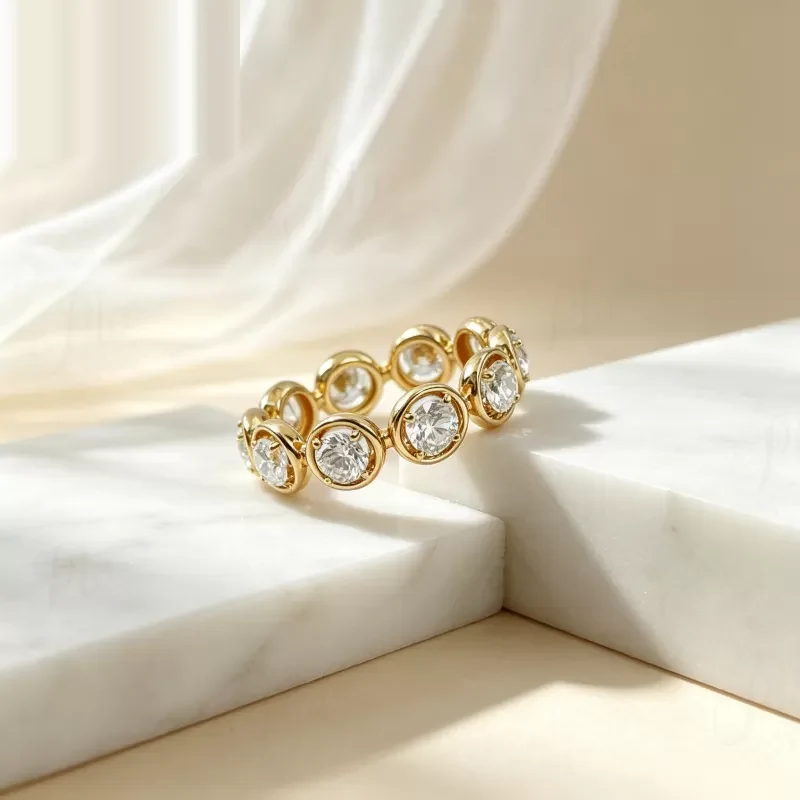
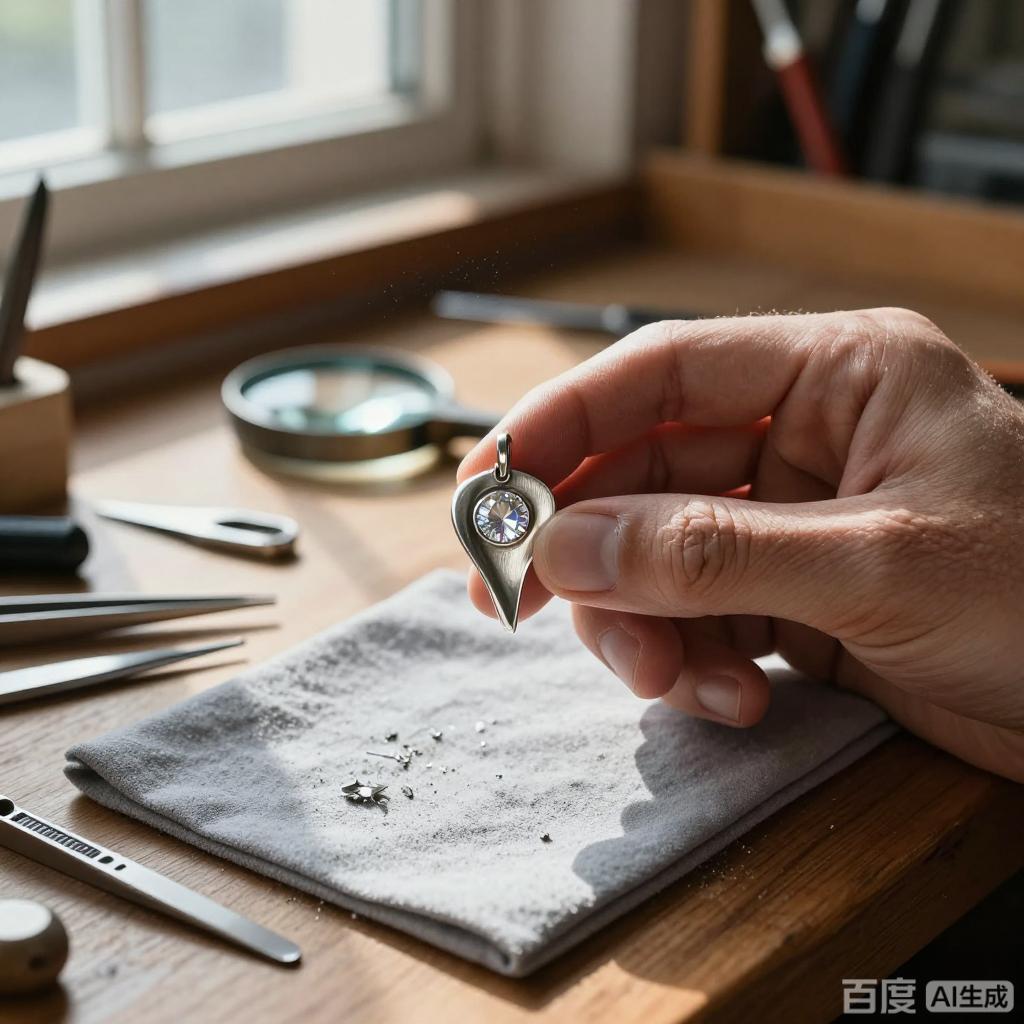
An Australian demi-fine jewelry founder contacted us in March 2025 with a pendant concept that would become her brand's signature. She wanted a compass-shaped pendant in 925 silver with 3mm moissanite at each cardinal point and a 5mm center stone, sold on an adjustable 16-18 inch cable chain, retailing at $145 AUD. Her previous supplier had produced 200 samples but the compass points were misaligned by 2-3 degrees per piece, the bail loop was too small for many chains, and the stones were not level—some tilted visibly. We re-engineered the design: created a new mold with precision compass point alignment, enlarged the bail to fit chains up to 3mm, added seat-leveling to ensure all stones sat flush, and produced 800 pieces in seven weeks. The pendant has since sold 2,400 units across three reorders and drives 40% of her website's pendant traffic.
Custom moissanite pendants are a strong category for brands because they have broad appeal (gifts, self-purchase, layering pieces) and they photograph exceptionally well for social media. They are also structurally simpler than rings in some ways but have their own set of manufacturing pitfalls: bail strength, chain compatibility, stone visibility when worn, and how the pendant hangs on the neck. This guide covers what goes into custom pendant design and manufacturing, the key engineering decisions that determine wearability and durability, and how to specify pendants that look good, wear comfortably, and hold up over years of daily use.
Core Design Decisions for Custom Pendants
Pendants have fewer functional constraints than rings (no finger sizing, no hand-wear exposure), but the design choices that determine whether a pendant succeeds or fails are still numerous:
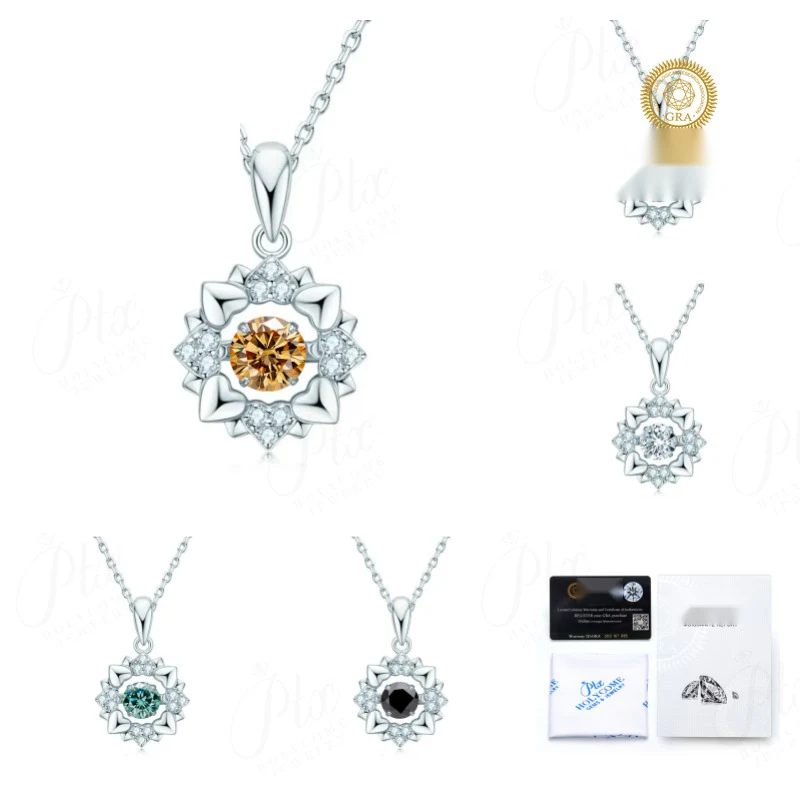
- Pendant shape and silhouette: Solitaire pendants (single stone) are classic and timeless. Halo pendants add perceived size and sparkle. Geometric shapes (compass, hexagon, triangle, evil eye, initials) carry specific brand identity. Nature motifs (leaf, moon, star, heart) sell well for gifting. The silhouette is visible from across a room and should read clearly at thumbnail size for web and social media.
- Bail design: The bail (the loop the chain passes through) is the most failure-prone part of a pendant. A weak bail pulls open or breaks; a bail that is too small limits chain compatibility; a bail that is too large looks bulky. Standard bail sizes accommodate chains up to 2.5mm; large bails accommodate up to 5mm chains. Bails should be soldered (not jump-ring attached) for pendants over 2 grams total weight. Hidden bails (where the attachment point is behind the pendant) create a cleaner front view but can cause the pendant to tilt forward.
- Pendant thickness and weight: Pendants that are too thin feel cheap and bend easily; pendants that are too heavy pull on the chain and cause discomfort. For 925 silver pendants under 20mm diameter, 1.2-1.8mm thickness provides good weight and durability. For gold pendants, 1.0-1.5mm is usually sufficient due to gold's higher density. Pendant weight over 8 grams becomes uncomfortable on thin chains.
- Chain compatibility: Specify what chain(s) the pendant will be sold with. Cable chains, box chains, Figaro chains, rope chains, and snake chains have different thicknesses and clasp sizes. The bail must accommodate the largest chain you plan to offer. Selling a pendant with a chain that the bail does not fit causes immediate returns. We recommend testing your final pendant prototype on every chain SKU you offer.
- Stone position and visibility: Pendant stones are viewed from the front at a slight downward angle when worn. Unlike rings, which are viewed from above and the side, pendants need stones angled slightly upward (5-8 degrees) to maximize sparkle when the pendant hangs naturally. Stone position that is perfectly perpendicular to the pendant face will appear dark when worn because light does not reflect back to the viewer's eye.
- Reverse side finishing: Customers see the back of a pendant when they put it on and take it off, and the back rests against skin. A polished, smooth reverse is essential—rough backs catch on clothing and irritate skin over time. Many brands add engraving on the reverse for personalization.
GIA provides guidance on how gemstone cut affects light return, but for pendants the stone's orientation relative to the viewer matters as much as the cut proportions. We angle pendant stone seats slightly based on typical pendant hang angle to maximize visible sparkle. Browse our moissanite pendant collection for reference designs, and explore OEM custom pendant development for brand-specific projects.
Custom Pendant Style Comparison
Different pendant styles vary significantly in manufacturing cost, durability, and target audience:
| Pendant Style | Unit Price (925, 1ct stone, 50pc) | Bail Strength | Weight | Wear Angle | Best For |
|---|---|---|---|---|---|
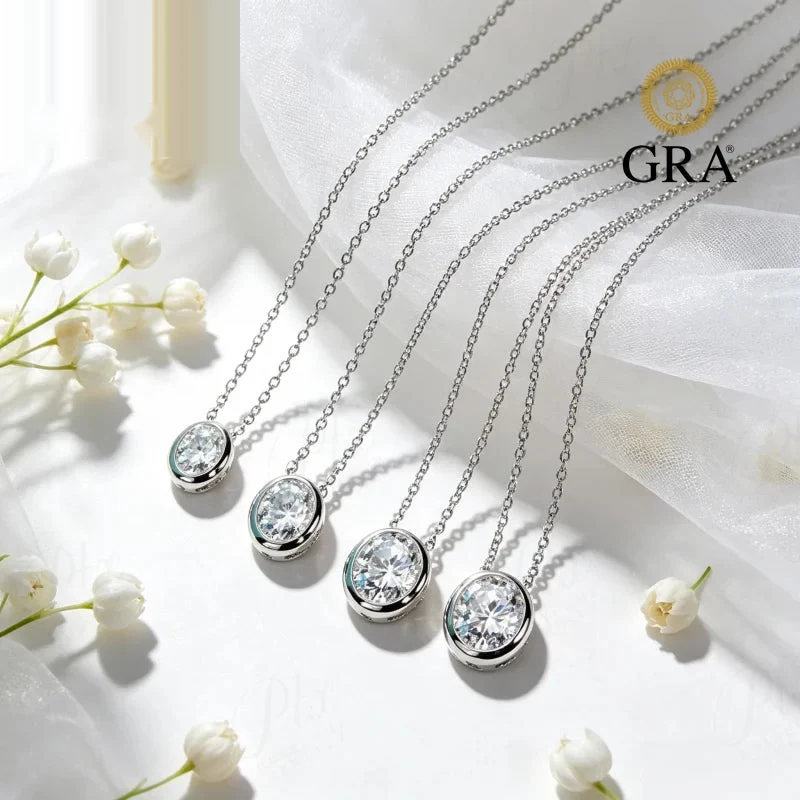
| Solitaire pendant (prong set) | $22-$35 | Excellent (fixed bail) | 1.5-2.5g | Hangs straight | Classic everyday, bridal gifts |
| Bezel solitaire pendant | $25-$40 | Excellent | 2.0-3.0g | Hangs straight | Modern, minimalist, active wearers |
| Halo pendant | $32-$50 | Excellent | 2.5-4.0g | Hangs straight | Bridal, maximum sparkle |
| Geometric / shape pendant | $28-$48 | Good-depends on design | 2.0-5.0g | Shape-dependent | Brand signatures, gifting |
| Initial / letter pendant | $24-$42 | Good | 1.5-3.5g | Letter-specific | Personalized gifting |
| Three-stone / trilogy | $35-$55 | Excellent | 2.5-4.5g | Hangs straight | Anniversary, symbolic gifts |
| Nature motif (leaf/moon/star) | $30-$55 | Good (delicate parts) | 1.8-4.0g | Design-dependent | Boho, dainty brands |
| Slider pendant (no chain loop) | $20-$32 | N/A (slides onto chain) | 1.5-3.0g | Faces forward | Tennis necklace add-ons, versatile |
| Locket / hinged pendant | $55-$95 | Excellent | 5.0-10.0g | Hangs straight | Heirloom, sentimental gifting |
| Articulated / moving pendant | $40-$75 | Good (joints wear) | 3.0-6.0g | Shifts with movement | Statement pieces, fashion |
Prices shown are for 925 sterling silver with D/VVS1 moissanite in the sizes noted. 14K gold versions run 2.5-3.5x silver pricing due to higher metal cost and more labor-intensive finishing. Pendants under 1.5mm thickness in silver risk bending if accidentally caught; we recommend 1.5mm minimum for geometric shapes and 2.0mm+ for lockets or pieces that receive regular handling. The history and variety of pendant designs spans thousands of years—modern manufacturing lets brands revive historical motifs with precise stone settings and consistent quality at scale.
Chain Integration and Supply
Many brands sell pendants with chains included, and the quality of the chain matters as much as the pendant itself. Chains are also common failure points and should be specified with the same care as the pendant:
Choose the right chain style for your pendant weight. Cable chains (simple oval links) are versatile and work with pendants up to 5 grams. Box chains (square links) are stiffer and more formal, good for pendant weights up to 8 grams. Figaro chains (alternating link pattern) have visual interest but can catch on pendant bails if links are uneven. Rope chains are textured and strong but can snag fine hair and clothing. Snake chains are smooth and sleek but kink easily if bent. Curb chains lay flat and are excellent for heavier pendants. For pendants over 5 grams, we recommend a chain of 1.0mm minimum thickness; for pendants over 8 grams, use 1.5mm+ chain.
Clasp quality drives returns. Spring-ring clasps are small and affordable but can open accidentally if tugged. Lobster clasps are more secure and easier to operate with one hand—we recommend lobster clasps for all pendants over $50 retail. Magnetic clasps are convenient but not secure enough for valuable pieces. Barrel clasps and toggle clasps are decorative but bulky under clothing. All clasps should be tested for 50 open/close cycles during QC, and we recommend supplying extra jump rings and clasps for customer repairs.
Chain length options. Standard pendant chain lengths are 16" (choker), 18" (princess, most popular), 20" (matinee), and 24" (opera). Offering two lengths (16" and 18" for everyday wear; 20" and 24" for layering) increases conversion by giving customers choice. Adjustable chains (with a sliding bead or multiple rings at the clasp) are popular but add $1.50-3.00 per unit cost.
Custom Pendant Manufacturing Process
Pendants follow the same general custom process as rings (CAD → prototype → mold → production) but with a few pendant-specific steps:
- Design brief (Day 1-3): Provide sketch, reference images, desired stone size(s), metal type, target chain type, and retail price point. We confirm bail size needed for your specified chain(s).
- CAD design (Day 4-10): Pendant CAD includes bail dimensions, stone seat angles (set 5-8 degrees upward to maximize sparkle when worn), and reverse-side detailing. Multiple view renders are provided: front, back, side profile, and how it hangs on a chain.
- Prototype (Day 11-20): Silver prototype with CZ stones produced. We test the prototype on your specified chain(s) to confirm bail fit, hang angle, and front-facing visibility. Most pendant prototypes require 0-1 minor adjustment rounds.
- Wear testing (Day 21-25): We recommend wearing the prototype for at least 3-5 days during the evaluation period—checking how it hangs, whether it flips forward, if it catches on clothing, how it looks against different necklines, and whether the bail shows from the front.
- Mold creation (Day 26-32): After prototype approval, vulcanized rubber mold created for production. Bails are cast as integral parts of the pendant (not soldered separately) for designs under 30mm where possible, for maximum strength.
- Bulk production (Day 33-52): Casting, setting, polishing, and finishing. Chains are cut to specified lengths, clasped, and attached (or supplied separately depending on your packaging preference).
- QC and packaging (Day 53-56): Pendants and chains are individually inspected; pendants are attached to chains, packaged, and shipped.
Total custom pendant timeline is typically 7-8 weeks, slightly faster than rings because pendants have fewer setting complexities and no finger sizing. Explore our wholesale pendant programs for stock designs alongside custom options.
Pendant-Specific Quality Control
Beyond our standard jewelry QC checks, custom pendants go through these pendant-specific inspections:
- Bail pull test: Each bail is pull-tested with 8lbs of force to ensure it does not open or detach. Soldered bails are inspected under 10x magnification for complete solder joint coverage with no gaps.
- Hang angle test: Each pendant is hung on a reference chain and observed from a distance of 1 meter to verify it hangs straight, does not flip forward, and the stone faces the viewer at a flattering angle. Pendants that consistently tilt are re-balanced (weight added to the bottom or bail position adjusted).
- Chain compatibility test: Bails are tested with the specified chain(s) to confirm smooth threading and secure fit—neither too loose (pendant slides excessively) nor too tight (chain binds).
- Reverse side inspection: The back of each pendant is inspected for smoothness, no sharp edges, no excess solder, and complete polishing. Engraving (if included) is checked for depth, clarity, and centering.
- Stone angle verification: Stone seats are checked to ensure stones are angled 5-8 degrees upward relative to vertical when worn, maximizing light return to the viewer.
- Chain clasp test: Every chain clasp is opened and closed 5 times to confirm smooth operation and secure closure. Chain links near the clasp are inspected for weak or open links.
- Chain length verification: Chains are measured for accurate length within ±0.25 inches of specified length.
Our custom pendant defect rate runs under 0.4%, with the most common issue being slight hang-angle tilt that we correct before shipment. Learn about our complete QC process.
Frequently Asked Questions
Q: What is the MOQ for custom moissanite pendants?
A: 50 pieces per custom pendant design for bulk production. One-off silver prototypes are $40-$80 depending on complexity. Small batch runs of 20 pieces are available at 20% premium for initial market testing. Reorders of existing custom designs start at 30 pieces. Chains can be ordered in matching quantities or supplied separately at bulk chain pricing.
Q: Can you produce pendants with personalized engraving per piece?
A: Yes. We support batch engraving (same text on all pieces) at $2-4 per unit, and individual engraving (different text per piece—names, dates, initials, coordinates) at $3-6 per unit. We accept engraving files in CSV format with one piece per row. Individual engraving adds 3-5 days to production time due to setup per piece.
Q: Can pendants be produced without chains (pendant only)?
A: Yes. Many brands sell pendants separately and chains separately to give customers mix-and-match options. Pendant-only pricing deducts the chain cost ($3-12 per chain depending on style and metal). Bails should still be specified to match the chains you plan to sell.
Q: How do I choose between a fixed bail and a hidden bail?
A: Fixed bails (visible loop at the top) are strongest, easiest to manufacture, work with all chain types, and are the standard choice for most designs. Hidden bails (attachments on the back) create a cleaner front view—ideal for geometric shapes, initials, or pieces where the silhouette is the design—but they can cause the pendant to tilt forward if not properly positioned and weighted. We recommend fixed bails for pendants under 20mm and hidden bails for larger pieces where bail visibility would break the design.
Q: Can you make two-sided / reversible pendants?
A: Yes. Reversible pendants (different design or stone on each side) require careful balancing so the pendant hangs correctly regardless of which side faces forward. They also require full finishing on both sides, adding 20-30% to unit cost. Reversible pendants are best suited to geometric shapes rather than heavily dimensional designs.
Q: What plating options work best for silver pendants?
A: 925 silver pendants are typically rhodium-plated (white, bright, tarnish-resistant), gold-plated (yellow gold look, 0.5-1.0 micron thickness), or rose gold-plated (copper-gold alloy). Rhodium plating lasts longest (1-2 years with regular wear); gold and rose gold plating fade over 6-18 months depending on wear. We offer e-coating (electrophoretic clear coat) as an additional $1-2 per unit to extend plate life by 2-3x. Vermeil (2.5+ micron gold plating over silver) is available at $3-5 per unit premium and meets US FTC vermeil standards.
Key Takeaways for Custom Moissanite Pendants
Custom moissanite pendants are giftable, photographable, and scalable—but engineering details separate quality pieces from failures:
- Bails are the most failure-prone component—pull-test every piece and use soldered/integral bails for heavier pendants
- Angle stone seats 5-8 degrees upward so they sparkle when the pendant hangs naturally
- Test every prototype on the actual chain(s) you will sell to confirm fit and hang angle
- Keep pendants under 8 grams total weight for comfortable all-day wear on standard chains
- Finish the reverse side smooth with no sharp edges—customers see and feel it
- Use lobster clasps (not spring rings) for pieces over $50 retail to reduce returns
- Offer multiple chain lengths or adjustable chains to increase conversion
- Pendants are faster to develop than rings (7-8 weeks total) making them ideal for first custom projects
If you have a custom moissanite pendant concept—a signature shape, a brand motif, a stone arrangement you cannot find in stock collections—send it to our design team for a free feasibility review. We will assess bail requirements, stone angle, chain compatibility, provide ballpark pricing, and walk through the development timeline. Pendants are an accessible entry point for brands exploring custom manufacturing for the first time; they have lower complexity than rings while still carrying the margin and brand identity benefits of custom design. Start your custom pendant project with our team.