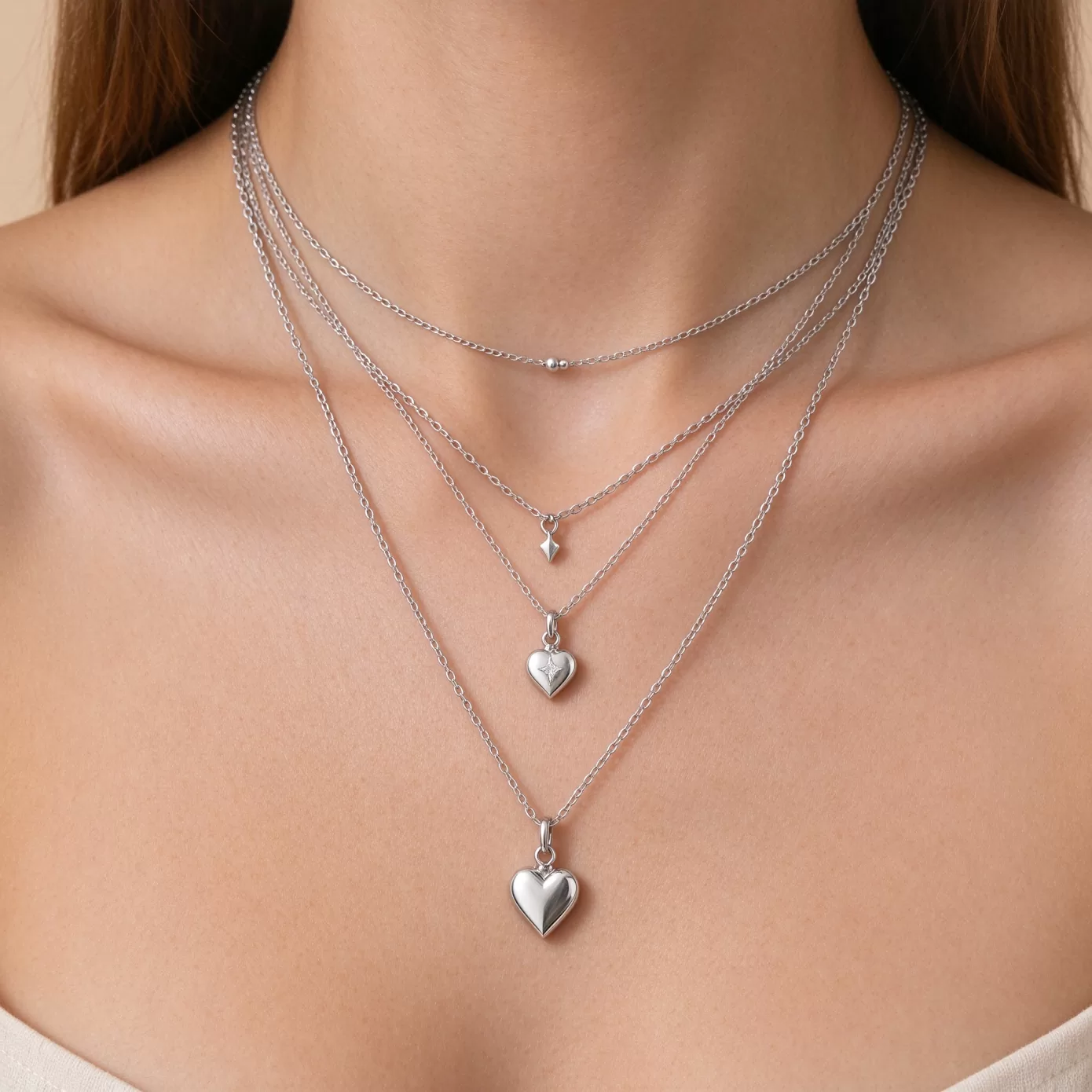
Two silver chains can look identical in a photo and last ten years apart. The difference is almost always weight—how much actual silver is in the chain. A light, flimsy chain kinks, tangles, and snaps; a properly weighted chain drapes beautifully, resists breaking, and feels premium the moment it hits the hand. If you are buying wholesale silver necklaces or advising customers, understanding chain weight and gauge is the fastest way to separate good stock from lightweight profit-burners.
What "Weight" Means in a Silver Chain
Weight is simply how many grams of silver are in the finished necklace. The same style—say, a 20-inch cable chain—can weigh anywhere from 1.5g on the ultra-light end to 8g on the chunky end. Heavier chains use thicker wire, stronger links, and a sturdier clasp. They cost more per piece, but they also sell at a higher retail price and, crucially, they don't come back broken.
- Light (1–3g): delicate, good for thin pendants and layering, but prone to tangling.
- Medium (3–6g): the sweet spot for everyday pendants and standalone chains.
- Heavy (6g+): statement curb and figaro chains, men's chains, high-price point.
Why Gauge Matters More Than Length
Gauge describes the thickness of the wire used to make each link. Lower gauge numbers mean thicker wire. A chain that is long but thin will still feel cheap; a shorter but heavier chain feels substantial. When comparing SKUs, ask suppliers for both length and weight rather than trusting a photo. Our types of silver chains guide pairs well with this—certain styles like snake chains need careful gauge choices to avoid kinking.
How Weight Drapes and Feels
Weight changes how a chain actually sits on the body. A light chain floats and twists, tangling in hair. A medium-weight chain falls straight, lies flat on the chest, and holds a pendant at the right angle. Heavy chains drape with presence and are chosen for their look rather than for a pendant.

Weight by Chain Style
Expected weights help you spot a suspiciously light quote. These are rough benchmarks for a 18–20 inch sterling silver chain:
- Cable chain: 2–5g depending on wire thickness.
- Curb chain: 5–12g for medium widths.
- Figaro: 4–9g.
- Snake chain: 3–6g but must be flexible, not stiff.
- Rope chain: 5–10g; rope strength comes from density.
If a supplier quotes a curb chain at 2g for 20 inches, it is likely a plated hollow chain—wrapped silver over base metal—not solid 925. Solid silver chains have real heft. Our solid versus plated guide explains how to spot the difference.
Why Buyers Should Never Choose by Photo Alone
Online, every chain looks the same. Buyers get burned when they order "chunky curb" and receive a flimsy 2g chain. The fix is simple:
- Request the exact gram weight per SKU in the spec sheet.
- Order a sample piece to feel the weight in person.
- Compare weight per inch across three suppliers before committing to MOQ.
- Remember: heavier chains mean fewer returns and better reviews.
Cross-Selling with Weight Tiers
Weight tiers are also a merchandising opportunity. Offer the same design in a light layering version and a medium everyday version, and let customers choose by price and feel. This naturally increases average order value. Pair heavier chains with bold pendants and lighter chains with delicate birthstones, as described in our birthstone pendant guide.
Common Questions
Is a heavier chain always better?
Not for every use. Delicate pendants look best on light chains, and layering sets rely on thin chains to avoid bulk. Match weight to the pendant and the look, not just to cost.
Do hollow silver chains last?
Hollow chains are lighter and cheaper but dent and crush permanently. For daily wear and resale value, solid silver chains are always the safer buy.
Why do some light chains turn the neck green?
That is usually a plated chain where the silver coating has worn to reveal copper underneath. Solid 925 silver with a proper weight does not typically cause green skin. For more, read our guide on 925 hallmarks.
Weight is the honesty test of a silver chain. Insist on gram weights, sample the feel, and stock chains customers can rely on for years. Explore our silver necklace collection guides for more.
Reading a Supplier's Chain Spec Sheet
A reliable supplier lists chain weight in grams, length in inches, and wire gauge. When comparing quotes, ignore the product photo and compare these three numbers side by side. If two suppliers both sell a 20-inch cable chain but one quotes 2 grams and the other 5 grams, the 5-gram chain is a genuinely different product. Ask for a sample of each so you can feel the weight in your hand. Weight is the single best predictor of whether a chain will last, because lighter chains use thinner wire that kinks and snaps.
Beware of hollow silver chains marketed as solid. Hollow chains dent permanently and cannot be repaired, while solid chains can be polished and reshaped. When in doubt, ask the supplier whether the chain is solid or hollow, and check the price: a solid 5-gram sterling chain should not cost the same as a thin 2-gram one. For retailers, ordering a small sample of each chain style lets you build a weight reference you can trust. Over time, you learn which suppliers deliver consistent gram weights, and you stop guessing. This is the detail that separates a store whose chains last from one whose customers return broken pieces within a month.
Repairing and Replacing Thin Chains
Even the best chain can break if it is thin. Keep a small stock of common chain styles in popular lengths so you can replace a broken piece quickly. Explain to customers that very light chains are fashion pieces meant for occasional wear, while solid heavier chains are built for daily life. Offer to swap a broken chain for a matching sterling replacement. Fast, fair repairs turn a complaint into a loyalty moment and keep the customer buying from your store rather than a competitor.
When in doubt, choose the heavier chain. A slightly thicker sterling piece costs a little more up front but lasts far longer than a flimsy fashion chain. It is the kind of small upgrade customers notice and appreciate, and it keeps your store associated with quality rather than disposability.
Related Articles
- How to Layer Silver Necklaces: The No-Tangle Layering Method
- Silver Lariat and Y-Necklaces: The Adjustable, Elegant Layer
Sterling silver terminology used in this guide follows the Wikipedia entry on sterling silver.
Frequently Asked Questions
Which chain lengths should I stock first?
16 to 18 inch covers most necklines and gift purchases. Add 20 inch for layering sets and 24 inch for pendant lines.
Are your chains nickel-free and hypoallergenic?
Yes. Sterling silver is 92.5% silver; stainless lines use 316L. Both are nickel-safe for reactive customers when plated correctly.
Can necklaces be personalized?
Laser engraving on pendants and clasps is available from 50 pieces, with 3–5 day turnaround on the engraving step.
What is the bulk lead time?
15–20 days under 500 pieces; 25–30 days for custom pendants or new molds.